

Over the past 50 years, you’ve seen UK mining machinery shift from manually controlled diesel equipment to larger, more precise and increasingly automated machines. Hydraulics improved digging, lifting and steering, while stronger cabs, rollover protection and hazard-detection systems enhanced operator safety. Today, sensors track pressures, temperatures and vibration, helping teams spot faults before failures occur. Remote controls and autonomous haulage can reduce exposure to danger, but require strict site procedures. Next, you’ll see how each advance changed mining work.
How Did Mining Machines Work 50 Years Ago?
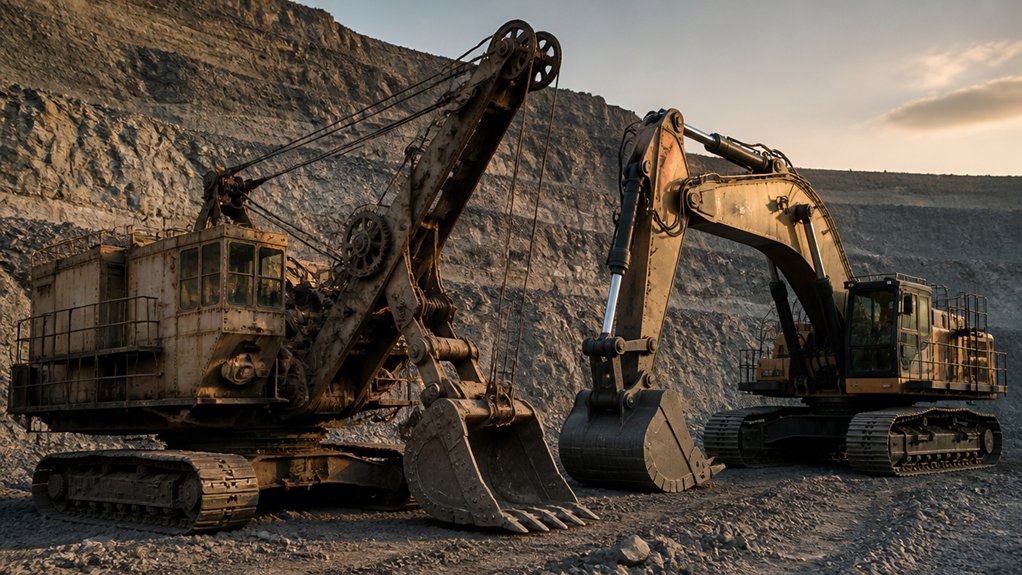
Fifty years ago, mining machines relied mainly on diesel engines, hydraulics and mechanical controls to cut, load and haul rock, with operators directing most tasks from the cab. In UK mines and quarries, you’d find excavators, dump trucks, loaders and drilling rigs built for rugged, repetitive work.
Mining equipment depended on levers, gauges and the operator’s judgement; visibility, noise and vibration could make precise control difficult. Drilling technology typically used percussion or rotary action to bore blast holes, with crews positioning and operating rigs manually.
You’d need to follow site procedures, wear suitable protective equipment and keep clear of moving machinery and suspended loads. Regular inspections and maintenance helped prevent hydraulic leaks, brake failures and other hazards.
Supervisors coordinated work through radios or hand signals, while operators relied on experience to respond to changing ground conditions.
How Did Mining Machines Grow in Size?
Mining machines grew larger as UK quarries and open-pit operations needed to move more rock with fewer trips. Bigger dump trucks, excavators and loaders increased payloads and bucket capacity, helping you shift overburden and aggregate more efficiently.
Stronger frames, larger tyres and higher-capacity engines supported the added loads, while wider haul roads and carefully designed turning areas accommodated the machines.
These Mining machine innovations changed site planning as well as production. You’ll need to check ground bearing strength, gradients, visibility and traffic routes before operating larger equipment.
Bigger machines create greater blind spots and stopping distances, so segregate pedestrians, set speed limits and use trained operators. Industry safety depends on matching vehicle size to the site, maintaining clear communications and inspecting brakes, tyres and structures.
Larger equipment can cut journeys, but only when your quarry’s infrastructure and controls safely support its scale.
How Did Hydraulics Change Heavy Mining Machinery?
As machines grew larger, hydraulics gave UK quarry operators finer control over the force used to dig, lift and steer. Instead of relying mainly on mechanical linkages, you could direct power through cylinders and motors, making controls more responsive and attachments easier to position.
Hydraulic systems also let you operate brakes, steering and implement circuits with consistent force, even under demanding conditions. Pressure regulation became essential: relief valves limit peaks, while load-sensing controls match flow to demand and reduce overheating.
You should check hoses, couplings, seals and fluid regularly; a pinhole leak can inject oil through skin, so never search for leaks by hand. Isolate and depressurise circuits before maintenance, follow the manufacturer’s procedures, and keep guards in place.
These changes improved control and helped you work more safely in UK quarries.
How Did Bigger Machines Increase Mining Output?
Larger excavators, haul trucks and crushers increased UK quarry output by moving and processing more material per cycle, reducing the number of machine passes needed to meet production targets.
With greater bucket capacity and payload, you can shift more overburden and aggregate per operating hour, while high-capacity crushers handle larger, steadier feed. Fewer loading and haulage cycles can shorten production time and lower unit costs, provided your site’s roads, benches and processing plant can support the equipment.
These Mining industry innovations also demand careful planning: match truck size to excavator capacity, maintain suitable turning areas, and coordinate dispatch to limit queues.
Bigger machines may consume more fuel and concentrate ground pressure, so assess the Environmental impact through energy use, emissions, noise and land disturbance. You’ll gain output sustainably only when capacity fits the quarry’s geology, infrastructure and restoration plan.
How Did Mining Machines Become Safer?
As mining machines grew larger, you needed stronger safeguards against rollovers and impact. Rollover protection systems and reinforced operator cabins now help shield you in the event of an incident.
Automated hazard detection can also alert you to risks before they escalate, supporting safer operations under UK health and safety requirements.
Rollover Protection Systems
When heavy mining machines work on steep, uneven ground, a rollover can trap or crush the operator. Rollover protective structures (ROPS) reduce this risk by creating a reinforced zone that helps prevent the machine’s weight from crushing its occupant.
Over the past 50 years, safety innovations and technological advancements have made these structures stronger, better tested, and more closely matched to specific machines.
You’ll find ROPS designed and tested to recognised standards, including requirements relevant to UK workplaces. They’re engineered to withstand defined rollover loads, but they can’t prevent every injury or make unstable ground safe.
You should use the machine only with its approved ROPS fitted, secured, and maintained; modifications or damage can undermine its protection.
Combine this safeguard with risk assessment, suitable routes, speed control, and trained operation to reduce rollover likelihood on site.
Operator Safety Cabins
ROPS protect operators during a rollover, while the safety cabin helps protect them from hazards during everyday work. Over the past 50 years, cabin design has developed to shield you from falling debris, dust, noise and vibration.
Reinforced structures, laminated glazing and securely mounted doors help maintain a protective enclosure on UK quarry and mine sites. Effective seals and filtered, pressurised air can limit dust entering the cab, while heating and demisting keep windows clear in cold, damp conditions.
Operator comfort matters because fatigue can undermine safe decisions during long shifts. Adjustable seats, clear controls, good visibility and climate control help you work with less strain.
You should keep glazing, seals and restraints in serviceable condition, and follow site procedures for access, seat-belt use and cab maintenance.
Automated Hazard Detection
Automated hazard detection adds another layer of protection by helping operators spot people, vehicles and obstacles around heavy machinery. On UK sites, radar, cameras and proximity sensors can warn you of a collision risk, while machine-learning systems distinguish hazards from routine activity.
You’ll receive alerts in the cab, giving you time to slow, stop or change course; some systems can intervene automatically. These tools support, rather than replace, safe systems of work, clear exclusion zones and trained operators.
Regular checks matter: mud, dust, poor light or sensor damage can weaken detection, so you should keep equipment clean and report faults.
Linked to fleet controls, detection can also reduce unnecessary idling and damage, limiting environmental impact. Used consistently, these technologies strengthen Mine safety and help protect workers around moving plant.
When Did Heavy Mining Machinery Become Automated?
You can trace mining automation in the UK from early machine controls to systems that reduce operators’ exposure to hazardous areas. Remote-control technology lets you operate equipment from a safer location, subject to site procedures and risk assessments.
Today, autonomous haulage and drilling systems extend automation, but you’ll still need robust safeguards and oversight.
Early Automation Milestones
As electronics advanced in the late 20th century, heavy mining machinery began shifting from operator-controlled systems to automation. Early milestones included electronic engine controls, onboard diagnostics and sensors that monitored temperature, pressure and machine position.
You could use these systems to detect faults sooner, improve consistency and reduce workers’ exposure to hazardous areas.
Remote Control Systems
Remote control systems moved heavy mining machinery beyond basic monitoring by letting operators work from a protected location, often outside the machine’s line of sight. In the UK, you’ll find remote operation useful where unstable ground, dust, noise or restricted access puts people at risk.
Wireless controls let you steer loaders, excavators and drilling equipment from a nearby control station, while cameras and sensors give you a view of the work area. Reliable radio links, emergency stops and fail-safe shutdowns matter: signal loss mustn’t leave a machine moving unpredictably.
You still need trained operators, clear site procedures and checks for interference, battery condition and visibility. These systems reduce exposure to hazards, but they don’t remove the need for supervision or safe exclusion zones.
They marked a practical step towards safer, more flexible machine operation.
Autonomous Mining Equipment
When did heavy mining machinery become automated? You can trace early commercial trials to the 1990s, when mines began testing driverless haul trucks. Wider deployment followed in the 2000s, as GPS, machine control and wireless networks improved. Today, autonomous systems can haul, drill and inspect with limited direct intervention.
For UK operators, automation isn’t simply a productivity upgrade. You must assess vehicle interactions, emergency stops, communications failure and safe access before introducing autonomous plant. HSE guidance and site-specific risk assessments should shape operating procedures, training and exclusion zones.
Keep people clear of machine routes, and ensure you can switch safely to manual control when needed.
Mining technology continues to advance through Equipment innovation, including sensors and fleet software. With robust safeguards, maintenance and oversight, you can reduce exposure to hazardous tasks while keeping production controlled and accountable.
How Do Sensors Monitor Mining Machinery Today?
Today, sensors monitor mining machinery by measuring conditions such as vibration, temperature, pressure, fluid levels and component position. On a UK site, you can use readings from engines, hydraulic systems, conveyors and brakes to spot abnormal wear or overheating before a failure puts workers at risk.
Effective sensor integration brings these signals into onboard displays or a control room, where operators can check machine status and respond promptly. Data analytics can compare live measurements with operating limits and historical patterns, helping maintenance teams plan inspections rather than rely solely on fixed schedules.
Alerts should be clear, prioritised and understood by trained staff; a sensor can’t replace competent checks or safe isolation. You’ll still need to follow site procedures, manufacturer guidance and relevant UK health and safety requirements when acting on warnings.
What’s Next for Heavy Mining Machinery?
What’s next for heavy mining machinery? Future innovations will help you move more material with less risk and lower environmental impact. Expect battery-electric haul trucks, hydrogen powertrains and trolley-assist systems to reduce diesel use, while autonomous vehicles and AI-enabled maintenance improve productivity.
Yet you’ll need robust communications, secure software and trained operators to manage these systems safely, especially in remote UK sites.
Sensors will increasingly connect machines to digital twins, letting you spot wear, plan repairs and prevent failures before they endanger workers. Remote operation could keep people away from unstable ground, but you’ll still need clear emergency procedures and competent supervision.
Sustainability challenges remain: electrification requires reliable charging and grid capacity, while batteries demand responsible sourcing and recycling. You’ll also need to meet UK health, safety and environmental requirements as technology advances.
Plan upgrades around site conditions, workforce skills and whole-life costs.