
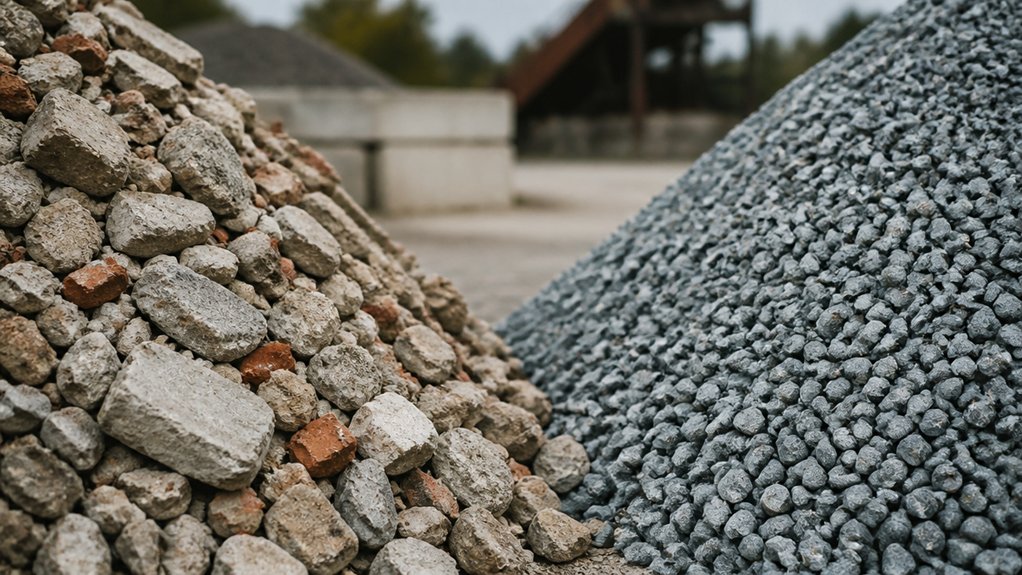
Choose recycled aggregate vs. primary rock according to your project specification, performance needs, supply, cost and environmental priorities. Recycled aggregate comes from processed construction and demolition waste, so its composition and quality can vary; check grading, contaminants and test data before ordering. Primary rock is quarried and generally offers more predictable particle properties, though performance still depends on geology and production. For drainage, sub-base or visible finishes, match the material to the required properties. The key trade-offs become clearer as you compare their uses, costs and impacts.
Which Aggregate Fits Your Project’s Needs?
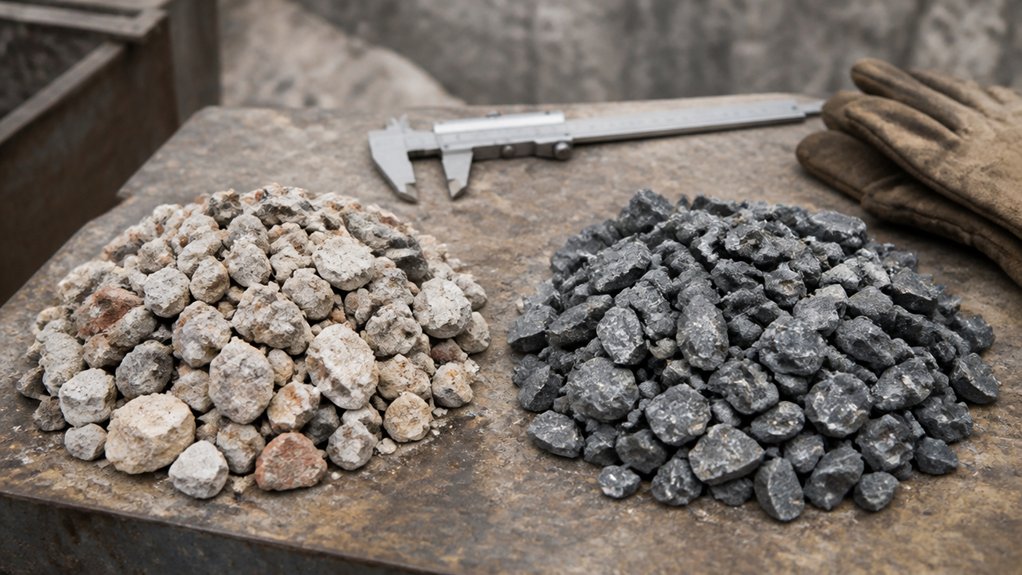
Choosing between recycled aggregate and primary rock depends on the job, not a blanket preference. Start with your specification, intended use and site constraints.
For sub-base beneath a driveway or access road, you’ll need suitable grading, compaction and verified performance against the project requirements. Recycled material can meet these needs where its certification and source are appropriate; primary rock may suit jobs demanding tighter control or a particular stone type.
Consider delivery distance, availability and cost across your UK region, as haulage can affect both budget and programme. Check planning conditions, drainage design and any client requirements before ordering.
For visible paths, walls or landscaping, compare colour and texture: Aesthetic appeal matters, while aesthetic consistency can shape the finished scheme. Ask your supplier for test data and confirm the material matches your design and installation method.
What’s in Recycled Aggregate and Primary Rock?
When you specify recycled aggregate, you’re selecting material recovered from sources such as crushed concrete, brick and asphalt.
Primary rock comes from quarried geology, so its mineral composition depends on the source and rock type.
Processing, grading and quality controls differ, affecting consistency and suitability for your project.
Recycled Aggregate Materials
Recycled aggregate is made from processed construction and demolition waste, such as crushed concrete, brick and asphalt, while primary rock is quarried from natural deposits and crushed to size.
In the UK, you’ll find recycled material graded for uses such as sub-base, drainage and general fill. Processing typically involves sorting, crushing and screening; magnets remove ferrous metal, while quality checks help control grading and contaminants.
Depending on its source, the feed may also contain tiles, masonry or reclaimed road planings. You should check the project specification and supplier’s test data, as composition and performance vary between loads.
Innovative recycling can recover useful material that would otherwise go to landfill, supporting sustainable sourcing. For compliant construction, confirm that the aggregate meets the relevant grading, contamination and end-use requirements before ordering.
Primary Rock Composition
Unlike recycled aggregate, primary rock starts as naturally occurring stone, so its composition depends on the geology of the quarry. Its Geological origin determines the minerals present and the rock’s broad characteristics.
In the UK, common primary aggregates include limestone, sandstone, granite and basalt, each formed through different geological processes.
Mineral composition affects properties such as density, hardness and resistance to weathering. For example, granite typically contains quartz and feldspar, while limestone consists mainly of calcite.
These differences matter when you specify aggregate for concrete, asphalt, drainage or general construction. Your choice should reflect the intended application and relevant project requirements, as rock types don’t perform identically.
Local geology also influences which materials are available to UK producers, so understanding a source’s composition helps you make an informed material selection.
Processing and Quality Differences
Processing determines what each aggregate contains and how consistent it is. When you specify primary rock, you’re choosing material quarried from a known geological formation. Crushing and screening produce graded stone, while testing checks properties such as particle size, strength and durability. Its Chemical composition generally reflects the source rock, though you should confirm suitability for the intended application.
Recycled aggregate comes from processed construction and demolition waste, so its content can vary between loads. Processing methods include sorting, crushing, screening and removing contaminants such as timber, metal and plaster. You may still find brick, concrete, asphalt or trace impurities, affecting grading, water absorption and performance.
UK specifications and project requirements determine acceptable limits; check supplier test data and certification before use. That way, you can match aggregate quality to the job.
How Do Their Strength and Consistency Compare?
Strength depends on the source material, grading and intended use—not simply on whether an aggregate is recycled or primary rock. Recycled concrete aggregate can retain mortar, making it more porous and variable in density and water absorption than many quarried products. That doesn’t automatically mean lower performance: tested, well-processed material can meet specified strength requirements.
Primary rock often offers more predictable particle properties, but geology, blasting and production still affect consistency.
For your project, assess test results against the relevant British or European specification, rather than relying on the aggregate label. Check grading, fines, flakiness, water absorption and contamination, and confirm that supply controls keep results within limits.
Material durability depends on sound particles and exposure conditions. Structural reliability also rests on appropriate design, dependable quality assurance and consistent delivery—not on whether the source is recycled or virgin.
Which Aggregate Suits Common Construction Uses?
For driveways and paths, you’ll choose between recycled aggregate and primary rock based on the required finish, load, and specification.
Foundations demand suitable grading and verified performance.
While drainage relies on clean, permeable stone.
Check the project specification and local requirements before selecting either material.
Driveways and Paths
Which aggregate suits a driveway or path depends on the ground conditions, expected traffic and finish you want. For a domestic drive, you’ll need a well-graded material that compacts firmly under vehicle loads. Recycled crushed concrete can provide a cost-effective sub-base, while primary limestone or granite offers consistent grading and established performance.
Check the supplier’s grading, fines content and declared properties against your specification; recycled products can vary between batches.
For a visible surface, consider how the stone will look and behave underfoot. Primary gravel gives you predictable colour and texture, supporting Aesthetic appeal, though Color variation occurs naturally. Recycled aggregate may include mixed concrete or brick, creating a less uniform finish.
Choose angular stone for better interlock on paths and drives, and confirm the product suits your intended use before ordering. A local merchant can advise on available grades.
Foundations and Drainage
When specifying aggregate for foundations, match its grading and declared performance to the design and ground conditions.
For a sub-base beneath a ground-bearing slab, you’ll typically need well-graded, compactable material that meets the project specification and relevant UK standards. Primary crushed rock offers consistent grading and known performance; recycled aggregate can suit the work when its source, composition and certification meet the same requirements.
For drainage trenches and land drains, prioritise Water permeability. Clean, single-sized stone lets water flow around pipes, while fines can clog voids and reduce capacity. Check the drainage design, discharge route and ground conditions before choosing either material.
Good Soil stability depends on more than aggregate: assess bearing capacity, contamination risks and compaction requirements. Ask your supplier for grading data and a declaration of performance, then follow the engineer’s specification. Don’t assume recycled material is suitable without evidence.
How Do Cost and Supply Compare?
Cost depends on haulage, processing and specification as much as on the material itself. Your delivered price reflects distance from the quarry or recycling plant, loading, transport and any screening or grading needed to meet the contract.
Compare like-for-like products: recycled aggregate may need additional testing or processing, while primary rock can command a premium where tight grading or consistent performance is essential.
Market valuation varies by region, demand and material availability. Check current quotes, not headline prices, and include minimum loads, waiting time and fuel surcharges in your comparison.
Supply stability also matters. A nearby recycling facility can offer dependable volumes when suitable demolition feedstock is available; quarry output may provide larger, more predictable orders, subject to extraction limits and planned maintenance.
Before you specify, confirm lead times, stock levels and backup sources with your supplier.
What Are the Environmental Trade-Offs?
Beyond price and availability, recycled aggregate can reduce demand for virgin stone and divert demolition material from landfill. By specifying recycled material, you can lower your project’s carbon footprint, particularly when local processing and short haulage distances limit transport emissions. You’ll also support resource efficiency across the UK construction sector.
However, recycling isn’t impact-free. Crushing, screening and washing consume energy and water, while transport can outweigh savings if the source is distant. Recycled aggregate may contain contaminants, so producers must apply suitable processing and quality controls to meet relevant specifications.
Primary rock extraction also carries an ecological impact: quarrying alters landscapes, affects habitats and generates dust and noise. Yet well-managed quarries can restore land and deliver consistent material.
Compare verified environmental product data and supply-chain impacts for a balanced assessment.
How Do You Choose the Right Aggregate?
How do you choose the right aggregate? Start with the job’s specification, not the material’s label. Check grading, particle shape, strength, frost resistance and contamination limits against the design, relevant British Standards and project requirements. For concrete, drainage or sub-base, performance must come first.
Then compare recycled aggregate with primary rock on availability, delivered cost and supply consistency. Recycled material can reduce demand for virgin resources, but confirm its source, processing controls and declared properties. Sustainability considerations should include transport distances, recycled content and any project carbon targets—not just the quarry gate.
Finally, consider appearance and site conditions. Colour and texture affect exposed finishes, so assess samples for aesthetic appeal. Verify access, delivery capacity and required volumes with your supplier. If performance data or compliance evidence is unclear, request documentation before ordering.