
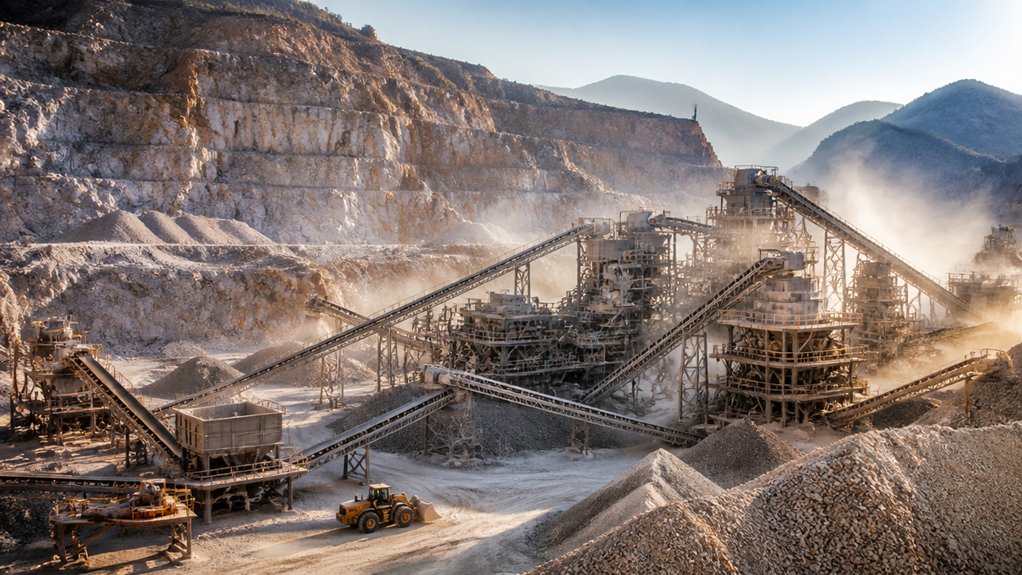
The world’s most impressive quarry crushing and screening plants turn variable rock into consistent, saleable aggregate at high throughput, with minimal downtime and waste. You’ll find fixed plants built for enormous, continuous volumes, mobile units positioned near the quarry face to cut hauling, and hard-rock circuits that match jaw and cone crushers with grizzly feeders and screens. Automated controls balance feed, flag bottlenecks, and track performance, while conveyors, dust suppression, and planned maintenance keep production efficient. The sections ahead explain what sets these systems apart.
What Makes a Quarry Plant Impressive?
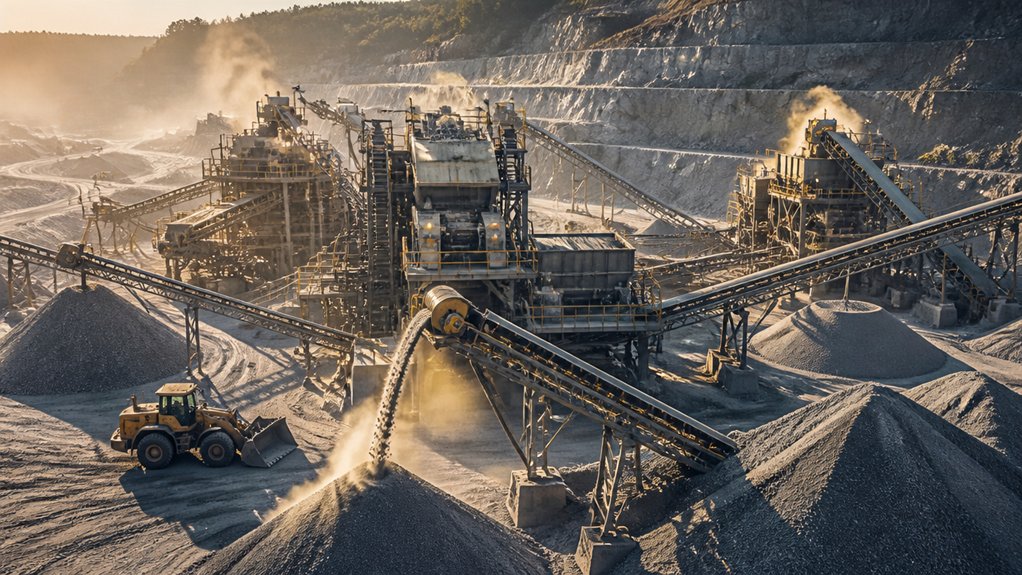
An impressive quarry plant does more than move rock: it consistently turns variable feed into correctly sized, saleable material while meeting production, safety, and environmental targets.
You can judge performance by throughput, product consistency, uptime, and the plant’s ability to handle changing rock conditions without excessive energy use or unplanned stops. Well-matched crushers, screens, conveyors, and controls keep material flowing and reduce bottlenecks.
Practical maintenance access and reliable monitoring help your team spot wear early and protect availability. Effective safety measures include guarded moving parts, clear walkways, lockout procedures, and dust suppression at transfer points.
You should also assess Environmental impact through water management, noise control, emissions, and efficient land use. A strong plant balances output with operating cost, worker protection, and responsible resource management, delivering dependable results shift after shift.
The World’s Largest Fixed Quarry Plants
What sets the world’s largest fixed quarry plants apart is their ability to process enormous volumes of rock through permanent, carefully integrated systems. These facilities link primary crushers, secondary stages, screens, conveyors, and stockpiles into a continuous production line.
You’ll find their capacity depends not only on crusher size but also on feed consistency, equipment availability, and material-flow design. Their historical development reflects growing demand for aggregates and advances in automation, wear-resistant components, and plant control.
When you assess a site, examine throughput targets, energy use, maintenance access, and product specifications. Environmental impact also shapes plant design: dust suppression, noise control, water management, and efficient haul routes can reduce local effects.
Because fixed installations require substantial investment and planning, you’ll need reliable reserves, permitting, and long-term market demand to justify their scale.
Notable Mobile Quarry Crushing Plants
Notable mobile quarry plants pair high-capacity crushers with integrated screening systems to process material in fewer stages.
You can deploy these units close to the face, reducing haulage and simplifying site logistics.
The following examples show how their configurations meet demanding production requirements.
High-Capacity Mobile Crushers
When quarry output demands high tonnage without fixed infrastructure, high-capacity mobile crushers bring primary and secondary crushing closer to the face. You can deploy tracked jaw, impact, or cone units as geology and feed size require, then relocate them as the working face advances.
Their heavy-duty frames, high-power drives, and automated controls sustain throughput while managing variable rock conditions. Innovative engineering improves chamber geometry and enables rapid setting adjustments, helping you maintain product size and reduce downtime.
Choose a machine with adequate feed capacity, proven wear protection, and service access suited to your site. Mobile crushing can also shorten haul distances, lowering fuel use and emissions.
With careful fleet planning, Environmental sustainability and production targets can align, while you retain the flexibility to respond to changing extraction plans and demand.
Integrated Screening Systems
To produce consistent aggregate in one pass, integrated screening systems pair mobile crushers with decks that separate material by size and return oversize for further reduction. You can configure screen media and deck angles to match feed characteristics, target gradations, and throughput demands.
A closed-circuit layout sends oversized rock back to the crusher, limiting recirculation of finished product and helping stabilize output. Smart sensors track vibration, bearing temperature, and screen loading, giving you early warning of blinding, imbalance, or component wear.
Use these readings to adjust feed rate and screen settings before quality drifts. Coordinate maintenance scheduling with production intervals, and inspect panels, liners, and conveyors at planned stops.
When you match the screen to the crusher and material, you’ll improve separation efficiency, reduce unnecessary crushing, and deliver reliable aggregate across changing quarry conditions.
High-Capacity Plants for Hard-Rock Quarries
Hard-rock quarries need crushing and screening plants that sustain high throughput without sacrificing product quality or equipment life. To meet that demand, you’ll need a carefully matched circuit: primary jaw crushers handle large, abrasive feed, while cone crushers reduce it through successive stages.
Grizzly feeders regulate flow and protect downstream equipment from surges. Screens then separate saleable sizes and return oversize material for further crushing.
Choose wear-resistant liners, robust bearings, and drives sized for continuous duty. Automated controls can balance feed rates, monitor power draw, and flag developing bottlenecks before they restrict production.
For consistent ore processing, set crusher gaps and screen apertures to your target specifications, then verify output regularly. Schedule equipment maintenance around wear measurements and operating data; timely liner changes and lubrication help prevent unplanned stops and preserve throughput across demanding shifts.
Major Limestone Quarry Crushing Plants
Major limestone quarry plants combine high-capacity crushers with screening circuits designed to handle variable feed and produce consistent aggregate sizes. You’ll find their performance depends on matching crusher type, chamber geometry, and operating settings to the deposit’s hardness and moisture.
Primary jaw crushers reduce blasted rock; impact or cone units then refine it while limiting excessive fines. Feeders regulate throughput, and dust-control systems protect workers and nearby communities.
Limestone purity matters: clay, chert, and other contaminants can affect product quality, so you should assess the geology before selecting equipment and blending practices.
Reliable conveyors and accessible maintenance points help keep production steady. Thoughtful plant placement can also improve quarry aesthetics, reduce visual impact, and simplify site rehabilitation.
With these choices, you can balance output, product consistency, operating costs, and environmental obligations across a demanding quarry operation.
How Quarry Screens Sort Crushed Rock
You control product sizing by selecting a screen deck design suited to the rock and target gradations.
The screen’s vibrating motion stratifies the material and moves it across each deck.
Aperture sizes then separate crushed rock into defined size fractions.
Screen Deck Design
As crushed rock travels across a vibrating screen deck, each opening separates material by size: smaller particles pass through, while larger ones move toward the next deck or discharge point. You’ll choose screen deck openings to match product specifications and feed characteristics.
A sequence of decks with progressively smaller apertures can produce several size fractions in one pass. Select wire cloth, perforated plate, or polyurethane panels according to rock abrasiveness, moisture, and required service life.
Aperture shape also matters: square openings support accurate sizing, while elongated slots can reduce blinding with damp or flaky material. Keep adequate open area so particles reach the apertures, but don’t sacrifice panel strength or wear resistance.
Sound deck design balances capacity, separation accuracy, maintenance access, and operating cost for your quarry’s production targets.
Vibrating Motion
Deck openings set the size limits, but vibrating motion determines how effectively rock reaches them. Your screen’s drive system moves the deck in a controlled pattern, advancing material while lifting and turning particles. This action exposes more rock to the screening surface and helps prevent pieces from settling into a stationary bed.
You can adjust stroke, frequency, and deck angle to suit feed conditions, but each change affects throughput, impact loads, and screen stability. Watch for uneven movement, unusual noise, or declining performance; these can signal loose fasteners, worn springs, or drive problems.
Follow the manufacturer’s settings and inspection schedule as part of equipment maintenance. Consistent checks help you preserve reliable motion, limit unplanned downtime, and keep the screen operating within its designed mechanical limits under changing quarry conditions.
Material Size Separation
Once crushed rock reaches the screen, each deck separates it by size. As material travels across the vibrating surface, smaller particles pass through apertures while larger pieces continue toward the discharge end. You can control the cut size by selecting suitable screen media and opening dimensions for each product specification.
Multiple decks let you produce several size fractions in one pass, directing each stream to a separate conveyor or stockpile.
For reliable innovative separation, match the screen’s feed rate to its capacity and keep material distributed evenly across the deck. Excessive loading can blind apertures, reduce throughput, and contaminate finished products.
Inspect media for wear, and adjust vibration or inclination when sizing performance drifts. Precision sorting depends on consistent feed, correctly sized openings, and routine checks.
These practices help you maintain product quality while reducing recirculation and unnecessary handling.
How Quarry Conveyor Networks Move Material
From the crusher discharge to the stockpile, a quarry conveyor network moves material along a planned route of belts, transfer points, and feeders. You direct each stream to the next processing stage, using chutes and diverters to limit spillage and control flow.
Belt width, speed, and incline must match the required capacity and the material’s size, moisture, and abrasiveness. At transfer points, well-designed liners and suitable drop heights reduce impact, dust, and wear.
Properly positioned feeders maintain an even load, helping downstream screens and crushers operate within their rated limits. Good Material transfer efficiency depends on short, practical routes and minimal bottlenecks.
Regular Conveyor belt maintenance includes checking alignment, tension, rollers, scrapers, and splices. These inspections help you catch damage early, reduce unplanned stoppages, and keep aggregate moving reliably to storage.
How Automation Improves Quarry Plant Output
When sensors, programmable controls, and plant software work together, automation helps you increase output while keeping production stable.
With sensor integration across crushers, screens, feeders, and conveyors, you can track equipment status and material flow in real time. Controls adjust feeder rates or crusher settings when conditions change, helping you maintain consistent throughput without overloading equipment.
Automated sequencing also coordinates starts and stops, reducing delays between process stages.
Use data analytics to compare production rates, detect recurring bottlenecks, and identify performance trends across shifts.
Clear alarms let operators respond quickly to abnormal vibration, temperature, or power draw before a minor issue disrupts production.
You’ll still need skilled staff to verify readings, set operating limits, and maintain sensors.
How Quarry Plants Reduce Waste and Emissions
Efficient quarry plants reduce waste and emissions by controlling material use, energy demand, and dust at each process stage. You can start by matching crusher settings to feed size and hardness, limiting recirculation, excess fines, and unnecessary wear. Screens calibrated to product specifications help you recover usable aggregate instead of sending it to waste.
Water sprays and enclosed transfer points capture dust where it forms, while maintained filters protect air quality.
For emission reduction, you can select efficient motors, use variable-speed drives, and schedule equipment to avoid idle running. Regular maintenance keeps engines and conveyors operating efficiently, and monitoring fuel and electricity use reveals avoidable losses.
Eco friendly practices also include reusing process water and returning suitable fines to approved applications. Track waste, dust, and energy data routinely; then adjust operating parameters to meet production targets while reducing environmental impact.