

Underground mining equipment is compact and manoeuvrable, built to pass through confined workings with limited ventilation. You’ll see low-profile loaders, underground trucks and drills, often fitted with enclosed cabs, fire suppression and gas monitoring. Surface mining uses larger excavators, shovels, haul trucks and dozers to move heavy loads across open ground. Your choice depends on the mining method, terrain, haul routes and safety risks. The sections ahead explain how these factors affect equipment selection, performance and cost.
How Do Underground and Surface Mining Differ?
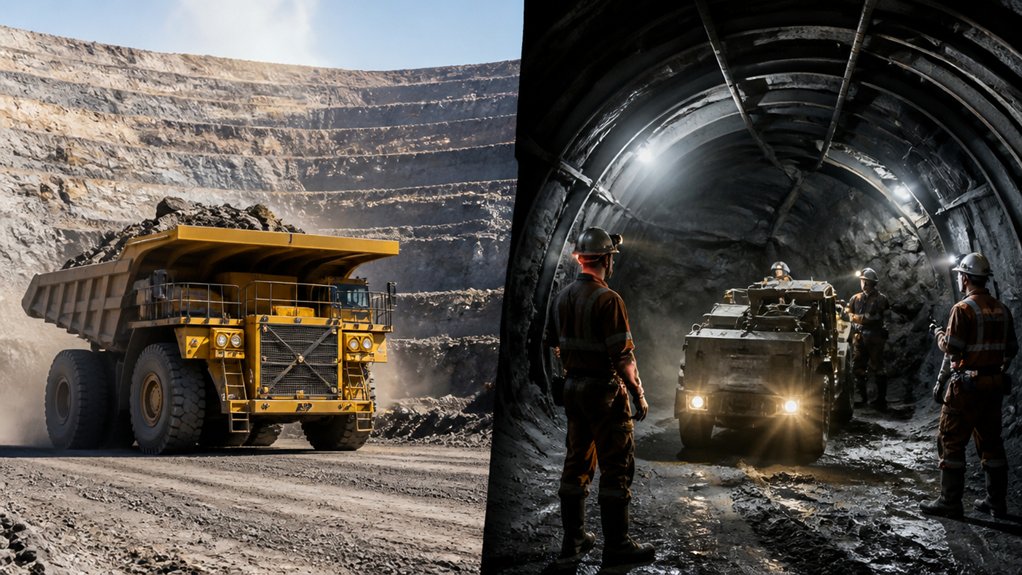
Surface mining removes ore and overburden from deposits near the ground, while underground mining reaches deeper seams through shafts, declines and tunnels. You’ll usually find surface methods easier to access and inspect, but they disturb a wider area and can alter drainage, habitats and views. Underground workings limit surface excavation, yet they bring confined spaces, ground instability and ventilation risks.
Your choice depends on deposit depth, geology, production needs and site constraints. Assess mining safety from the outset: plan safe access, ground support, emergency routes and clear communication for the method you select. Check how water, dust, noise and waste could affect workers and nearby communities.
Compare the environmental impact across the mine’s life, including land restoration and water management after closure. Don’t assume either method is automatically safer or cleaner; site-specific assessment guides responsible decisions.
What Equipment Does Underground Mining Use?
You’ll use underground haulage vehicles to move people and ore through confined workings.
Drilling and blasting equipment breaks the rock, so you must follow site procedures and keep clear of blast zones.
Ground support systems help stabilise the roof and walls, protecting you from falls of ground.
Underground Haulage Vehicles
Because underground workings are confined and often steep, haulage vehicles must be compact, manoeuvrable and suited to the mine’s routes. You’ll typically use load-haul-dump machines (LHDs) to collect broken ore and carry it to an ore pass, crusher or transfer point.
Underground trucks then move larger loads along haul roads to a shaft or decline. Choose vehicle size and power to match tunnel dimensions, gradients, turning space and payload requirements.
Diesel machines need effective underground ventilation to control exhaust and heat; battery-electric options can reduce emissions at the face, but still require charging plans and suitable infrastructure.
Check brakes, lights, tyres and steering before each shift, and keep to site speed limits. Separate pedestrians from traffic wherever possible, use clear radio procedures, and never exceed rated capacity.
Surface drilling equipment serves a different setting and isn’t used for underground haulage.
Drilling and Blasting Equipment
In underground mines, drilling and blasting equipment must fit the tunnel and suit the rock. You’ll use jumbo drills to bore accurately spaced holes into the face, then load them with explosives according to a planned firing sequence. Smaller rigs may suit narrow workings, while automated drills can improve consistency in larger headings.
Before firing, clear the area, check ventilation and communications, and make sure everyone’s accounted for. Follow site procedures for handling explosives, setting exclusion zones and re-entering after a blast; never assume fumes have cleared.
Mining safety depends on competent operators, reliable equipment and disciplined checks.
You’ll also manage Environmental impact by controlling dust, noise, vibration and blast fumes. Use water suppression where suitable, monitor air quality, and plan charges to limit overbreak and waste.
Choose equipment that’s maintained, correctly rated and matched to ground conditions.
Ground Support Systems
As excavation advances, ground support systems help keep the roof and walls stable. You’ll use scaling bars or mechanised scalers to remove loose rock, then install rock bolts, mesh and steel straps to reinforce exposed surfaces.
A bolter drills holes and secures bolts; resin or cement grout may bond them into competent strata. In weaker ground, you may need shotcrete, steel arches or cable bolts for additional support.
Choose equipment to suit the geology, excavation size and ground conditions, and inspect support regularly for movement or damage. Follow the mine’s support rules and keep clear during installation.
Good ground control also protects access routes and ventilation systems, helping you maintain safe airflow and escape paths. Never enter unsupported ground; report cracking, falling rock or unusual noises immediately and reassess the area before work resumes.
Which Machines Are Used in Surface Mining?
In surface mining, you’ll use excavators and shovels to remove overburden and load material.
Haul trucks carry it across the site, while dozers clear routes and maintain working areas.
Keep to traffic plans and exclusion zones to protect operators and ground staff.
Excavators and Shovels
When a surface mine needs to move large volumes of overburden or ore, excavators and shovels do the digging and loading. You’ll typically use hydraulic excavators for flexible digging across changing faces, while electric rope shovels suit high-volume, repetitive work in large pits.
Choose machine size to match the material, bench height and loading requirements; an oversized bucket can strain the machine and compromise control. Keep the working face stable, maintain clear access and follow the operator’s visibility limits.
For Mining safety, inspect attachments, warning systems and access steps before each shift, and keep people outside the swing radius. You’ll also need to manage dust, noise and ground disturbance to reduce environmental impact.
Regular maintenance helps preserve digging performance and prevents leaks or unexpected failures during operation.
Haul Trucks and Dozers
Once excavators load the material, haul trucks carry ore and overburden to crushers, stockpiles or waste dumps. While dozers clear routes, spread material and maintain dump areas.
Choose truck capacity to match your excavator, haul distance and road conditions; mismatched fleets waste fuel and slow production. On gradients, use suitable gears and keep loads within the manufacturer’s limits.
Dozers grade haul roads, remove spillage and push material safely near dump edges. Set clear traffic routes, speed limits and right-of-way rules, and keep people away from reversing vehicles.
Mining safety depends on trained operators, working radios, seat belts and reliable berms at tipping points. Schedule Equipment maintenance checks for brakes, tyres, steering, tracks and blades.
Record defects, isolate unsafe machines and repair them before returning them to service. Review routes as conditions change.
How Do Underground and Surface Machines Compare?
Underground and surface machines serve different working conditions, so you’ll see clear differences in their size, power and safety features. Underground loaders, drills and trucks use compact frames to manoeuvre through restricted headings. Surface excavators, haul trucks and dozers can be much larger, carrying heavier loads across open benches.
You’ll also find differences in power: underground equipment often runs on batteries or diesel, while surface fleets commonly use diesel-electric systems.
Compare visibility, access for maintenance and operator protection before choosing a machine. Underground cabs need robust rollover protection, clear sightlines and effective ventilation controls; surface cabs prioritise visibility across wide work areas.
Mining safety depends on matching equipment capacity to routes, loads and operator training. Consider Environmental impact too: fuel use, emissions, noise and ground disturbance vary by machine and operating scale.
Check site requirements and manufacturer guidance before deployment.
How Do Mining Machines Handle Each Environment?
Mining machines are configured to suit the conditions they face: underground, compact equipment works in confined headings with limited ventilation, while surface machines handle open, exposed terrain and heavier loads.
You’ll find low-profile loaders and narrow drilling rigs easier to manoeuvre below ground, where restricted access also affects servicing and material movement. Surface operations can use larger excavators, haul trucks and drills, but you’ll need to account for changing ground, weather and long travel distances.
Match each machine to the task and site layout: check clearances, gradients, ground conditions and haul routes before deployment.
Underground, battery-electric or low-emission equipment can reduce diesel fumes and heat; at surface, efficient engines and careful route planning can limit fuel use, dust and the Environmental impact.
Good maintenance supports reliable operation and Mining safety in either setting.
How Do Safety Needs Shape Mining Equipment?
Safety requirements influence every equipment choice, from protective features to how machines operate in confined or exposed conditions. Underground, you need low-profile machines with enclosed cabs, fire suppression, gas monitoring and reliable communications. These features help protect operators where escape routes are limited and visibility can be poor.
On surface sites, you’ll prioritise rollover protection, seat belts, clear sightlines and alarms to manage risks around large vehicles and changing ground conditions.
Safety protocols should guide equipment selection, inspections and operator training. Check that guards, emergency stops and isolation points suit the tasks your crew performs. For hazard mitigation, match machine controls and protective systems to site-specific risks, then maintain them as conditions change.
You’ll also need safe access for servicing and clear procedures for breakdowns. No feature replaces competent operation, regular checks or a well-planned response to emergencies.
What Affects Mining Equipment Productivity and Cost?
Equipment productivity and cost depend on how well each machine suits the site, task and operating conditions. Underground workings need compact, manoeuvrable equipment; surface operations can use larger machines where haul roads and loading areas allow.
Match capacity to the job: an oversized machine may waste fuel, while an undersized one can create delays and unsafe pressure to catch up.
You’ll also need to assess ground conditions, gradients, travel distances and shift patterns. These affect cycle times, fuel use and wear.
Include purchase or hire costs, operator training, parts availability and maintenance requirements in your budget. Planned servicing helps prevent breakdowns, but you must allow safe access and time for inspections and repairs.
Environmental impact matters too: consider noise, dust, emissions, water use and ground disturbance when choosing equipment and planning its operation.
How Are Mining Machines Becoming Automated and Electric?
As mines seek to cut emissions and improve control, automation and electrification are changing how machines work underground and on the surface. Mining automation uses sensors, cameras and positioning systems to guide loaders, drills and haul trucks, either remotely or along programmed routes. You can keep operators away from hazardous faces, while monitoring equipment from a control room.
However, you’ll still need trained staff to supervise systems, check exclusion zones and respond safely to faults.
Electric machinery replaces diesel engines with battery or cable power. Underground, this can reduce exhaust fumes, heat and ventilation demand; on the surface, it can lower fuel use and noise.
You’ll need charging points, suitable power supplies and planned battery changes. Match automation and electric systems to site conditions, and maintain them carefully to protect workers and keep production steady.
How Do You Choose the Right Mining Equipment?
Choose mining equipment by matching its capacity and configuration to the deposit, mining method and site conditions.
For surface operations, assess haul distances, gradients, ground conditions and required production rates before selecting excavators, dump trucks or drills.
Underground, check tunnel dimensions, ventilation, turning space and the need for low-profile or remote-controlled machines.
Compare payload, power, maintenance demands and parts availability, not just purchase price. Your equipment must work safely with existing systems and suit operators’ skills.
Prioritise Mining safety: verify guarding, visibility, emergency stops, braking and compliance with site procedures.
Consider Environmental impact too, including fuel or electricity use, noise, dust, emissions and ground disturbance.
Trial shortlisted machines where possible, then review whole-life costs and supplier support.
Choose equipment that meets today’s needs while allowing practical upgrades as the mine develops.