
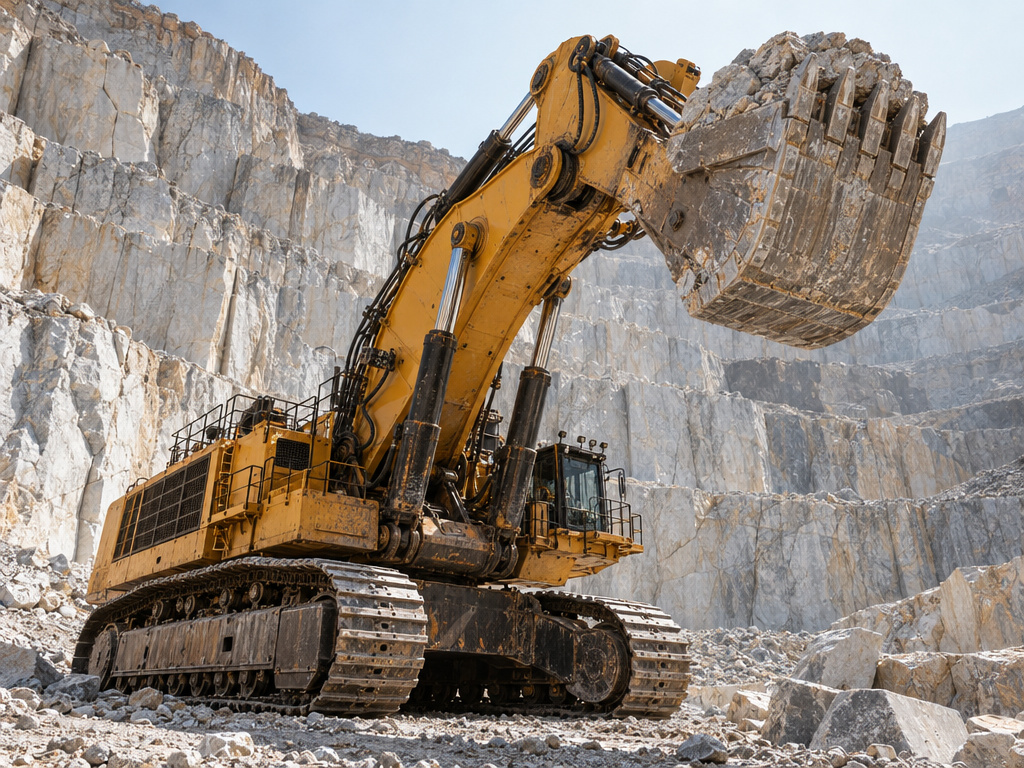
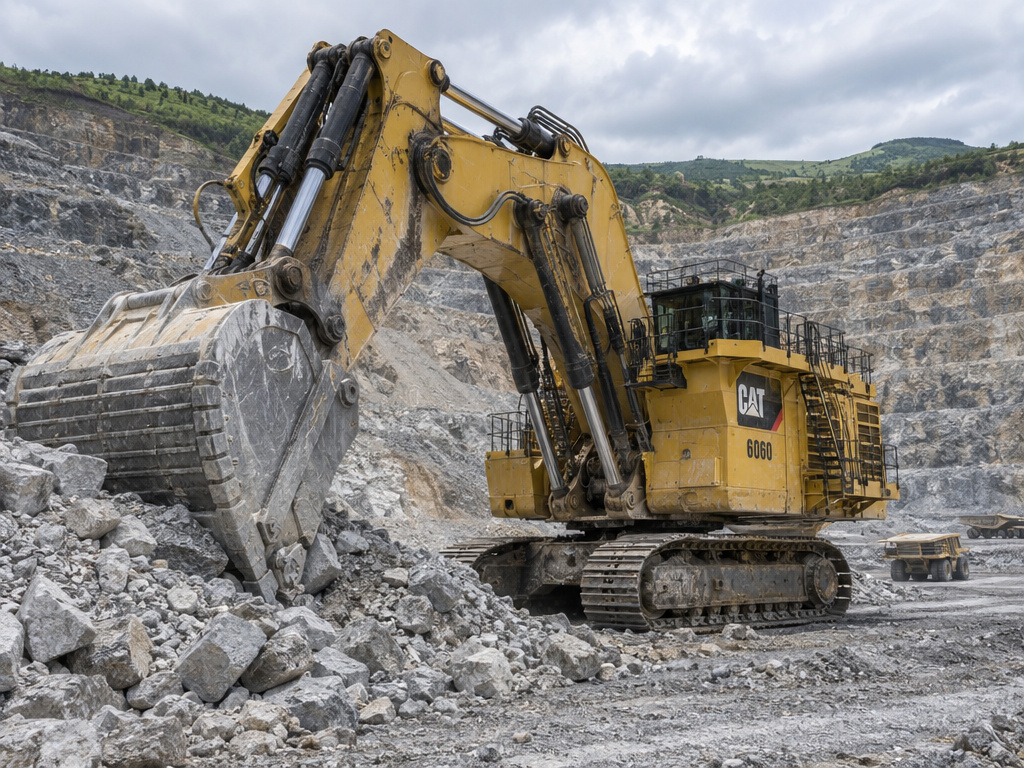
The Cat 6060 Hydraulic Mining Shovel features a twin-engine design that ensures high reliability; if one engine goes down, it can still limp to safety or operate at reduced capacity. This mechanical redundancy represents a shift in how Mining & Heavy Plant operations approach large-scale material movement. When a single machine can move thousands of tons of ore per hour, any unplanned stoppage creates a massive ripple effect across the entire site. Operators today focus on ultra-class machinery not just for its size, but as a mathematical requirement to lower the total cost per ton moved.
Scaling efficiencies in these environments depends on the strategic deployment of massive machinery supported by advanced automation and predictive maintenance. By using larger, more durable equipment, a site can reduce the total number of active units, which simplifies traffic management and lowers the overall headcount required for maintenance. The goal is a continuous, high-volume flow of material from the pit to the processing plant with as few interruptions as possible. This approach turns heavy machinery into a predictable financial asset rather than a variable operational burden.
Modern industrial sites distinguish between standard aggregate production and the rigorous demands of hard-rock mining. While a local quarry might use mid-sized excavators, a global mining operation requires “ultra-class” assets from industry leaders like Caterpillar, Komatsu, and Metso. These machines are engineered to run twenty-four hours a day in abrasive conditions that would destroy standard construction equipment in weeks. The financial logic is dead simple: higher initial capital costs for premium machinery lead to significantly lower long-term expenses through better fuel efficiency and longer component life cycles.
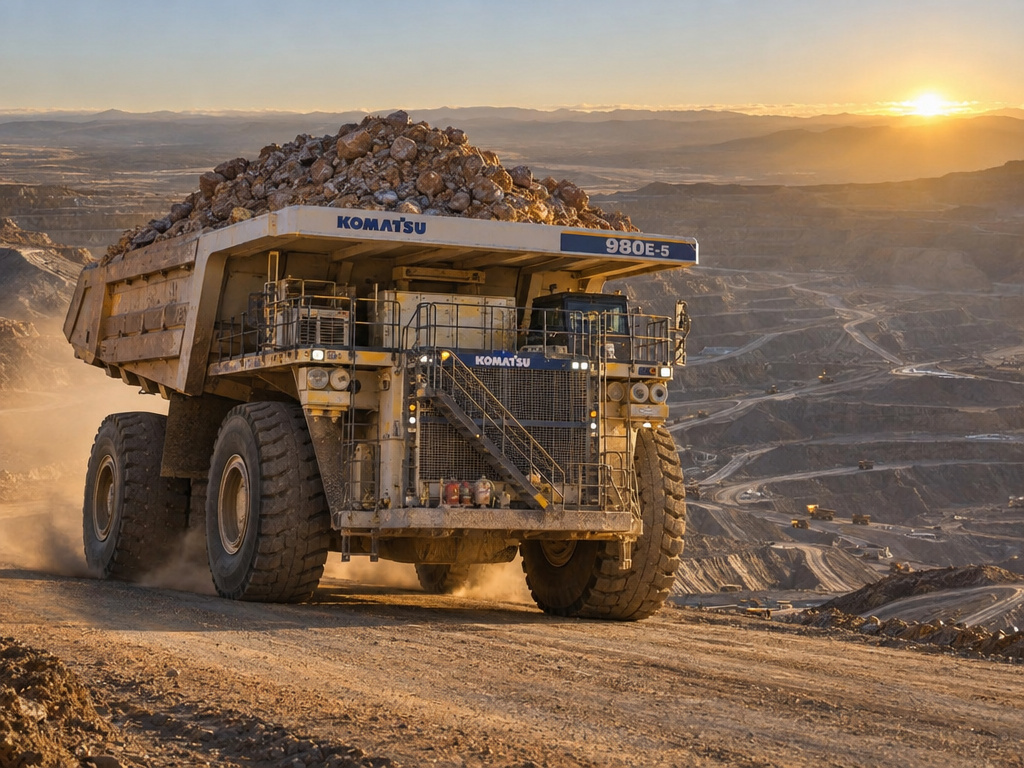
87% of operators report that integrating autonomous systems improves safety and consistency. This transition toward driverless fleets and remote monitoring allows heavy plant managers to track every movement of a machine in real-time. For example, the Komatsu 980E-5 Electric Drive Truck uses the Komatsu Autonomous Haulage System (AHS) to navigate complex zones without human intervention. This level of control ensures that trucks are always positioned perfectly for the shovel, reducing idle time and maximizing the volume of rock moved during every shift.
Efficiency also extends into the processing phase, where primary gyratory crushers handle the initial breakdown of massive boulders. The Metso Superior MKIII Gyratory Crusher, for instance, utilizes a heavy-duty, one-piece main shaft structure to prevent structural fatigue under persistent load. These machines act as the heartbeat of the mine, and their health is monitored through automated setting technologies that adjust for wear. By matching the capacity of the loading fleet with the throughput of the crushing plant, an operation avoids bottlenecks and keeps the cost-per-ton at its lowest possible point.
- The impact of ultra-class hydraulic shovels on ore body extraction.
- How electric drive haul trucks reduce mechanical wear and fluid dependency.
- The role of primary gyratory crushers in high-capacity material processing.
- Strategies for predictive asset condition monitoring and component rebuilding.
- The economic shift toward autonomous mining fleet systems.
This article examines the engineering behind these massive machines and the maintenance strategies that keep them running. It explores how structural durability and smart technology work together to create a more profitable operation. From the hydraulic circuits of a shovel to the liner dynamics of a crusher, every component plays a role in the broader goal of industrial efficiency.
Ultra-class loading is the process of using massive hydraulic shovels to extract and move high volumes of fragmented rock from the face of an ore body into haulage units. In the demanding environment of mining & heavy plant operations, these machines must withstand extreme mechanical stress while maintaining a continuous production cycle to ensure downstream processing remains profitable. To achieve this, technical editors observe that manufacturers like Caterpillar now integrate advanced oil filtration systems into their hydraulic circuits to reduce the frequency of fluid changes and protect internal components from wear.
This focus on structural durability and fluid cleanliness allows operators to maximize the working life of the equipment, preventing the catastrophic mechanical failures that often occur when smaller, less robust machinery is pushed beyond its engineering limits.
Maximizing the volume of material moved during the first few seconds of the extraction process determines the economic trajectory of the entire mining cycle. Ultra-class hydraulic shovels achieve peak efficiency by maximizing load capacity per pass, which directly lowers the initial costs of material handling at the mine face. By filling a massive haul truck in just three to four swings, these machines reduce the idle time of the transport fleet and ensure a steady stream of ore moves toward the processing plant.
The engineering of these machines focuses on the ability to penetrate dense, blasted rock and maintain a high fill factor-the ratio of actual material in the bucket compared to its theoretical capacity. Operators rely on the sheer breakout force of the hydraulic cylinders to shear through the muck pile without stalling the machine. This aggressive loading style requires a power system that can handle sudden, massive spikes in energy demand while maintaining the cooling necessary for continuous 24-hour operation.
Reliability is often a trade-off for scale, but the design of the Cat 6060 Hydraulic Mining Shovel addresses this through a twin-engine design. This configuration provides a critical safety net for high-production environments where a stationary shovel can halt the entire pit’s progress. If one engine suffers a mechanical failure, the machine does not become a dead weight on the bench; instead, it can continue to operate at a reduced capacity or use its remaining power to limp to a safe maintenance bay away from the active face.
Safeguarding the Hydraulic Heart
The longevity of these “iron giants” depends heavily on the purity of the fluids pulsing through their veins. Advanced oil filtration systems are integrated into the machinery to reduce the frequency of routine fluid changes, which are both costly and time-consuming for assets of this size. These systems work by removing microscopic contaminants that would otherwise cause internal scouring in the high-pressure pumps, effectively safeguarding the heavy hydraulic circuits from premature wear.
Beyond mechanical hardware, these shovels are now digital hubs that communicate with the broader mine ecosystem. They integrate with Caterpillar MineStar Solutions to provide real-time machine tracking and data on bucket weights, cycle times, and fuel burn. This connectivity allows supervisors to see exactly how the shovel is performing against its production targets, ensuring that the loading rate stays perfectly synchronized with the downstream crushing capacity. They can even be configured for autonomous operation, removing the operator from the high-vibration environment of the cab.
Efficiency in the pit is also a matter of maintaining the machine’s internal health without constant human intervention. The use of automated lubrication systems and self-diagnostic sensors allows the Mining & Heavy Plant team to monitor the shovel’s vitals from a remote office. This proactive approach prevents small issues, like a minor pressure drop, from escalating into a catastrophic failure that could take the shovel out of the production line for weeks.
To maintain peak performance throughout a multi-shift day, fleet managers focus on several key operational factors:
- Bucket Edge Protection: Using specialized wear shrouds to maintain a sharp digging profile, which reduces the energy required to penetrate the rock.
- Swing Angle Optimization: Positioning the shovel so that the rotation between the face and the truck is less than 90 degrees, shaving seconds off every cycle.
- Fluid Analysis: Utilizing the onboard filtration data to extend service intervals based on actual oil condition rather than fixed hourly schedules.
- Engine Load Balancing: Managing the power output of the twin engines to ensure even wear and maximize the time between major overhauls.
The ability of a shovel to maintain these high-speed cycles is not just about the engines or the hydraulics; it is about how the machine handles the violent feedback from the rock. Every time the bucket hits a stubborn section of the ore body, the energy vibrates back through the boom and into the main chassis. This constant bombardment tests the very limits of the steel, requiring a level of structural resilience that defines the difference between a standard excavator and a true ultra-class shovel.
When these machines are pushed to their limit, the stress on the pins and joints becomes the primary factor in determining the machine’s ultimate lifespan. Engineers must account for these repetitive, high-impact forces that occur every time the bucket meets an unyielding blast wall, leading to a need for specialized welding and reinforcement techniques in the frame design.
Choosing between traditional cable shovels and modern hydraulic systems often comes down to how a mine manages mechanical stress. While cable units rely on gravity and winch tension, modern operations favor dynamic hydraulic responsiveness over traditional mechanical cable systems to handle the erratic resistance of a blast wall. This shift allows the machine to exert precise, high-pressure force exactly where the rock is toughest. The structural integrity of ultra-class shovels is paramount for enduring extreme operational stress, directly influencing equipment lifespan and uptime.
Engineering these machines requires a deep understanding of materials science to prevent the steel from cracking under the weight of its own power. A shovel does not just lift; it fights against unyielding rock faces that send violent vibrations back through the entire assembly. Engineers must design frames, pins, and boom designs to endure repetitive high-impact forces that would snap lesser equipment. Without this focus on structural resilience, the massive investment in a loading fleet can quickly evaporate through unplanned welding repairs and frame fatigue.
The sheer scale of these components is difficult to grasp without seeing them in the field. A single pin in the main boom assembly can weigh as much as a small car, yet it must rotate with millimetre precision thousands of times a day. If these joints fail, the entire production chain stops, leaving the haulage fleet idling and driving up the cost of every ton of ore moved. High-quality Mining & Heavy Plant operations treat these structural elements as the foundation of their long-term financial strategy.
Engineering for Impact Resistance
The boom of an ultra-class shovel acts as a massive shock absorber for the entire machine. In a typical shift, the reinforced boom structure of a large hydraulic shovel is designed to absorb thousands of tons of impact daily without fatigue. This is achieved through complex internal baffling and the use of high-strength alloy steels that possess enough elasticity to flex slightly under load rather than snapping. It is a delicate balance between being rigid enough to dig and flexible enough to survive.
Stress distribution is the primary goal of the design team. Instead of allowing energy to concentrate at a single weld point, the geometry of the boom and stick is carved to flow that energy back into the main chassis. This prevents the “paperclip effect,” where repeated bending at one spot leads to a clean break. Many manufacturers now use advanced computer modeling to simulate years of digging in just a few hours, identifying potential weak spots before the first plate of steel is ever cut in the factory.
Heat management also plays a surprising role in structural durability. As hydraulic fluid moves at high speeds to provide breakout force, the friction generates immense heat that can transfer to the pins and bushings. If these areas overheat, the metal can soften or expand, leading to accelerated wear. Modern designs often include specialized cooling paths and high-tolerance seals to keep the structural “skeleton” of the machine at a stable temperature, even in extreme desert or arctic environments.
Longevity Through Component Geometry
The revolving frame serves as the literal backbone where the upper works meet the undercarriage. This area must withstand massive torsional forces-the twisting motion that occurs when a shovel digs at an angle or swings a full bucket across uneven ground. Unlike smaller construction equipment, ultra-class frames are often fabricated from massive castings rather than simple welded plates. This reduces the number of seams, which are naturally the most common points of failure in heavy machinery.
It is common to see these machines operating in environments where the ground itself is shifting. This puts immense pressure on the track frames and the carbody. To combat this, engineers utilize a “box section” design for the lower works, providing a rigid platform that prevents the machine from twisting out of alignment. This stability is what allows the hydraulic systems to provide consistent pressure without losing energy to structural “give.”
87% of operators report that integrating autonomous systems improves safety. This statistic is relevant to structural health because computers operate with a level of smoothness that human hands cannot always replicate. By eliminating the “shocks” caused by aggressive or erratic joystick movements, autonomous controls can actually extend the fatigue life of the steel components. This predictability in movement ensures that the stress applied to the pins and booms stays within the engineered safety limits.
As these loading units break the ore body, they set the pace for the rest of the mine. The material they move must then be carried by haulage solutions that are equally robust. For instance, the Komatsu 980E-5 Electric Drive Truck features an advanced structural frame designed to easily absorb high-impact shock loads from mining shovels. This synergy between the loader and the hauler ensures that the impact of a 100-ton bucket drop doesn’t compromise the truck’s chassis over time.
Electric drive haul trucks replace traditional mechanical transmissions with high-torque electric drivetrains to eliminate the frequent wear and fluid dependencies associated with gear-based systems. By adopting this technology, heavy plant operations significantly reduce the mechanical strain on internal components while improving the long-term reliability of the fleet. The Komatsu 980E-5 Electric Drive Truck, for example, utilizes an advanced structural frame specifically engineered to absorb the high-impact shock loads delivered by large-scale mining shovels.
This shift toward AC electric power ensures that massive haulage units maintain consistent performance during ascent and descent, ultimately lowering the total maintenance burden for site engineers and fleet superintendents who manage these industrial-scale assets in demanding environments.
The Electric Advantage
Traditional mechanical transmissions face a hard physical limit when applied to the scale of ultra-class haulage. In these environments, the sheer mass of the vehicle and its payload creates immense friction and heat within conventional gearboxes, leading to frequent component fatigue. By replacing these complex mechanical linkages with a diesel-electric configuration, operators can bypass the most common failure points found in heavy planetary gear sets and torque converters. This shift represents a fundamental change in how Mining & Heavy Plant equipment manages power delivery under extreme loads.
AC electric drive systems provide significantly higher torque efficiency and lower maintenance requirements than mechanical alternatives. This is achieved by using a diesel engine to turn a large alternator, which sends electrical energy to wheel motors. Because there is no physical connection between the engine and the wheels through a transmission, the truck avoids the “shift shock” that often stresses the chassis during gear changes on steep inclines. The result is a smoother application of power that preserves the structural life of the entire machine while ensuring more consistent travel speeds during the haul cycle.
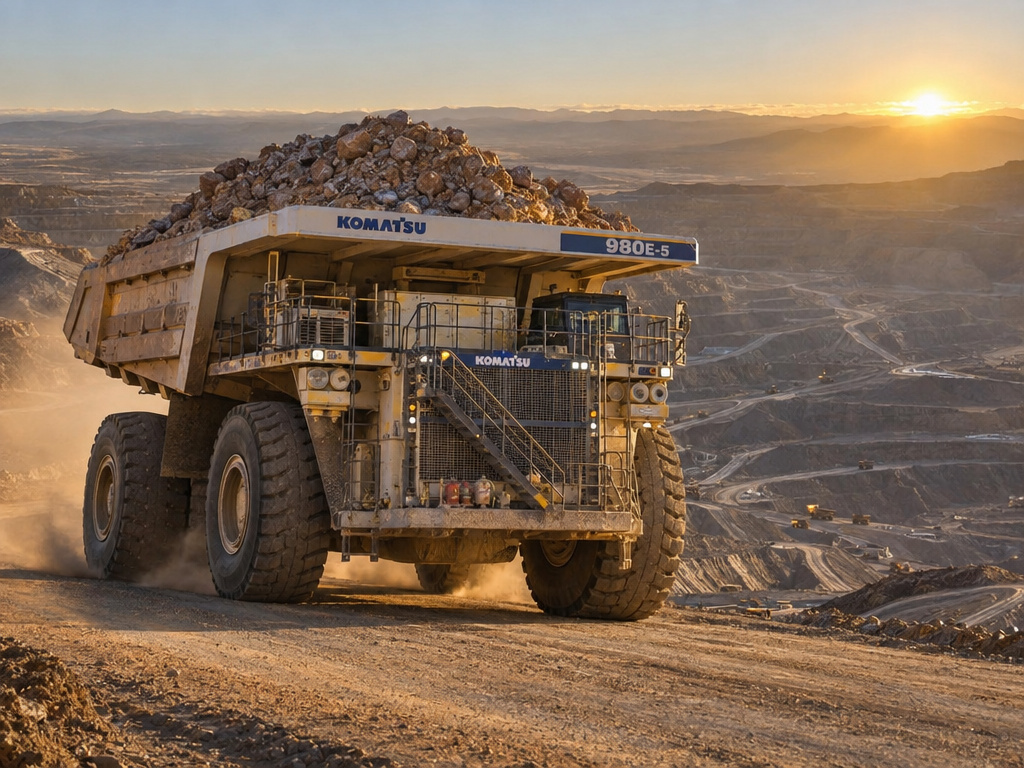
The Komatsu 980E-5 serves as a primary example of this technology in action, particularly when operating in deep pit mines where the demands on the drivetrain are highest. This model is powered by a high-torque electric drivetrain that reduces standard mechanical transmission wear and fluid dependency. By eliminating the need for transmission oil and the associated cooling systems, the machine becomes simpler to maintain. This reduction in fluid reliance is not just a matter of convenience; it directly lowers the environmental risk and the logistical burden of transporting thousands of liters of oil to remote mine sites.
Beyond the propulsion benefits, the integration of electric motors allows for more sophisticated structural protection. The Komatsu 980E-5 features an advanced structural frame designed to easily absorb high-impact shock loads from mining shovels. While the electric motors handle the movement, this specialized frame ensures that the energy from a 100-ton bucket drop doesn’t cause immediate stress fractures. It is a symbiotic relationship where the drivetrain provides the steady movement and the frame provides the necessary impact absorption to keep the asset in the dirt for longer durations.
The transition to AC electric drive offers several distinct operational improvements for large-scale fleets:
- Reduced Mechanical Complexity: The removal of the transmission, torque converter, and drive shaft eliminates hundreds of moving parts that are prone to failure.
- Dynamic Retarding: Electric motors act as generators during downhill travel, providing powerful braking force without wearing out the service brakes.
- Higher Availability: Fewer oil changes and gearbox inspections mean the truck spends more time on the haul road and less time in the workshop.
- Simplified Cooling: Managing heat in an electric motor is often more efficient than cooling a massive mechanical transmission under full load.
I have observed that the decision to move toward electric drive often comes down to the total cost of ownership over a ten-year period. While the initial price tag of an electric-drive hauler might be higher, the savings in lubricants and the extended intervals between major overhauls usually make up the difference within the first few years of operation. It is quite a contrast to see a machine of this scale move with the precision of a much smaller vehicle, all because it isn’t fighting the friction of a traditional gearbox.
Reliability is the most valuable currency in a high-volume mine. If a single truck in a fleet of thirty experiences a transmission failure, the entire production schedule for that shift can be thrown into chaos. The AC electric revolution addresses this by providing a drivetrain that is essentially “solid state” in its power delivery. There are no gears to grind and no clutches to slip, which means the performance on day one is virtually identical to the performance on day one thousand.
The 980E-5 demonstrates its ability to carry massive payloads without the common wear issues of conventional gearboxes. This is especially evident during the “stall” phase of a climb, where a mechanical truck might struggle to find the right gear, whereas an electric motor simply provides maximum torque from zero RPM. This capability allows the truck to maintain momentum on the ramp, which is the most energy-intensive part of the cycle.
Maintenance teams also benefit from the diagnostic capabilities inherent in electric systems. Because the power flow is digital, every amp and volt can be tracked in real-time, allowing for a level of precision that mechanical gauges simply cannot match. When an electric drive truck enters a service bay, technicians can often identify a potential issue in the motor windings or the inverter cabinet before it leads to a physical breakdown on the haul road. The ability to monitor these electrical signatures ensures that the Mining & Heavy Plant assets remain productive for the maximum number of hours possible.
The choice of propulsion system ultimately dictates the rhythm of the entire mine site. As these trucks move material from the pit floor to the surface, their ability to handle the changing terrain determines the efficiency of the downstream processing. The electric drive’s ability to maintain high speeds on grade ensures that the primary crusher is never left waiting for a load, keeping the flow of ore steady and predictable.
Deciding how to manage the return trip from the bottom of a deep pit is often more complex than the initial descent. While the climb out requires raw power, the trip back down with a full load demands a sophisticated strategy for energy management. Electric drive haul trucks handle deep pit climbs under load by utilizing the immediate response of wheel motors, but the real engineering triumph lies in how they manage the massive kinetic energy generated during the descent.
Regenerative braking serves as the primary mechanism for safe descent on steep grades, functioning as a non-mechanical retarder that preserves the life of the vehicle’s service brakes. When a loaded hauler moves down a ramp, the electric motors switch roles to act as generators. This process creates resistance that slows the truck while converting the energy of the descent into electricity.
In many configurations, this power is sent to a large grid of resistors-essentially a massive toaster-where it is safely dissipated as heat. This allows the vehicle to maintain a steady speed without the risk of brake fade or mechanical overheating.
The ability to maintain consistent cycle times on varied terrain is a direct result of this precise speed control. Unlike mechanical trucks that may need to downshift or hunt for the right gear on a changing grade, an electric drive system provides a seamless range of retarding force. This means a fleet can maintain a tighter “rhythm” on the haul road, as every truck can be programmed to follow the same speed profile regardless of minor changes in the ramp’s incline. It is a level of predictability that traditional friction-based systems simply cannot match over a ten-hour shift.
Thermal Management and Grade Performance
Managing thermal loads is the hidden hurdle in high-production haulage. When a truck is retarding, the amount of heat generated in the resistor grids is immense. Cooling fans must work in tandem with the drivetrain to ensure these components stay within safe operating temperatures.
If the system gets too hot, the truck may be forced to reduce its speed, which immediately increases the cost-per-ton by slowing down the entire haulage string. Modern Mining & Heavy Plant designs prioritize high-capacity cooling systems to ensure that the retarding performance remains available even in the hottest summer months.
Speed on the ramp is not just about the engine’s horsepower; it is about how effectively that power reaches the ground. Because electric motors can be controlled with extreme precision, they minimize wheel slip during the heavy torque demands of a pit climb. This keeps the truck moving at its optimal speed without wasting energy or damaging the road surface. I have seen operations where switching to electric drive smoothed out the “washboard” effect on ramps, simply because the power delivery was more consistent than a shifting mechanical transmission.
This consistency has a significant impact on the lifespan of expensive consumables. While the motors handle the bulk of the slowing force, the physical tires are still the interface between the machine and the rock. Excessive heat from friction brakes can sometimes transfer through the wheel hubs to the tires, but regenerative braking keeps that heat away from the rubber. Operators must still monitor tire pressure and temperature closely, as the high speeds maintained during retarding put unique stresses on the internal structure of the tire casing.
The efficiency of the climb is also measured by the stability of the power draw. A diesel engine paired with an alternator can run at its most efficient RPM range while the electric motors handle the variable speed requirements of the ramp. This decoupling allows for better fuel economy compared to mechanical systems that must rev through every gear. It also means that as the pit gets deeper and the ramps get longer, the electric truck does not suffer the same exponential increase in mechanical wear-and-tear that plagues traditional gearboxes.
Safety is the final, and perhaps most important, piece of the retarding puzzle. In the event of an engine failure, the electric retarding system can often continue to function using the residual energy or battery backups, providing a critical layer of redundancy. This gives the operator much more control during an emergency than a system that relies solely on a spinning drivetrain. It is a fail-safe approach that is becoming the standard for deep-pit mines where a runaway truck is the ultimate nightmare scenario.
The integration of these systems into a broader fleet management strategy allows for real-time adjustments to haul road conditions. If a specific section of the ramp is becoming slippery or degraded, the retarding limits can be adjusted across the entire fleet via software. This ensures that the descent remains within the “envelope” of safety and efficiency without requiring manual intervention from every driver. It turns a fleet of individual machines into a synchronized system of material movement.
Ultimately, the transition to electric retarding is about more than just saving brake pads. It is about creating a predictable, repeatable cycle that can be measured in seconds and cents. By removing the variability of manual braking and gear selection, mine sites can forecast their production targets with much higher accuracy. The truck becomes a reliable conveyor belt on wheels, moving millions of tons of ore with a level of mechanical discipline that was previously impossible.
As the industry moves toward deeper deposits, the demands on these systems will only increase. The physics of moving 300-plus tons up and down a 10% grade are unforgiving. Engineering solutions that prioritize thermal stability and regenerative efficiency are no longer optional for those looking to maintain a competitive cost-per-ton. The focus remains on keeping the wheels turning and the ore moving, shift after shift, without the interruptions of mechanical failure.
The wear on the resistor grids is significantly lower than the wear on traditional brake discs, leading to longer intervals between major overhauls. This reliability ensures that the trucks spend more time on the haul road and less time in the workshop. In the high-stakes environment of ultra-class mining, the ability to stop is just as valuable as the ability to go.
Primary high-capacity plants serve as the foundational entry point for material processing in large-scale mining and heavy plant operations, utilizing massive stationary crushers to reduce run-of-mine ore into manageable sizes. These installations represent a critical financial and engineering investment where the choice of machinery dictates the maximum throughput potential for the entire site. Operators often select the Metso Superior MKIII Gyratory Crusher for these roles because its automated setting technologies dynamically adjust internal parameters as the crushing mantles wear down over time.
This mechanical adaptability ensures that the plant maintains a consistent output size without requiring frequent manual interventions or unscheduled downtime. By integrating such advanced primary units, a facility secures a reliable flow of material that prevents bottlenecks in downstream processing circuits, directly impacting the long-term cost-per-ton metrics of the mineral extraction process.
Gyratory Power
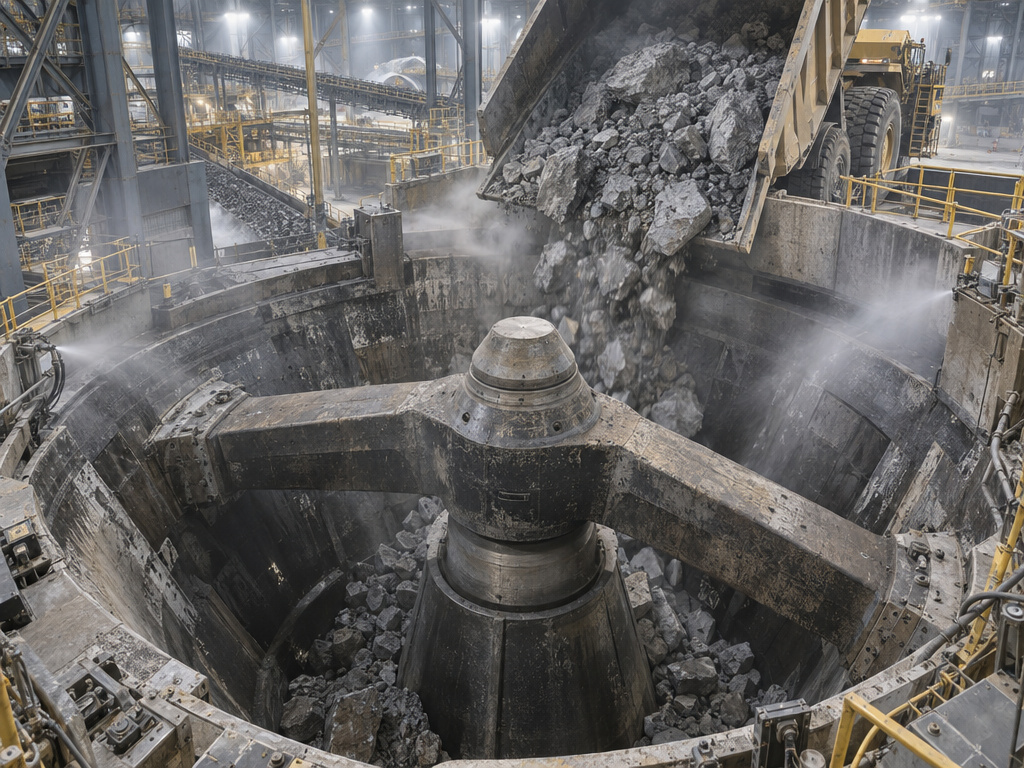
One hundred percent of the material extracted from a deep pit eventually hits a hard physical limit: the throat of the primary crusher. While haulage units can be added to a fleet to increase capacity, the primary crusher remains a fixed point of failure that must handle everything the mine throws at it. The Metso Superior MKIII Gyratory Crusher serves as the industry standard for this role, specifically engineered to accept unseparated run-of-mine material directly from ultra-class haulers without the need for preliminary screening or sizing. This capability is the cornerstone of high-volume processing, ensuring that the rhythm established by the shovels and trucks isn’t lost to a bottleneck at the plant entrance.
In my experience, the most impressive sight in a primary station is a 400-ton truck dumping its entire load of blasted rock into the crusher’s hopper in one continuous motion. Most smaller crushing systems would choke under the weight or the size of the larger boulders, requiring a feeder to meter the flow. However, the MKIII is designed for direct-feed operations.
By allowing the machine to be “buried” under the rock, the system uses the weight of the material itself to help force ore into the crushing chamber. This keeps the plant moving at peak capacity, even when the ore contains massive, unclassified chunks that would stall a lesser machine.
The engineering required to survive this level of punishment is staggering. Unlike smaller secondary units, a primary gyratory crusher must act as a blunt-force instrument, breaking down the toughest basalt or granite while supporting the weight of a small building. It isn’t just about the crushing force; it’s about the machine’s ability to remain rigid under the fluctuating stresses of varying rock hardness. If the internal components flex even slightly under load, the resulting friction can lead to rapid heat buildup and eventual structural failure.
Structural Integrity and the Main Shaft
The primary reason the Metso Superior MKIII can survive decades of constant impact is its one-piece main shaft structure. In many older designs, the main shaft was a multi-part assembly that relied on heavy-duty bolts or interference fits to stay together. Under the persistent load of a high-capacity mine, those joints become points of weakness where catastrophic structural fatigue can begin. By using a single, heavy-duty forging, the MKIII eliminates these failure points, allowing the machine to absorb the massive energy of a 100-ton boulder being shattered without vibrating itself to pieces.
I would argue that the main shaft is the single most important component in the entire processing chain. If a haul truck breaks down, you lose one-thirtieth of your production; if the crusher’s main shaft fails, the entire mine stops. This is why the move toward a one-piece design was so significant for the industry.
It provides a level of mechanical reliability that allows engineers to push the feed rates higher than ever before. This design choice directly supports the long-term financial goal of lowering the cost of every ton processed by reducing the frequency of major structural overhauls.
Beyond the physical steel, the way these machines handle wear is equally vital. As the internal crushing mantles-the heavy metal “teeth” of the machine-grind against the ore, they naturally wear down, which would normally change the size of the crushed rock and slow down the process. The MKIII addresses this by employing smart, automated setting technologies.
These systems dynamically adjust the internal parameters of the crusher as the mantles wear, ensuring that the output remains consistent without requiring a technician to manually recalibrate the machine every few shifts. This automation keeps the gap between the crushing surfaces at the perfect width for maximum throughput.
Optimizing Throughput and Maintenance
Maintaining a steady feed rate is a delicate balance between the speed of the haul fleet and the physical capacity of the crusher’s mantle. If the feed is too slow, the machine runs empty and wastes energy; if it is too fast or the material is too large, the crusher can “bridge,” where rocks jam across the opening and stop all flow. The MKIII’s wide-mouth design is specifically tailored to prevent this, allowing it to swallow the largest rocks that an ultra-class shovel can load. This creates a seamless transition from the mobile fleet to the fixed plant.
To keep these machines running at their theoretical maximums, operators rely on structured support programs rather than reactive repairs. The Metso Life Cycle Services (LCS) program is a primary example of this shift toward proactive management. By using data from the crusher’s own sensors, maintenance teams can predict when a mantle will need replacement weeks before it actually fails. This allows the mine to schedule the shutdown during a natural lull in production or when other parts of the plant are already down for service.
- Direct-feed capability allows trucks to dump directly into the crusher, eliminating the need for intermediate feeders.
- Automated compensation for mantle wear ensures consistent material sizing throughout the life of the wear parts.
- High-torque starts enable the machine to begin crushing even if the chamber is full of ore after an emergency stop.
- Integrated lubrication systems monitor oil temperature and flow to protect the massive eccentric bearings.
- Proactive monitoring through the LCS program reduces the risk of unplanned downtime in the primary circuit.
The sheer scale of these operations means that even a 1% increase in crusher uptime can result in thousands of additional tons processed every month. When you consider that the Metso Superior MKIII is often the heart of a multi-billion dollar operation, the value of its structural durability becomes clear. It is not just a piece of equipment; it is the anchor for the entire site’s productivity. The ability to handle unseparated ore means the mine can spend less time on secondary blasting and more time on moving material.
As the rock leaves the primary crusher, it is smaller and more manageable, but the challenge of moving it doesn’t end there. The material must now be transported through a series of surge hoppers and conveyors that are designed to handle a continuous, high-speed stream of rock. This transition from the crushing chamber to the downstream discharge points requires a different set of management techniques to ensure the volume doesn’t overwhelm the secondary processing stages.
The choke feeding principle dictates that a crusher operates most efficiently when its crushing chamber is kept completely full of material. By maintaining a constant head of rock above the crushing zone, the machine uses the weight of the material itself to force ore downward, ensuring that every movement of the internal components results in maximum breakage. In high-volume environments, managing continuous surge hoppers and high-volume structural discharge points beneath the crusher base is crucial to preventing the entire system from grinding to a halt.
Effective material management starts with the surge hopper, which acts as a buffer between the raw delivery from haulers and the sensitive secondary stages of the plant. A well-engineered hopper is not just a container; it is a precision-angled funnel designed to maintain flow through gravity while resisting the abrasive friction of thousands of tons of ore. If the hopper angles are too shallow, material will cling to the sides, leading to bridging-a dangerous condition where rocks wedge together to form a stable arch that blocks all downward movement. To combat this, engineers specify steep, calculated valley angles and smooth liners that encourage a steady, downward slide toward the discharge gate.
The discharge gate mechanisms located at the bottom of these structures must handle immense pressure. These gates regulate the speed at which crushed rock exits the primary stage and enters the conveyor network. In my experience, the most common bottleneck in a plant isn’t the crusher’s motor speed, but rather a poorly calibrated discharge gate that cannot keep up with the machine’s output. When these gates fail to clear material fast enough, the crushed rock backs up into the crusher base, causing high-pressure spikes and potential mechanical damage.
87% of operators report that integrating autonomous systems improves safety. This statistic is particularly relevant when managing the flow beneath the crusher. Automated sensors can now detect the exact level of material in a surge hopper, adjusting the discharge rate in real-time to match the intake. This prevents the “empty-to-overflowing” cycle that often plagues manually operated plants, which puts unnecessary stress on the structural discharge points. A steady, predictable flow is always preferable to erratic bursts of high-volume material.
Material flow dynamics within the hopper are also influenced by the size and shape of the rocks being processed. Large, jagged boulders can easily jam if the hopper’s throat is not wide enough to accommodate the largest possible piece of run-of-mine material. I would always recommend over-specifying the width of the discharge opening; it is far easier to restrict flow with a gate than it is to clear a jam caused by an opening that is too narrow for a stray oversized rock. A surge hopper designed with specific angles and discharge mechanisms to prevent large rocks from jamming ensures a steady stream of material into the secondary processing stage.
The structural integrity of the area beneath the crusher is often overlooked during initial planning. The discharge point must be built to withstand the constant “thumping” of heavy rocks falling from the crushing chamber. Without heavy-duty impact beds or reinforced liners, the steel structure will suffer from metal fatigue and abrasive wear. Over time, the constant friction of ore moving at high speeds can thin out even the thickest steel plates, making the selection of high-grade wear alloys a necessity for the longevity of the plant.
Maintaining high throughput requires a delicate balance between the intake speed and the discharge capacity. If the discharge conveyor moves too slowly, the surge hopper fills up, and the crusher must be paused-a costly interruption that ripples through the entire mine’s logistics chain. Conversely, if the discharge is too fast, the crusher cannot maintain a “choke” condition, leading to inefficient crushing and increased wear on the internal mantles. The goal is a seamless, liquid-like movement of rock from the truck bed to the conveyor belt.
Preventing blockages is as much about chemistry and physics as it is about mechanical force. Moisture content in the ore can turn fine dust into a sticky paste that “slugs” the hopper, effectively gluing larger rocks together. In these environments, vibratory feeders or air cannons are often installed on the hopper walls to break the surface tension and keep the material moving. These small additions are often the difference between a plant that runs 24/7 and one that requires frequent manual intervention to clear clogs.
Ultimately, the efficiency of the primary crushing stage is measured by its ability to stay out of its own way. By focusing on the engineering of the discharge points and surge hoppers, a mine ensures that its most expensive assets are never waiting for a clear path. The constant friction and impact within these hoppers necessitate a rigorous inspection schedule for the wear-resistant liners that protect the underlying steel.
Mega-processing involves the deployment of primary mining gyratory crushers to manage the initial reduction of massive volumes of run-of-mine material within Mining & Heavy Plant operations. These high-capacity systems are essential for maintaining a continuous flow of ore, as a single structural failure at this stage can halt the entire downstream production line. The Metso Superior MKIII Gyratory Crusher addresses this risk by utilizing a heavy-duty, one-piece main shaft structure that prevents catastrophic fatigue during persistent loading cycles.
For the reader, the integration of automated setting technologies is the most decisive advancement, as these systems dynamically adjust parameters to compensate for mantle wear. This proactive mechanical adjustment ensures that the plant maintains optimal throughput and consistent product sizing without requiring manual intervention or frequent operational shutdowns.
In 2026, the cost of unplanned downtime in primary processing can exceed the value of the ore itself, making the science of sacrificial components a top priority for asset managers. Liner dynamics refers to the complex interaction between the internal protective plates of a crusher and the abrasive run-of-mine material they process. Selecting appropriate wear alloys capable of handling millions of tons before requiring full shutdowns is key to maintaining the rhythm of a high-output site.
Strategic selection of wear alloys for crusher liners is a critical factor in extending operational life and minimizing costly downtime in primary processing plants. Without the right metallurgy, the internal surfaces of a primary gyratory crusher would erode in weeks rather than months. Engineers must balance the hardness of the liner against its ability to absorb impact without cracking. This decision impacts not just the frequency of maintenance, but the total cost-per-ton of the entire operation.
- Work-Hardening Manganese: Ideal for high-impact environments where the material actually becomes harder as it is struck.
- High-Chromium White Irons: Best suited for extreme abrasion where impact levels are lower but the rock is exceptionally sharp.
- Alloy Steel Variations: Used for specific structural components that require a blend of toughness and weldability for field repairs.
- Composite Inserts: Ceramic or specialized metal inserts embedded in a tougher matrix to extend the life of high-wear zones.
Manganese steel liners are the industry standard for primary gyratory crushers due to their unique work-hardening properties. When the crushing mantle strikes hard rock, the molecular structure of the manganese alloy changes, creating a “skin” that is significantly harder than the original cast metal. This allows the liner to withstand extreme abrasion from hard rock over extended periods while maintaining a ductile core that resists snapping under heavy shock loads. It is a self-renewing defense mechanism that keeps the plant running through the most aggressive feed cycles.
Metallurgical Selection and Wear Patterns
The geography of the mine site often dictates the chemical composition of these wear parts. In regions with high silica content, a standard alloy might fail prematurely, necessitating a shift toward higher chromium levels. Operators use 3D laser scanning to track how these liners thin out over time.
By mapping the wear profile, they can predict exactly when the mantle or concave ring will reach its limit, allowing for a planned exchange rather than a reactive repair. This data-driven approach is a pillar of modern Mining & Heavy Plant management.
Scheduling liner replacements to minimize downtime requires a deep understanding of the material’s life cycle. Modern plants often synchronize these major overhauls with other heavy asset maintenance to ensure the entire circuit remains productive. Because a full liner change-out can take several days, even a 10% extension in liner life can result in thousands of tons of additional throughput annually. This focus on durability ensures that the primary crusher does not become the bottleneck of the extraction process.
Asset health monitoring has moved beyond simple visual inspections. Today, sensors embedded near the liner seats monitor vibration and temperature to detect if a liner has come loose or if the backing material has failed. These live diagnostic feeds allow the maintenance team to intervene before a loose liner causes catastrophic damage to the crusher’s internal housing. This proactive stance on component integrity is what separates profitable ultra-class operations from those plagued by mechanical failures.
The thickness of the liner also plays a role in the crushing geometry. As the metal wears away, the gap between the mantle and the concave increases, which can change the size of the crushed product. Advanced control systems compensate for this by adjusting the main shaft position, but eventually, the physical limit of the alloy is reached.
At this point, the worn liners are stripped out and recycled, often being melted down to create the next generation of wear-resistant castings. The efficiency of the primary stage is ultimately a battle against friction, won through superior material science.
Caterpillar MineStar Solutions provides complete machine tracking and autonomous operation capabilities, representing a fundamental shift in how heavy plant assets interact with the mine environment. This integration allows for a seamless flow of data between the loading face and the processing plant, ensuring that every movement is calculated for maximum efficiency. By removing the variability of human operation, these systems create a highly predictable logistics chain where cycle times are standardized and mechanical stress is strictly controlled. Autonomous trucking networks significantly enhance operational safety and predictability, driving efficiencies in large-scale mining logistics by ensuring that every vehicle adheres to a mathematically optimized path.
The transition toward driverless environments is not merely about replacing a person behind the wheel; it is about the total optimization of the Mining & Heavy Plant ecosystem. When a fleet operates without manual intervention, the sudden braking and aggressive acceleration that typically accelerate component wear are virtually eliminated. This level of control extends the life of expensive consumables and structural elements, as the onboard computers maintain the precise torque and speed required for the terrain. It is a methodical approach to hauling where the machine is never pushed beyond its engineered limits, yet never performs below its peak potential.
Safety remains the primary catalyst for adopting these high-tech solutions in deep-pit environments. By isolating human workers from the most hazardous zones of the mine, companies significantly reduce the risk of fatigue-related incidents and vehicle collisions. These systems use a combination of radar, LIDAR, and high-precision GPS to “see” the environment with a level of peripheral awareness that no human operator could match. The result is a work site where the movement of hundreds of tons of steel becomes a choreographed dance rather than a high-risk traffic management challenge.
Predictable Logistics and Fleet Orchestration
The Komatsu Autonomous Haulage System (AHS) allows a fleet of Komatsu 980E-5 trucks to operate autonomously, following optimized routes and maintaining safe distances without human intervention, even in adverse weather conditions. This capability is particularly vital during night shifts or in heavy fog where human visibility would be compromised, forcing a slowdown or a total halt in production. The AHS software manages the entire traffic flow, calculating the most efficient speeds to ensure that trucks arrive at the crusher or the shovel exactly when needed, eliminating the “queue and rush” pattern that plagues manual operations.
87% of operators report that integrating autonomous systems improves safety. This statistic highlights the industry’s recognition that removing the human element from the cab is the most effective way to mitigate risk in high-volume environments. Beyond safety, the data generated by these autonomous units provides a granular look at the health of the fleet. Because every truck is essentially a mobile sensor platform, the system can detect subtle changes in rolling resistance or engine performance that might indicate a developing haul road issue or a mechanical fault before it leads to a breakdown.
Integrating these systems with existing mine infrastructure requires a robust communication network, often utilizing private LTE or 5G to handle the massive data throughput. This connectivity allows the central control room to monitor the exact position and status of every asset in real-time. If a shovel moves to a new section of the blast wall, the autonomous pathing software automatically updates the haul routes for the entire fleet. This agility ensures that the primary processing plant receives a steady, uninterrupted supply of material, which is the heartbeat of a profitable operation.
The financial implications of this predictability are profound. In a traditional setup, the difference between the most efficient driver and the least efficient can vary by as much as 20% in fuel consumption and cycle time. Autonomous systems bridge this gap by enforcing the “best-practice” operating profile across every vehicle, every hour of the day.
Fuel savings alone can reach significant figures over a fiscal year, but the real value lies in the reduction of unscheduled maintenance. When a truck never misses a gear and never takes a corner too fast, the structural integrity of the chassis is preserved far longer than in a manual fleet.
Machine health is further protected by the system’s ability to respond to environmental changes instantly. For example, if a haul road becomes slippery due to unexpected rain, the autonomous system can adjust the speed and braking distance of every truck simultaneously. There is no delay in communication and no risk of a driver misjudging the traction. This level of precision is what allows modern Mining & Heavy Plant operations to maintain high throughput rates in conditions that would have previously required a complete operational stand-down.
The synergy between loading and hauling is also perfected through these digital platforms. A shovel equipped with MineStar can communicate directly with the approaching truck, signaling exactly where to spot for the most efficient loading angle. This reduces the time spent maneuvering and ensures the shovel’s hydraulic cycle is never interrupted. It is a closed-loop system where the goal is to keep the iron moving at all times, as a stationary machine is a liability in a high-tonnage environment.
As these autonomous networks become more sophisticated, the role of the mine technician shifts from reactive repair to proactive system management. The focus moves toward ensuring the sensors are calibrated and the network is stable, rather than fixing damage caused by operator error. This evolution in labor requirements reflects the broader trend of the industry: moving away from brute force and toward refined, data-driven execution. The massive scale of the equipment remains, but the intelligence controlling it has become the true driver of the cost-per-ton metric.
Tracking these assets in real-time creates a digital twin of the entire mine, allowing engineers to run simulations and identify bottlenecks before they manifest in the physical world. If the data shows that trucks are consistently slowing down at a specific intersection, the road crew can be dispatched to grade the surface or widen the turn. This constant feedback loop ensures that the infrastructure evolves alongside the fleet, maintaining the high-speed “conveyor belt” of trucks that modern processing plants require. The health of the asset is no longer a mystery solved during a teardown, but a transparent, living metric that guides every operational decision.
Reliability in these heavy systems is often a matter of managing heat and vibration, two factors that autonomous control handles with extreme care. By maintaining steady engine RPMs and optimized cooling cycles, the system prevents the thermal spikes that lead to premature seal failure or fluid degradation. This disciplined operation ensures that the complex internal components of an electric drive system remain within their ideal temperature windows, even when hauling full loads up steep inclines for hours on end. The long-term durability of the fleet is a direct consequence of this digital oversight.
The ability to operate continuously without shift changes or breaks adds hours of productive time to the mine’s calendar every week. While a human-operated fleet loses time during hot seats and meal intervals, an autonomous fleet keeps moving, pausing only for scheduled refueling and preventative maintenance. This increase in utilization means that a mine can potentially achieve its production targets with fewer total vehicles, reducing the initial capital expenditure and the long-term maintenance burden. The precision of the autonomous haulage system fundamentally changes the math of mine planning, making it possible to extract more value from the same ore body with less mechanical overhead.
Continuous monitoring of these advanced assets reveals that the most critical failures often start as minute deviations in vibration or temperature. By catching these signals early, maintenance teams can intervene during a planned window, replacing a single bearing rather than an entire motor. This shift toward predictive health management is the only way to sustain the intense operational rhythms of a modern high-capacity mine.
Autonomous systems preserve the structural integrity of Mining & Heavy Plant assets by removing the variability of human operation and ensuring machinery functions within precise engineering tolerances. By integrating technologies like Caterpillar MineStar Solutions for machine tracking, operators can monitor the health of heavy hydraulic circuits and advanced oil filtration systems in real time. This constant data flow allows technical teams to shift from reactive repairs to proactive component rebuilding cycles based on actual wear patterns rather than rigid schedules.
For example, the Metso Superior MKIII Gyratory Crusher utilizes automated setting technologies to dynamically adjust parameters as internal mantles wear down, which prevents the catastrophic structural fatigue that often occurs when equipment is pushed beyond its mechanical limits.
Relying on human inspection alone to catch mechanical failure in a Mining & Heavy Plant environment is a gamble that modern operations can no longer afford to take. Predictive asset condition monitoring uses live diagnostic feeds to identify internal equipment distress before a physical breakdown occurs, effectively shifting maintenance from a reactive scramble to a controlled, data-led schedule. This technical oversight ensures that multi-million dollar assets remain in production by detecting minute changes in vibration or heat that the human eye or ear would miss.
The core of this strategy involves a network of sensors that act as the nervous system for primary processing equipment. These sensors monitor vibration frequencies and bearing oil temperatures in real time, feeding data into algorithms that establish a baseline for “healthy” operation. When a component like a crusher bearing begins to fail, it rarely happens instantly.
Instead, it emits a specific high-frequency vibration or a subtle temperature spike. By flagging these anomalies early, the system allows a technician to intervene, perhaps finding a small lubrication issue that, if ignored, would have led to a seized shaft and weeks of lost production.
Asset health is not just about avoiding “the big bang” of a total engine or frame failure; it is about managing the steady degradation of parts that are under constant stress. For example, the Metso Life Cycle Services (LCS) program utilizes these continuous data streams to optimize how and when maintenance is performed. Rather than stopping a machine because a calendar says it is time for a check-up, teams use actual wear data to decide if the machine can safely keep running. This approach significantly reduces the frequency of unnecessary teardowns, which often introduce new risks to the mechanical systems.
Integration of this diagnostic data into a central maintenance schedule creates a feedback loop that benefits the entire fleet. When a sensor on a crusher bearing detects an abnormal temperature spike, it triggers an alert that does more than just call for a repair. It provides a window into the machine’s internal environment, allowing engineers to adjust feed rates or cooling parameters to stabilize the asset until the next scheduled stop. This level of predictive maintenance is what allows high-capacity plants to maintain their aggressive throughput targets without sacrificing the long-term health of the hardware.
Structural stress points are another critical focus for live monitoring, particularly on machines that handle high-impact loads. Advanced filtration systems and sensors within hydraulic circuits track the presence of microscopic metal particles, which serve as an early warning for internal component wear. By catching these particles, operators can identify a failing pump or valve long before the operator notices a drop in machine performance. This foresight is a primary driver in reducing the total cost per ton, as it prevents the collateral damage that usually follows a high-pressure hydraulic failure.
The transition to these smart systems requires a shift in how mine sites view their technical staff. Technicians are now as likely to carry a tablet as a wrench, using it to analyze anomaly detection reports generated by the plant’s software. This digital layer does not replace mechanical skill; it directs it more precisely. Instead of searching for a problem, the maintenance crew arrives at the machine already knowing which bearing or seal requires attention, significantly shortening the time the asset spends in the workshop.
Implementing a comprehensive monitoring strategy involves several key technical layers:
- Real-time telemetry: Constant transmission of heat, pressure, and speed data from the machine’s internal BUS system to a central server.
- Acoustic and vibration analysis: High-speed sampling of rotating components to identify the unique “noise” of a failing ball bearing or gear tooth.
- Fluid chemistry tracking: Automated sensors that check for oil oxidation and moisture levels to ensure the structural integrity of lubricated surfaces.
- Thermal imaging: Fixed cameras or sensors that watch for hot spots on electrical cabinets and drive motors.
- Historical trend mapping: Software that compares current performance against years of data to predict exactly when a part will reach its limit.
This data-rich environment also sets the stage for planned component rebuilding, where parts are swapped out based on their actual condition and performance history. By knowing the exact state of a machine’s internals, a fleet manager can order long-lead-time parts months in advance, ensuring they are on-site precisely when the data suggests the original part will hit its wear limit. It turns the guesswork of heavy plant management into a disciplined science.
Ultimately, the value of predictive monitoring is found in the silence of a machine that doesn’t break. While the initial investment in sensors and diagnostic software is significant, it is dwarfed by the cost of a single catastrophic failure in a primary crusher or ultra-class shovel. Consistent monitoring ensures that the machinery remains the most reliable link in the production chain. As of 2026, the industry standard has moved firmly toward this “always-on” diagnostic model, where the machine itself is the most important witness to its own operational health.
Scheduled component exchange represents the strategic pivot from reacting to wear to controlling it. Implementing planned exchange strategies for key structural elements maximizes total machine lifetime values by treating the asset as a collection of high-value modules rather than a single, depreciating block of steel. This methodical approach ensures that Mining & Heavy Plant machinery remains economically viable far beyond the point where unmanaged equipment would be consigned to the scrap heap.
The core of this strategy involves replacing major parts at fixed intervals based on accumulated hours or tonnage throughput. By rotating components out for refurbishment before they reach the point of catastrophic fatigue, a fleet manager can maintain a consistent baseline of reliability. It is the difference between a controlled stop for a planned overhaul and a sudden, multi-week production freeze caused by a snapped structural member.
Mining companies often find that rebuilding a component costs significantly less than purchasing a new replacement, provided the core remains structurally sound. This economic logic drives the cycle of “strip, assess, and renew,” allowing a single chassis to serve through three or four complete engine and drivetrain lives. The goal is to keep the primary frame in service for decades while the internal systems are cycled through modern standards of performance.
Managing the Lifecycle of Structural Steel
Structural durability is not infinite, even in the most robust designs. Heavy hydraulic shovels, for example, endure repetitive, high-impact forces that eventually create microscopic fractures in the boom and stick assemblies. Rather than waiting for a crack to migrate through the steel, sophisticated operations schedule the replacement of a hydraulic shovel’s main boom pins every five years. This timeline is typically derived from a combination of manufacturer recommendations and historical wear data specific to the site’s rock density and digging conditions.
Replacing these pins-which can weigh as much as a compact car-is a massive undertaking that requires specialized heavy-lift cranes and precision alignment tools. However, doing so prevents the pin bores from becoming oval-shaped or damaged, which would necessitate a much more expensive line-boring repair or even a total boom replacement. It is a calculated trade-off where a two-week scheduled outage saves the operation from a six-month lead time on a new boom assembly.
The cost-benefit analysis of rebuilding versus replacing often hinges on the condition of the “core” component. If a Mining & Heavy Plant asset is pulled for service while it is still running, the internal gears, housings, and shafts are usually salvageable. If the same component is run until it “grenades” internally, the resulting metal contamination and housing damage often make a rebuild impossible, forcing the purchase of a new unit at a 40% to 60% higher price point.
Major overhauls are frequently timed to coincide with broader mine plan shifts. For instance, a fleet might be scheduled for a mid-life refurbishment during a period of lower production demand or when moving between different pits. This ensures the equipment is at peak mechanical availability when the mine enters a high-output phase where every hour of uptime is worth hundreds of thousands of dollars in processed ore.
The following table illustrates the typical lifecycle stages for a primary haulage or loading asset in a high-intensity environment:
| Service Interval (Hours) | Primary Action | Economic Impact |
|---|---|---|
| 0 – 18,000 | Routine Maintenance & Inspections | Low cost; focus on fluid health. |
| 18,001 – 25,000 | Mid-Life Component Exchange | Moderate cost; prevents secondary damage. |
| 35,000 – 50,000 | Major Structural Overhaul | High cost; resets the machine’s economic life. |
| 50,000+ | Retirement or Secondary Role | Residual value extraction. |
Advanced filtration and lubrication systems play a supporting role in extending these cycles. By keeping contaminants out of the heavy hydraulic circuits, these systems protect the precision-machined surfaces of the pumps and valves. This protection allows the components to reach their scheduled exchange date without losing the efficiency or “speed” that the operator requires to meet cycle time targets.
Ultimately, the success of a rebuilding program is measured by the predictability of the maintenance budget. When a site can forecast its major capital expenditures three years in advance, it removes the volatility that often plagues mining balance sheets. The focus remains on the long-term economic viability of the fleet, ensuring that the massive initial investment in iron continues to pay dividends through multiple decades of service.
This disciplined approach to Mining & Heavy Plant management transforms the workshop from a cost center into a strategic asset that preserves the structural integrity of the entire operation. The pins are pushed out, the bushings are pressed in, and the machine returns to the face, ready for another five years of relentless impact.
Conclusion
The transition toward ultra-class machinery defines the current era of industrial mineral extraction. Success in these environments depends entirely on maintaining continuous mechanical uptime and establishing highly predictable logistics. By centering operations on high-capacity assets like the Cat 6060 shovel or the Komatsu 980E-5 hauler, a site can effectively minimize the cost per ton through sheer scale and reduced cycle variability. Engineering reliability, such as the twin-engine design in hydraulic shovels, ensures that even mechanical setbacks do not result in total production halts.
Modern sites now look toward a future involving zero-emission heavy operations and the implementation of battery-trolley truck assist infrastructure. These advancements aim to further decouple production costs from volatile fuel markets while maintaining the high torque required for deep pit climbs. The integration of automated systems ensures that these massive investments perform at their peak theoretical efficiency without the inconsistencies of human operation. Autonomous fleets currently run safely in complex zones using systems like Komatsu AHS to eliminate driver-related downtime. This shift toward a digital, electrified mine site represents the next logical step in the evolution of material processing.
Key Takeaways for Operational Efficiency
- Redundancy as standard: Utilizing twin-engine shovels allows a machine to limp to safety or continue working at lower speeds during a partial engine failure, preventing mid-pit blockages.
- Electric drive advantages: Switching to AC electric wheel motors reduces the number of mechanical wear parts and fluid dependencies found in traditional transmissions.
- Automated wear management: Systems like the Metso Superior MKIII use automated settings to adjust for mantle wear, ensuring the crusher throat stays open and material flows without manual intervention.
- Predictive monitoring: Implementing live diagnostic feeds for vibration and oil temperature allows maintenance teams to swap components during scheduled windows rather than reacting to catastrophic breaks.
Asset managers should begin by auditing their current fleet telemetry to identify which machines deviate most from their theoretical cycle times. They can then integrate these data points into a centralized platform like Caterpillar MineStar to begin the transition toward a fully tracked, predictable production environment. Establishing a rigid component rebuilding schedule based on these diagnostic insights will prevent the compounding costs of emergency repairs. Strategic planning in Mining & Heavy Plant operations ensures that every ton of moved earth contributes to a leaner, more profitable bottom line.
Efficiency is a result of calculated engineering choices and disciplined maintenance cycles.
Frequently Asked Questions
What defines ‘ultra-class’ mining equipment?
Ultra-class equipment refers to the largest, highest-capacity machinery used in mining, such as hydraulic shovels, electric drive haul trucks, and gyratory crushers. These machines are designed for continuous, high-volume operations, specifically to reduce the cost per ton of material processed in large-scale mines.
How do electric drive haul trucks improve mining efficiency?
Electric drive haul trucks, like the Komatsu 980E-5, improve efficiency by reducing mechanical transmission wear, offering high torque, and enabling regenerative braking. This leads to lower maintenance costs, better performance on steep grades, and enhanced safety, all contributing to more predictable operational cycles.
What is the role of predictive maintenance in heavy plant operations?
Predictive maintenance uses live diagnostic feeds to monitor machine health, watching for vibration frequencies, bearing oil temperatures, and structural stress. This allows for planned component exchanges and proactive repairs, maximizing uptime and extending the total lifetime value of heavy assets, preventing costly unexpected breakdowns.
How do autonomous systems impact mining safety and productivity?
Autonomous systems, particularly in trucking networks, significantly enhance safety by removing human operators from hazardous environments. They also boost productivity through predictable cycle tracking, optimized routing, and continuous operation, leading to more consistent material flow and reduced operational variability.
About the author: Sarah Thompson
Sarah specialises in heavy plant machinery, crushing technology, and material processing systems.