
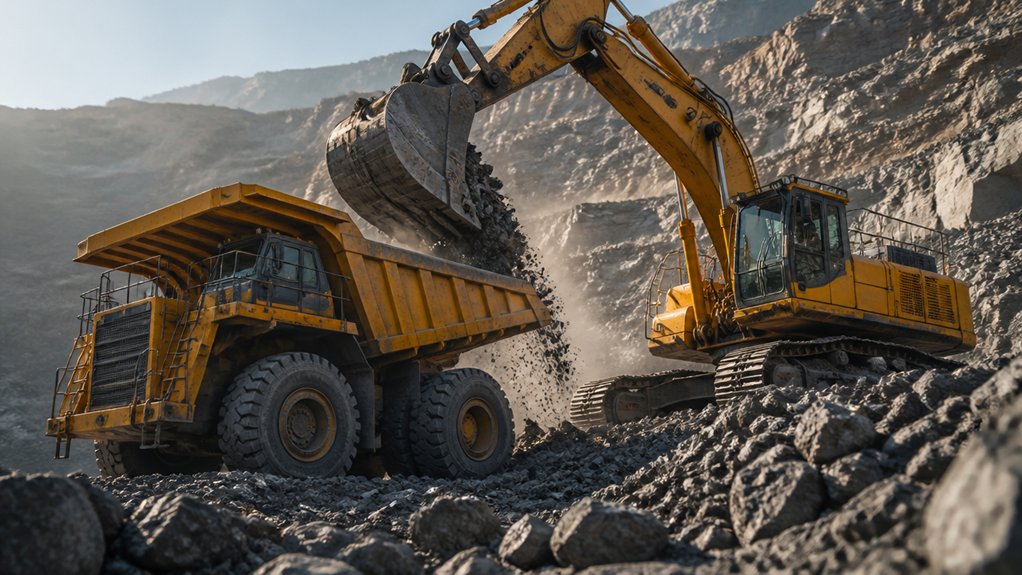
Mining heavy plant machinery includes the excavators, loaders, haul trucks, crushers, screens and support equipment you need to extract, move and process material on a UK site. Choose machines to suit your geology, haul routes, gradients, production targets and environmental conditions—not simply their size. Match capacity across the fleet, plan for maintenance and monitor output against targets. Before operating, complete site-specific training, pre-start checks and risk controls. The guide below explains how to select, operate and maintain your equipment safely.
What Equipment Counts as Mining Heavy Plant?

Mining heavy plant includes the large, specialised machines used to extract, move and process minerals on site. For UK operations, the term also covers fixed and mobile equipment that supports production, maintenance and site services.
You’ll typically find crushers, screens, conveyors, pumps, generators, drilling rigs and processing systems within this category. Plant may be diesel-powered, electric or hybrid, depending on its duty, site infrastructure and emissions requirements. The classification depends on function and scale, not simply size: equipment must perform a substantial operational task in the mining process.
When selecting or operating plant, consider ground conditions, load limits, guarding, noise and visibility. You must follow relevant safety regulations, including requirements for inspection, competent operation and maintenance.
Assess Environmental impact too, covering fuel use, dust, noise, water management and emissions. Your choice should suit the site’s production needs and controls.
Which Machines Excavate and Load Material?
You’ll typically use excavators to break out and dig material at the face.
Wheel loaders then scoop and transfer it to haul trucks or stockpiles.
Keep people clear of operating zones and follow site traffic plans.
Excavators
Excavators dig into the face, break out material and load it into haul trucks or onto conveyors. On UK mines and quarries, you’ll choose tracked machines for rough, uneven ground and match operating weight, reach and bucket capacity to the material and loading plan.
Excavator features such as reinforced booms, suitable bucket teeth, cab protection and clear sightlines support productive, controlled digging. Select the configuration for the bench height and working area; don’t exceed rated lift capacity or work beneath unstable faces.
Before each shift, you should check tracks, attachments, hydraulic hoses, guards, alarms and emergency stops. Keep people outside the swing radius, use agreed signals and maintain separation from vehicles.
Excavator maintenance, including scheduled inspections and prompt defect reporting, helps prevent failures. Follow the manufacturer’s instructions, site risk assessment and UK health and safety procedures.
Wheel Loaders
Where loading conditions suit a mobile approach, wheel loaders can complement excavators by scooping blasted or stockpiled material and loading it into haul trucks or hoppers. You’ll find them useful where frequent repositioning, short travel distances or changing stockpiles make a fixed loading point impractical.
Choose bucket capacity and machine size to match material density, truck payload and site gradients; an oversized bucket can compromise stability and cycle efficiency.
On UK sites, assess ground bearing capacity, visibility, pedestrian routes and traffic flows before work begins. Keep to site speed limits, use designated routes and maintain clear separation from people and other Heavy machinery.
Follow safety protocols, including pre-start checks, seat-belt use and agreed loading signals. Don’t travel with a raised bucket, and tip only on firm, level ground.
Regular maintenance helps protect tyres, brakes and hydraulic systems.
How Do Haul Trucks Move Ore and Waste?
Once excavators load the material, haul trucks carry ore to processing facilities and waste rock to designated dumps or stockpiles. Your site’s haul truck logistics should match vehicle capacity to route conditions, loading rates and planned destinations.
Ore transport methods may include direct delivery to a run-of-mine stockpile, while waste follows approved haul roads to engineered dumps. You’ll need to coordinate dispatch so trucks avoid queues, minimise empty running and maintain steady, predictable movements.
Before each shift, check tyres, brakes, steering, lights and reversing alarms; report defects and follow the site’s inspection procedure. Keep loads within the manufacturer’s limits, distribute material evenly and secure tailgates.
On gradients, use designated gears and controlled speeds. Follow one-way systems, radio protocols, exclusion zones and banksman instructions, especially near edges, pedestrians and other plant. Don’t travel with an unstable load.
Which Machines Crush and Process Rock?
At the processing plant, crushers reduce run-of-mine rock to sizes suited to screening and further treatment. Primary jaw or gyratory crushers handle large feed; cone crushers then perform secondary or tertiary rock crushing. You’ll find impact crushers where rock characteristics and product requirements suit their action.
Screens separate material by size, returning oversize to the crusher in a controlled circuit.
For ore processing, mills grind screened rock into finer particles so valuable minerals can be separated by flotation, gravity or other methods. Conveyors, feeders and transfer points keep material moving between machines, while dust suppression limits airborne silica.
You should check guards, interlocks and emergency stops before operation, and isolate equipment before clearing blockages or maintenance. Follow site procedures, use suitable PPE and keep clear of moving parts and suspended loads.
Which Machines Prepare and Maintain Mine Sites?
Before extraction begins, mine-site preparation machines clear vegetation, strip topsoil and shape safe access routes. You’ll use bulldozers with ripper attachments to break compacted ground, while graders create stable haul roads and drainage falls. Excavators remove unsuitable material, form bunds and dig channels; articulated dump trucks transport spoil to approved areas. Water bowsers suppress dust, and rollers compact road layers to reduce rutting and vehicle instability.
Geological surveys guide excavation boundaries and identify hazards, while environmental impact controls determine how you manage topsoil, runoff and protected habitats. During operations, graders maintain road profiles, dozers repair berms, and pumps control water in sumps. You’ll need competent operators, daily inspections, exclusion zones and clear traffic plans.
Keep plant away from unsupported edges and follow site rules and UK health and safety requirements.
How Do You Match Mining Equipment to Your Site?
To match mining equipment to your site, assess ground conditions, gradients, access routes and weather, while accounting for UK safety requirements.
Set production targets that reflect your operating hours, material and haul distances.
Then compare each machine’s capacity, reach and duty cycle with those demands.
Assess Site Conditions
Matching mining equipment to your site starts with a clear assessment of its geology, terrain, climate and access constraints. Examine borehole data, rock strength, abrasiveness and groundwater to identify suitable machine configurations and ground-support needs.
Map gradients, haul routes, turning areas and bearing capacity; weak or uneven ground may require lower-pressure tracks or engineered platforms.
Check rainfall, frost, temperature and altitude, since these affect traction, visibility, hydraulics and maintenance.
Confirm bridge limits, road widths, overhead clearances and delivery routes before moving plant to site.
Assess Environmental impact, including dust, noise, emissions, drainage and sensitive habitats, and plan controls in line with UK permits.
Include community engagement early to understand local concerns and traffic restrictions.
Record hazards, consult competent geotechnical and safety specialists, and reassess conditions as work progresses.
Define Production Targets
Set production targets against the mine plan, specifying tonnes per hour, shift output and annual volume for each material type. Use these figures to guide production planning, accounting for scheduled operating hours, planned maintenance, seasonal conditions and expected downtime.
Separate targets for overburden, ore and waste, and reflect their differing handling requirements. Check assumptions against survey data, extraction sequences and the site’s approved operating schedule; unrealistic targets can drive unsafe pressure on crews and equipment.
Include realistic allowances for shift handovers, inspections, refuelling and statutory safety checks. Review targets with supervisors, operators and the planning team so responsibilities and reporting measures stay clear.
Track actual tonnes against plan by shift and investigate variances promptly. This disciplined approach supports efficiency optimization while keeping output achievable, compliant and aligned with the mine’s priorities.
Match Equipment Capabilities
Match each machine to the site’s materials, haul distances, gradients, ground conditions and production targets. Choose excavators, loaders and dump trucks with compatible bucket capacities and payloads, so you avoid bottlenecks, overloading and unnecessary fuel use.
Check engine performance against altitude, temperature and duty cycles; assess traction, braking and stability on your actual routes. For UK sites, consider wet weather, restricted access, planning conditions and the needs of nearby communities.
Review maintenance support, parts availability and operator training before committing. Mining equipment innovations, including automation and telematics, can improve utilisation, but only when your workforce can use them safely.
Compare emissions, noise and energy consumption to limit environmental impact and meet applicable permits. Validate your selection through site data and a competent risk assessment, then adjust fleet size as conditions change.
How Can Operators Use Mining Machinery Safely?
Safe operation starts before a machine moves: complete site-specific training, carry out pre-start checks, and confirm that guards, alarms and communication systems work. Your operator training should cover the machine’s controls, limits, emergency stops and site traffic rules. Follow Safety protocols, including exclusion zones, reversing procedures and agreed radio calls.
Before starting, check that your seat belt fits, visibility is clear and no one is in the danger area. Use three points of contact when entering or leaving the cab; never jump down.
Keep to designated haul routes, obey speed limits and maintain safe separation from other plant. Adjust your driving to ground conditions, gradients, weather and load stability. Don’t use a phone or operate when fatigued, impaired or distracted.
Stop work and report hazards, near misses or changing conditions to your supervisor promptly.
How Do You Maintain Mining Equipment?
Regular maintenance keeps mining equipment reliable and helps prevent hazardous failures. Follow the manufacturer’s service schedule and your site’s risk assessments, adapting checks to operating hours, dust, vibration, and weather.
Your Preventive maintenance plan should cover inspections, servicing, and component replacement before wear becomes a breakdown.
Before work begins, isolate the machine, apply lockout procedures, and verify stored energy is released. Never inspect moving or raised components without approved safeguards.
Check tyres or tracks, brakes, steering, guards, hoses, electrical systems, and emergency stops; record defects and remove unsafe plant from service.
Equipment lubrication matters: use the specified lubricant, quantity, and interval, and keep fittings clean to prevent contamination.
Monitor oil, coolant, and hydraulic-fluid levels, filters, and temperatures.
Use trained technicians for repairs, retain accurate maintenance records, and investigate recurring faults promptly.
Confirm repairs and safety controls before returning machinery to operation.