
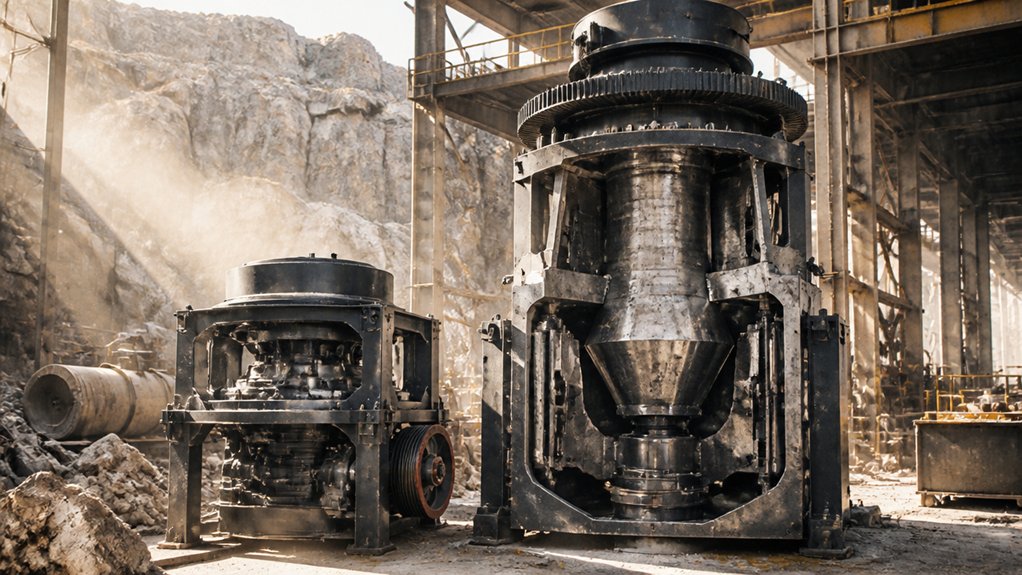
A gyratory crusher is built for high-volume primary crushing, handling large run-of-mine rock through a wide feed opening. A cone crusher is more compact and typically serves secondary or tertiary stages, where you need finer, adjustable product sizing. Both use an eccentrically driven mantle to compress material against a fixed concave, but their capacity, footprint, and typical duties differ. Your feed, production target, and plant layout help determine the right fit. The key comparisons below clarify your choice.
What’s the Difference Between Cone and Gyratory Crushers?
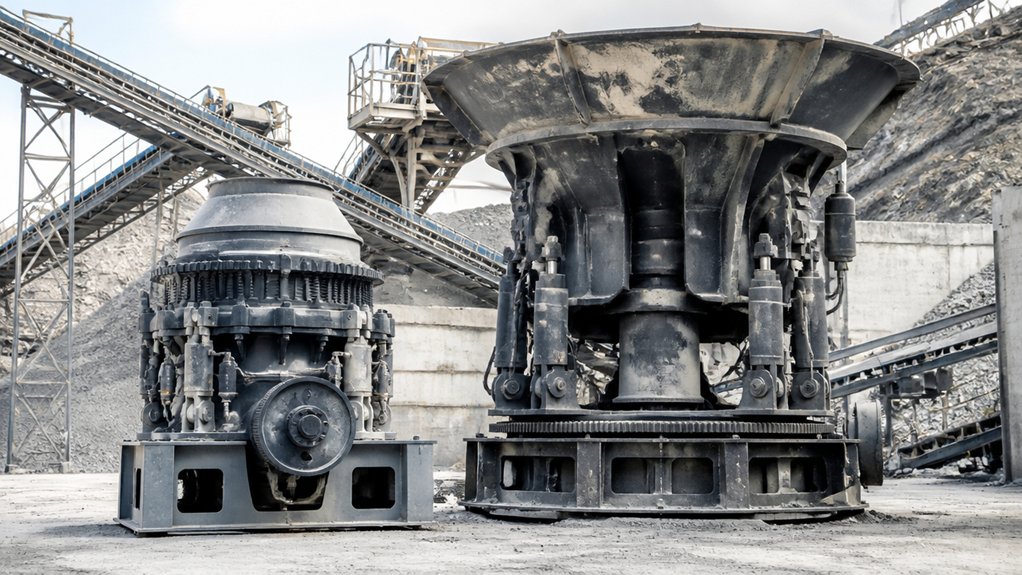
Both cone and gyratory crushers use a gyrating mantle to compress rock against a stationary concave, but they differ in scale, design, and typical use. A gyratory crusher typically serves as a primary unit in high-capacity operations, while a cone crusher handles secondary or tertiary stages and smaller plants.
You’ll find gyratory machines larger, heavier, and built for continuous, high-volume feed. Cone crushers offer more compact layouts and greater flexibility across product sizes. Consider feed requirements, plant space, and throughput when choosing between them.
Material durability also matters: abrasive, hard rock can increase wear and operating costs in either design. Maintenance complexity varies with machine size and access; gyratory units may demand more specialized service, while cone models often simplify routine component replacement.
Match equipment to site conditions and production targets.
How Do Cone and Gyratory Crushers Work?
Their size and typical applications differ, but cone and gyratory crushers reduce rock through the same basic action: a moving mantle compresses material against a fixed concave. An eccentric mechanism drives the mantle in a circular, gyrating path, narrowing the crushing chamber on one side and opening it on the other.
As you feed rock from above, compression fractures pieces; gravity and continued movement carry them downward until they’re small enough to exit through the discharge opening. You control performance by adjusting feed conditions and, where the design allows, the crusher setting.
Check liners and other contact surfaces regularly: Material wear changes chamber geometry and can affect operation. Follow maintenance routines that include lubrication, inspections, and timely liner replacement.
Always isolate and lock out equipment before servicing, and follow the manufacturer’s procedures.
How Do Cone and Gyratory Crushers Compare on Capacity and Product Size?
Capacity depends on crusher size and duty, but gyratory crushers generally handle higher throughputs in primary crushing, while cone crushers suit lower-capacity secondary and tertiary stages. Your actual rate depends on feed gradation, hardness, moisture, and the closed-side setting.
Gyratory designs accept large feed and maintain steady flow, whereas cone crushers offer finer control over discharge size. To meet a target product, you’ll need to balance setting, chamber design, and feed consistency; tighter settings generally produce smaller material but can reduce throughput and increase wear.
Material durability affects both capacity and product stability: abrasive or hard rock accelerates liner wear and can shift output gradation. Track throughput and screen results, then adjust settings as liners wear.
Compare Maintenance requirements and operating costs when selecting equipment, since downtime and wear-part changes affect achievable production.
Where Does Each Crusher Work Best?
Choose a gyratory crusher when you need high-volume primary crushing of large, run-of-mine rock in a fixed plant; its deep chamber and continuous feed suit steady production. You’ll get reliable performance where trucks dump directly into a large feed opening and the plant runs for long shifts.
A cone crusher works best in secondary or tertiary stages, where you need controlled reduction after primary crushing. Its adjustable settings and liner options help you produce specific sizes for downstream screening or aggregate use.
Consider Material durability: abrasive, hard rock can accelerate wear in either machine, so match liners to the feed. Maintenance requirements also differ by installation: gyratories need substantial planned service, while cones offer more accessible routine adjustments.
Keep feed consistent and protect both crushers from tramp metal and overloads.
Which Crusher Fits Your Operation?
To select the right crusher, match its role to your feed, production target, and plant layout. Choose a gyratory crusher when you need high-capacity primary crushing and can support its larger footprint, foundation, and capital cost.
Select a cone crusher for secondary or tertiary stages, tighter product sizing, or a more compact installation.
Check Material compatibility: abrasive, hard rock increases wear, while sticky or wet feed can restrict flow and require careful configuration. Compare feed size, required reduction ratio, throughput, and downstream specifications before deciding.
Consider operating hours, access for maintenance, spare-parts availability, and energy use across the full circuit.
Apply Maintenance tips from the manufacturer, including scheduled liner checks and lubrication inspections.
If your production varies, confirm the crusher can handle peak demand without compromising product quality or plant uptime.