
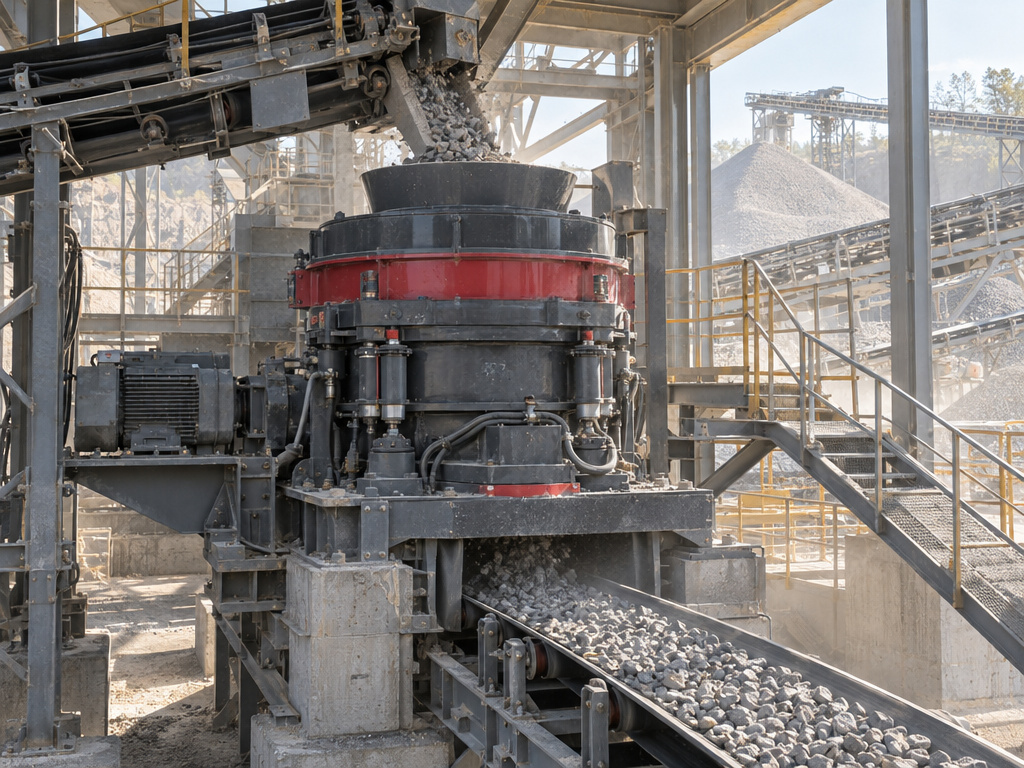
The Titans of the Quarry: A Master Guide to Heavy Duty Crushing Equipment
Aggregate production relies on the mechanical force of heavy duty crushing equipment to transform raw, run-of-mine rock into the precise stones required for global infrastructure. While a massive machine might look impressive on a quarry floor, the true value of a plant lies in its cost-per-ton and its ability to meet strict size specifications. Equipment sizing and smart automation configurations directly determine whether a site remains profitable or sinks under the weight of high energy costs and frequent downtime. Choosing the right machinery is not just a procurement task; it is a strategic decision that shapes the entire operating margin of a quarry.
This article examines the primary and secondary systems that serve as the beating heart of material processing. It provides a roadmap for selecting between compression and impact technologies while highlighting how market leaders like Metso, Sandvik, and Caterpillar define modern production standards. Readers will learn how to balance a crushing circuit to ensure that every stage-from the first jaw crush to the final shaping in a cone-works in harmony to maximize output and minimize wear.
The most efficient quarry operations do not rely on sheer size but on the smartest configuration of their assets. By matching crusher mechanics to specific rock geology and utilizing real-time telematics, plant managers can prevent catastrophic failures before they happen. This guide explores the essential components of a high-performing circuit, including:
- The mechanical differences between primary jaw crushers and secondary cone systems.
- Methods for achieving aggregate cubicity to meet high-level construction standards.
- The impact of automation and telematics on preventing tramp metal damage.
- Best practices for chamber optimization and selecting wear materials.
- Daily maintenance rituals that protect hydraulic and lubrication systems.
Modern processing has moved beyond simple rock breaking. Today, systems like the Metso HP Series or Sandvik Hydrocone CH Series allow for precise adjustments that were once impossible. These machines use automated sensors to change settings on the fly, ensuring the product stays within “spec” even as the raw feed changes. For a plant operator, this means fewer rejects and a much more predictable flow of sellable material.
Efficiency is often a game of inches and seconds. If a primary crusher is too large for the secondary stage, the resulting bottleneck creates a “dead zone” in production that wastes fuel and manpower. Conversely, an undersized primary unit forces the rest of the fleet to run at sub-optimal speeds.
Aligning these stages is the only way to achieve peak output. This guide helps the reader navigate those technical choices, turning a collection of heavy machines into a synchronized, high-margin production line.
The primary stage of material processing involves reducing massive, blasted rock-known as Run-of-Mine (ROM)-into a manageable size that downstream conveyors and secondary units can handle without blockages. This initial reduction relies on heavy duty crushing equipment designed to withstand extreme compressive forces and high-impact loads while maintaining a consistent throughput. By matching the mechanical action of the crusher to the specific geology of the quarry, operators prevent the catastrophic downtime associated with oversized feed blocking the circuit.
Efficient primary crushing hinges on the strategic selection of jaw or gyratory systems to ensure the initial sizing meets the precise intake requirements of subsequent processing stages. Proper feed optimization at this level directly dictates the plant’s overall cost-per-ton and determines the effectiveness of the entire production line.
Ignoring the mechanical limits of a primary crusher leads to a rapid, expensive bottleneck that ripples through the entire quarry. Heavy Duty Crushing Equipment at the primary stage is designed to receive massive, blasted rock directly from the mine, known as Run-of-Mine (ROM) material, and reduce it to a manageable size. Effective primary crushing, using either jaw or gyratory systems, is the indispensable first step for reducing massive boulders and setting the stage for downstream efficiency. By converting jagged, oversized feed into a consistent product, these machines ensure that the more delicate secondary units are not overwhelmed by material they weren’t built to handle.
The primary stage is where the battle for a low cost-per-ton is won or lost. If the primary crusher is undersized or poorly matched to the rock’s hardness, the plant faces frequent “bridging”-where a large rock wedges across the opening and halts all production. I have seen operations lose hours of uptime simply because the feed opening was just a few centimeters too small for the blasted rock. Choosing between a jaw and a gyratory system isn’t just about size; it is about how the material breaks and how much volume the plant needs to move every hour.
The Mechanics of Jaw Crushing
A primary jaw crusher operates on a simple principle of compression between two heavy plates. One plate remains stationary while the other, the “swing jaw,” moves back and forth, crushing the rock against the fixed surface. This “V” shaped chamber is excellent for handling hard, abrasive materials because the motion is direct and powerful. Because they have a wide intake but a relatively narrow footprint, jaw crushers are often the preferred choice for mobile setups or smaller quarries where space is at a premium but the rock is exceptionally tough.
The main advantage of the jaw design is its ability to accept very large, blocky feed. However, it is a reciprocating motion, meaning it only crushes during half of its cycle. This makes it less efficient for ultra-high-capacity operations compared to continuous systems. For a plant manager, the jaw crusher is the reliable workhorse that handles the most punishing, abrasive ores without requiring the massive foundation and infrastructure of larger alternatives.
High-Capacity Primary Gyratory Systems
When a quarry needs to process massive volumes without interruption, a primary gyratory crusher is the standard. Unlike the jaw’s back-and-forth motion, a gyratory crusher features a tall, conical chamber where a central shaft “gyrates” or wobbles. This creates a continuous crushing action around the entire circumference of the bowl. A quarry processing hard granite might opt for a primary gyratory crusher due to its high throughput and continuous operation, handling boulders up to 1.5 meters in diameter with ease.
These machines are true titans, often standing several stories tall and requiring deep, reinforced concrete pockets. The continuous crushing action means they can process significantly more tons per hour than a jaw crusher of a similar intake size. They are also less prone to bridging because the circular opening allows for a more natural flow of irregular rocks. While the initial investment is much higher, the long-term efficiency for high-output sites makes the gyratory system the superior choice for massive industrial applications.
Selecting the right primary system requires a cold look at the following operational variables:
- Maximum Feed Size: The physical dimensions of the largest boulders after blasting.
- Abrasiveness: High silica content wears down jaw plates faster than gyratory liners.
- Throughput Requirements: Total tons per hour needed to keep the secondary stage running.
- Installation Constraints: Whether the plant is a permanent fixed installation or a portable site.
- Maintenance Access: The ease of swapping out heavy liners or clearing blockages.
The primary stage is not just about breaking rock; it is about preparing the “shape” of the work for the next phase. If the primary crusher produces too many “slabs” or elongated pieces, the secondary cone crushers will struggle to create the cubic aggregate required for high-spec concrete. By optimizing the primary reduction, you ensure that the downstream equipment can focus on refinement rather than struggling with oversized debris. A well-tuned primary circuit creates a steady, predictable flow that allows for the automation and precision adjustments found in later stages of production.
A common mistake is focusing solely on the crusher’s motor power while ignoring the geometry of the crushing chamber. A machine can have all the horsepower in the world, but if the nip angle is wrong for the specific geology of the rock, the material will simply bounce or “pop” out of the top rather than being crushed. This wasted energy increases wear and decreases the overall value of the plant’s output. Proper primary reduction is the only way to protect the high-precision components that follow in the circuit.
By 2026, the industry has shifted away from viewing the primary hopper as a simple trash can for rock and toward treating it as a precision intake valve. The efficiency of a primary station depends less on the crushing force available and more on the consistency of the material stream hitting the liners. A erratic feed rate-swinging between empty cavities and choked overflows-destroys the mechanical rhythm of the plant and accelerates component fatigue. To maintain peak performance, a quarry must ensure a continuous, regulated flow of material that matches the specific processing speed of the machinery.
Feeding the beast requires a transition from raw excavation to controlled logistics at the very edge of the primary hopper. The goal is to avoid the “feast or famine” cycle where a machine sits idle for minutes and is then buried under a sudden surge of rock. When a crusher is starved, the internal components experience unnecessary vibration; when it is overfed without regulation, the motor draws excessive current and the risk of uncrushable material damage increases. Using surge piles or intermediate bins between the quarry face and the plant allows operators to decouple the digging speed from the crushing speed, creating a buffer that protects the downstream circuit.
Specialized loading equipment serves as the primary regulator for this intake process. The Caterpillar 988K XE Wheel Loader is a frequent choice for this role because it provides the mobility and bucket precision needed to manage a steady, optimized flow into the feeder. Unlike a standard loader, a purpose-built high-capacity unit can feather the load, ensuring the material doesn’t hit the grizzly feeder in one massive, disruptive clump. This level of control is what separates a high-output operation from one plagued by frequent emergency stops and manual clearing of the hopper.
The grizzly feeder acts as the final gatekeeper, performing a crucial pre-screening task before the rock enters the crushing chamber. By allowing smaller stones and dirt to bypass the main crushers, the feeder prevents the machine from wasting energy on material that is already at the target size. I have found that operators who neglect the maintenance of their grizzly bars often see a sharp decline in throughput because the crusher becomes “cushioned” by fines, which absorbs the impact energy intended for the larger boulders. Keeping these bars clear and correctly spaced is a simple but vital part of the feeding strategy.
A plant manager observed a 15% increase in primary crusher throughput after implementing a consistent feeding strategy with a high-capacity wheel loader, reducing idle time and preventing overloads. This specific case study highlights that the loader isn’t just a transport tool; it is a mechanical governor for the entire plant. By timing the arrival of each bucket to match the “draw-down” rate of the hopper, the operator maintains a choke-fed condition where the chamber is always full enough to optimize rock-on-rock interaction but never so full that it stalls. This balance is the thin line between profit and mechanical failure.
Improper feeding techniques often manifest as uneven liner wear, which can cut the lifespan of expensive manganese parts by nearly half. If the feed consistently hits one side of the hopper, the crusher will wear asymmetrically, eventually leading to structural misalignment. A uniform feed rate ensures that the crushing force is distributed evenly across the entire circumference of the chamber. This proactive management of material flow is as critical as the metallurgy of the machine itself for sustained plant performance and total tonnage output.
The logistics of the feed must also account for the physical characteristics of the rock, such as moisture content and the presence of clay. In wet conditions, a grizzly feeder might “blind” or clog, requiring the loader operator to adjust the volume of each pass to keep the system moving. It is a mistake to assume that automation can solve every feeding issue; the human element in the loader cab remains the first line of defense against oversized slabs that could bridge the opening. Proper communication between the loader operator and the plant control room ensures that the primary stage remains a steady heartbeat for the quarry.
While the primary stage focuses on the initial reduction of massive rocks, it effectively sets the ceiling for the entire operation’s capacity. Any bottleneck created here by poor feeding will ripple through the secondary and tertiary stages, where the focus shifts from raw volume to the precise shaping and sizing of the final aggregate. A well-fed primary system ensures that those downstream machines receive a consistent gradation, allowing them to focus on meeting strict cubicity specifications without being overwhelmed by surges of oversized material.
Monitoring the hopper level with ultrasonic sensors or cameras has become a standard practice for managing these intake flows. These tools provide real-time feedback to the loader operator, allowing for immediate adjustments to the cycle time based on the crusher’s current power draw. This integration of hardware and operational technique turns a series of heavy machines into a single, synchronized processing unit. In high-volume quarries, the difference between a 92% and 98% uptime rating usually comes down to how precisely the material is introduced to the circuit at the very beginning of its journey.
A high-capacity wheel loader with a 12.5-ton lift capacity can effectively manage the cycle times required to keep a 1,000-ton-per-hour primary station at full utilization.
Secondary and tertiary crushing stages transform raw, oversized material into finished aggregate products that meet strict industrial size and shape requirements. While primary crushers focus on volume reduction, these subsequent stages utilize specialized heavy duty crushing equipment to refine the product through precise compression or impact. Plant operators rely on these systems to eliminate internal fractures in the stone, ensuring the final material possesses the strength and geometric consistency required for high-grade concrete and asphalt applications.
The selection of specific machinery at this level determines the plant’s overall cost-per-ton by balancing throughput speed against the need for aggregate cubicity. Metso HP Series and Sandvik CH Series units provide the necessary automation to adjust settings dynamically, allowing the machinery to maintain consistent output even as feed characteristics change. Proper configuration of these circuits prevents recirculating loads from overwhelming the system, which protects the longevity of the components and ensures the final product adheres to the exact specifications demanded by end-users.
The Role of Cone Crushers
A quarry producing railway ballast depends on the specific geometry of its stones to ensure the stability of the track bed under heavy loads. Because ballast requires a high degree of angularity and a very uniform particle size, operators often turn to the Metso Nordberg HP Series to meet these rigid industrial standards. These machines act as the precision engineers of the plant, taking the rough output from the first stage and refining it into a sellable product. While earlier stages focus on sheer force, the secondary and tertiary stages are where the final value of the aggregate is truly realized through controlled reduction.
Modern cone crushers are indispensable for efficiently processing hard, abrasive materials in secondary and tertiary stages, consistently producing high-quality, precisely sized aggregates. This equipment operates by squeezing material between an eccentrically gyrating mantle and a fixed concave liner. As the mantle moves, it creates a closing gap that crushes the rock, followed by an opening phase that allows the material to fall further down into the chamber for the next cycle. This repetitive compression ensures that the stone is broken along its natural grain, which is a key factor in maintaining the structural integrity of the final aggregate.
- Standard Cone Crushers: These units feature a shallower crushing chamber and are typically used in secondary positions to handle larger feed sizes coming from the primary station.
- Short-Head Cone Crushers: Designed with a steeper head angle and a narrower opening, these are the preferred choice for tertiary or quaternary stages where fine, consistent sizing is the priority.
- Cavity Profile Selection: The internal shape of the liners can be swapped to handle different feed gradients, allowing a single machine to adapt to various rock types and moisture levels.
- Adjustable Eccentric Throw: Operators can modify the distance the mantle moves to balance the ratio of reduction against the speed of material flow through the chamber.
The Sandvik CH Series offers advanced crushing technology that highlights how internal design influences the final product. By adjusting the eccentric throw and the speed of the rotation, a plant manager can shift the size distribution of the output to match current market demands. If a project requires more fines for road base, the machine can be tuned for a tighter setting; if the goal is clean 20mm stone, the chamber dynamics are adjusted accordingly. This flexibility is what separates high-performing Heavy Duty Crushing Equipment from older, static designs that struggle with varying geology.
In the tertiary stage, the focus shifts entirely to the shape of the stone. When rock is crushed too quickly or with the wrong chamber geometry, it can result in “flaky” or “elongated” particles that are thin and prone to snapping. These shapes are generally rejected by inspectors for high-strength concrete applications.
Cone crushers mitigate this risk by utilizing a high-density crushing environment where stones are forced to press against one another. This “inter-particle” action helps grind away sharp, weak edges, leading toward the highly sought-after cubic shape that engineers demand for infrastructure projects.
Material hardness is a primary variable when choosing between different compression technologies. For extremely hard and abrasive rock like granite or quartzite, the compression method used by cone systems is far more cost-effective than impact-based methods. Because the rock is broken by pressure rather than high-speed collisions, the wear on the internal manganese liners is significantly lower. This choice directly impacts the cost-per-ton by extending the intervals between expensive maintenance shutdowns, especially in 24-hour operations where every hour of uptime counts toward the bottom line.
The internal cavity profile is perhaps the most overlooked aspect of secondary crushing. A “coarse” cavity is designed to accept larger rocks but may produce a wider range of sizes, whereas a “fine” cavity restricts the intake but delivers a much tighter output specification. Matching this profile to the specific geology of the site prevents the machine from becoming a bottleneck. When the chamber is correctly matched to the material, the crusher operates in a “choke-fed” state, where the head is completely covered by rock, maximizing the efficiency of every rotation and protecting the mechanical components from uneven stress.
As the material moves through these secondary and tertiary stages, the focus on size reduction begins to share priority with the physical shape of each stone. While achieving the correct diameter is the first hurdle, the industry’s shift toward high-performance materials means that the three-dimensional profile of the aggregate is now a non-negotiable metric. This transition from simple sizing to the refinement of particle geometry is where the next level of crushing strategy begins, particularly for those aiming for premium concrete and asphalt markets.
Achieving Cubicity
Aggregate quality is often judged by more than just size; the physical shape of the stone determines the structural integrity of the final product. Cubicity refers to the production of particles with nearly equal dimensions in length, width, and thickness, avoiding the thin, elongated, or flaky shapes that weaken construction materials. Modern crushing technology, particularly advanced cone crushers, is specifically engineered to achieve high aggregate cubicity, a critical factor for performance in high-strength concrete and asphalt applications. When stones are cubic, they lock together more effectively, creating a stable internal skeleton that resists shifting and cracking under heavy loads.
Engineers focus on shape because flaky or elongated stones create voids and weak points in a mix. In high-strength concrete, these “flat” stones are prone to snapping under pressure, which can lead to structural failure in bridges or high-rise foundations. Similarly, in asphalt, cubic aggregates provide better surface contact and friction, reducing the likelihood of the pavement “rutting” or deforming during high-temperature summers. Because of these risks, many infrastructure projects now enforce strict limits on the flakiness index and elongation index, which are standardized measurements used to quantify how many stones in a sample fail to meet the cubic ideal.
The secret to producing these high-value shapes lies in the dynamic force of rock-on-rock crushing within the chamber. While the steel liners provide the initial compression, it is the interaction between the stones themselves-often called inter-particle crushing-that grinds away sharp edges and snaps off thin protrusions. This process is most effective when the crushing chamber is kept “choke-fed,” meaning it is completely full of material. I have found that running a plant with a half-empty cavity is the fastest way to ruin your shape, as the stones have too much room to move and fail to squeeze against each other with enough force to achieve true cubicity.
87% of quarry operators report that maintaining a consistent choke-feed is the most influential factor in meeting shape specifications. When the feed rate fluctuates, the pressure within the crushing zone drops, allowing flat and elongated pieces to slip through the discharge setting without being properly reshaped. This is why automation and the use of surge bins are so valuable; they ensure the cone crusher is always working at its peak density. Without that constant pressure, even the most expensive heavy duty crushing equipment will struggle to produce anything better than sub-standard, sliver-like material that savvy buyers will reject.
Liner wear is another variable that quietly degrades the quality of the output over time. As the manganese steel liners inside the crusher wear down, the original geometry of the crushing chamber changes, which can lead to a wider discharge opening and a less efficient crushing angle. This degradation often happens so slowly that operators do not notice the shift until the aggregate fails a lab test.
Monitoring the internal cavity profile is essential to ensure that the machine is still applying force exactly where it was designed to. In my experience, neglecting liner maintenance is the primary reason plants fail to maintain a consistent flakiness index over a long production run.
A major highway project recently demonstrated the importance of this technical precision by specifying aggregates with a flakiness index below 15%. This was a demanding requirement that many standard setups would fail to meet consistently. However, the requirement was consistently met by a plant utilizing Sandvik CH Series cone crushers with optimized chamber settings.
By matching the stroke of the crusher and the specific liner profile to the hardness of the rock, the operators were able to maximize the inter-particle action. This setup ensured that every stone was subjected to multiple compression cycles before exiting the machine, effectively “polishing” the stones into the required cubic form.
It is a mistake to assume that simply closing the discharge setting will fix shape issues. While a tighter setting reduces the size of the stone, it does not necessarily improve the cubicity; in fact, over-crushing can sometimes lead to an excess of fines and dust without improving the shape of the larger stones. Instead, the focus should be on the reduction ratio-the relationship between the size of the rock entering the machine and the size of the rock leaving it.
If the ratio is too high in a single stage, the stones are more likely to shatter into shards rather than being compressed into cubes. Spreading the reduction work across secondary and tertiary stages is often the more efficient path to quality.
I would always recommend prioritizing a stable, automated feed system over simply buying a larger crusher. A smaller machine running at a constant 100% capacity will almost always produce a better-shaped product than a massive machine that is frequently idling or “surging” with uneven loads. The goal is to create a high-pressure environment where the rock does the work on itself. This approach not only improves the market value of the aggregate but also reduces the wear on the expensive steel liners, as the stones are absorbing much of the energy that would otherwise be directed at the machine’s internal components.
While cone crushers are the workhorse for hard and abrasive materials, they are not the only tools available for shaping stone. In some geologies, the material may be too soft or brittle for compression crushing to work effectively without creating excessive waste. In those specific scenarios, different mechanical actions are required to achieve the necessary cubicity.
This highlights why the choice between compression and impact-based systems is a fundamental decision in plant design, as the wrong mechanism can result in high wear costs and poor product geometry. The flakiness of the stone is ultimately a reflection of how well the machine’s mechanics have been matched to the specific characteristics of the raw rock.
The flakiness index of a stockpile can be the difference between winning a high-margin government contract and being relegated to low-value fill material. As specifications for high-performance concrete become more stringent, the ability to control particle geometry becomes a key competitive advantage for any quarry operation. Achieving this level of precision requires a deep understanding of how internal chamber dynamics and feed consistency interact. A plant that masters these variables can produce premium materials that meet the strictest engineering standards for modern infrastructure.
Concrete strength increases significantly when the aggregate has a low flakiness index because the surface area is more evenly distributed for cement bonding.
Choosing between a horizontal shaft impactor and a compression cone crusher depends on the geological abrasive properties of the feed material and the required shape of the final aggregate. While impactors excel at creating highly cubic products through high-velocity collisions, cone crushers utilize consistent pressure to process harder, more abrasive stones with significantly lower wear costs. Plant operators must prioritize this mechanical distinction because selecting the wrong technology for high-silica rock can lead to excessive maintenance downtime and inflated cost-per-ton.
Integrating the correct heavy duty crushing equipment ensures that the machinery matches the specific rock geology, preventing catastrophic component failure while meeting strict size specifications for the final output.
When to Deploy HSIs
Horizontal Shaft Impactors, or HSIs, utilize high-speed kinetic energy rather than slow compression to fracture material along its natural cleavage planes. This mechanism relies on a heavy rotor spinning at high revolutions, which flings the incoming rock against stationary manganese or ceramic apron plates. While compression machines squeeze the rock, the HSI shatters it on impact, making it the superior choice for applications where the final product requires a specific cubical geometry without the internal stresses often found in squeezed stone.
The direct answer for when to deploy an HSI is when processing soft to medium-hard materials like limestone, gypsum, or recycled concrete where high cubicity and a significant percentage of fines are required in a single pass. These machines excel in secondary or tertiary stages when the feed material is non-abrasive, allowing the operator to maximize reduction while maintaining lower capital costs compared to complex cone systems.
A quarry processing soft limestone for road base material found that HSIs produced a more consistent and cubical product than cone crushers, leading to better compaction properties. Because the impact energy breaks the stone into nearly equal-dimensioned particles, the resulting aggregate interlocks more effectively during road construction. This specific behavior makes the HSI a staple in the production of base course and sub-base materials where density and stability are the primary engineering requirements.
- Soft to Medium Rock: Ideal for materials with low silica content, such as limestone or dolomite, which do not cause excessive wear on the blow bars.
- Recycling Operations: HSIs are highly effective at liberating rebar from concrete and handling asphalt slabs without the clogging issues that plague compression chambers.
- High Reduction Ratios: Capable of taking a larger feed size and reducing it further in one step than most cone crushers can manage.
- Fines Production: When the market demands a higher volume of crushed stone sand or agricultural lime, the HSI’s attrition process naturally generates these smaller fractions.
- Lower Initial Investment: Generally features a simpler mechanical design and lower purchase price, which can improve the cost-per-ton for specific geologies.
Choosing an HSI is often a strategic decision based on the abrasiveness of the feed material. In limestone quarries, where the silica content is typically below 10%, the wear life of the internal blow bars remains economical. However, if the geology shifts toward high-quartz granite or basalt, the cost of replacing the impact components can quickly erode the profit margins of the entire plant. Smart configuration requires the reader to balance the desire for perfect stone shape against the reality of manganese consumption rates.
In recycling applications, the HSI is virtually unmatched. When processing “run-of-site” demolition waste, the impactor handles the occasional piece of wood or plastic far better than a precision-engineered cone crusher. The wide-open chamber design prevents the machine from stalling when encountering non-crushable materials that are softer than rock, while the impact force cleanly separates concrete from embedded steel. This makes the HSI the heart of modern circular economy initiatives within the aggregate industry.
The physical footprint of an HSI also offers advantages in mobile crushing setups. Because the machine is often lighter than a cone crusher of similar capacity, it allows for easier transport between job sites without sacrificing the ability to meet strict specification compliance for shape. For a contractor moving between various soft-rock sites, the HSI provides a versatile tool that can be adjusted via rotor speed to fine-tune the gradation of the final stockpile.
Operational efficiency with an HSI is largely determined by the tip speed of the blow bars. Increasing the rotor speed results in a finer product and higher cubicity, but it also accelerates the wear on the wear parts. A seasoned plant manager monitors the discharge curve closely, adjusting the gap between the blow bars and the impact plates to compensate for the gradual rounding of the metal edges. This ensures that the stone shape remains sharp and the gradation stays within the required limits throughout the life of the wear components.
While the HSI produces an excellent shape in softer rock, its performance profile changes dramatically when faced with high-strength, abrasive materials. The rapid wear of the blow bars in such conditions often necessitates a shift in strategy. This leads many operators to evaluate the long-term maintenance benefits of moving toward equipment that utilizes a different mechanical approach for harder geologies.
Choosing between impact and compression technology often comes down to the geological reality of the quarry floor rather than simple preference. Compression cone crushers are the definitive choice for processing hard, abrasive rock, offering superior wear life and precise control over aggregate shape and size for demanding specifications. While other machines rely on high-speed collisions, these units use a slow, steady squeeze to fracture material, making them the workhorse of choice for igneous stones like granite and basalt.
The mechanical advantage of a cone crusher lies in its compression crushing mechanism. Instead of striking the rock with a blow bar, the machine traps material between a moving mantle and a stationary concave liner. This process often facilitates rock-on-rock crushing within the chamber, where the stones themselves do the work of breaking each other down. This method is not just about size reduction; it is about protecting the machine’s internal components from the brutal friction caused by high-silica materials.
I would always recommend a cone crusher over an impactor when dealing with any material that tests high on the Los Angeles Abrasion scale. Using an impactor on abrasive quartz or hard granite is a recipe for financial disaster, as the wear parts would disappear in a matter of days. In contrast, the heavy-duty design of a compression system allows it to maintain a consistent gap for months, ensuring the output stays within the required size range without constant manual intervention.
Choke feeding is the secret to getting the most out of these machines. This means keeping the crushing chamber completely full of material at all times. When the cavity is packed, the stones are forced against one another, which helps to grind away sharp edges and produce a more rounded, high-quality result. It also ensures that the pressure is distributed evenly across the liners, preventing the uneven wear patterns that can lead to premature failure and increased maintenance costs.
Performance Advantages in Hard Rock Mining
The durability of these systems is best demonstrated in the high-stakes environment of metal extraction. A gold mine uses Sandvik CH Series cone crushers as their secondary and tertiary stages due to the extreme hardness of the ore, benefiting from reduced wear part consumption and consistent fine particle production. In this context, any unplanned stop for a liner change translates to thousands of dollars in lost mineral recovery. The ability of the compression system to handle igneous rocks and ores with high compressive strength makes it the only viable option for these 24/7 operations.
Maintenance costs tell the real story of why compression is king in abrasive environments. While the initial price tag of a cone crusher might be higher than an impactor, the long-term savings on manganese liners and internal components are significant. Operators who switch from impact to compression for hard rock typically see a dramatic drop in their cost-per-ton. This is because the slow eccentric motion of the cone creates far less heat and friction-related fatigue than the high-velocity strikes of a rotor-based system.
Precision is another area where these titans excel. Because the closed-side setting is mechanically fixed, the machine produces a very predictable maximum size. This level of control is vital when the final product must meet strict grading curves for high-performance concrete. You can essentially set the machine and trust that the stones coming off the belt will meet the engineer’s requirements, provided the liners are in good condition and the feed is consistent.
Modern operations are increasingly looking at how these machines integrate with broader plant technology. The way a cone crusher responds to changes in feed moisture or hardness can now be monitored through digital interfaces. This move toward smarter processing is a major trend in 2026, where the goal is to remove the guesswork from the crushing circuit. This connectivity sets the stage for advanced systems that can adjust the crusher’s parameters on the fly to maintain peak efficiency.
Efficiency in a quarry isn’t just about how fast you can break a rock, but how long you can keep the belt moving. Compression crushers provide that reliability by being less sensitive to the “tramp” material or uncrushable debris that might occasionally slip through the primary stage. Their robust frames are built to absorb the massive stresses of breaking high-strength stone without cracking or deforming over time. For any plant manager looking to stabilize their production schedule, the predictability of a compression circuit is an invaluable asset.
Ultimately, the choice to opt for compression technology is a strategic decision to prioritize uptime and material quality over low initial capital expenditure. It is the smartest configuration for any site dealing with “tough” geology. By matching the crusher’s mechanical strengths to the rock’s physical weaknesses, a quarry can ensure it stays profitable even when the specifications are at their most demanding.
The internal geometry of the crushing chamber dictates the path each stone takes, ensuring that the material is squeezed multiple times before it exits. This repeated action is what gives the aggregate its final characteristics and ensures the plant remains in compliance with modern building standards. Regular inspections of the hydraulic pressure and lubrication quality remain the best way to protect this investment and keep the titans of the quarry running at full capacity.
Modern industrial crushing operations utilize integrated automation and telematics to monitor mechanical performance and adjust machine settings without manual intervention. These systems provide a digital interface that allows heavy duty crushing equipment to react instantly to changes in feed material, ensuring consistent output and protecting internal components from catastrophic failure. By centralizing data from sensors, plant managers can identify operational bottlenecks and schedule maintenance based on actual wear patterns rather than fixed intervals.
The integration of tramp metal detection remains a critical advancement for protecting machine integrity, as it allows the system to automatically eject uncrushable objects that would otherwise cause severe internal damage. According to industry standards for plant optimization, these automated responses reduce the frequency of unplanned downtime and extend the service life of liners and mantles. Consequently, operators achieve a lower cost-per-ton by maintaining peak efficiency throughout the production cycle.
Real-Time Adjustments
Maximizing the efficiency of a crushing circuit requires more than just high-capacity steel; it demands the ability to change operational parameters without halting the flow of rock. Real-time adjustments allow operators to modify the crusher’s settings while the machine is under full load, ensuring that the final product meets exact size requirements even as internal components begin to wear down. This dynamic control is the difference between a plant that struggles with inconsistent sizing and one that maintains a steady, profitable output throughout the entire shift.
The primary mechanism behind this capability is the automated control of the closed-side setting (CSS). In traditional setups, adjusting the gap between the crushing surfaces required stopping the machine, which led to significant production losses and discouraged frequent tuning. Modern systems, particularly the hydrocone design used in Sandvik CH Series units, use hydraulic positioning to raise or lower the mainshaft.
This movement changes the gap instantly, allowing the system to compensate for the gradual thinning of liners caused by abrasive rock contact. One quarry manager reported a 10% increase in daily production after upgrading to crushers with automated CSS adjustment, as manual adjustments previously required frequent shutdowns that ate into active crushing hours.
Automation does not just react to wear; it also optimizes throughput by responding to the specific characteristics of the feed material. When the moisture content or the hardness of the rock changes, the pressure within the crushing chamber fluctuates. An automated system monitors these pressure levels and adjusts the CSS to maintain the highest possible crush force without exceeding the machine’s structural limits. This ensures that the heavy duty crushing equipment is always working at its peak performance level, rather than being dialed back to a “safe” but inefficient manual setting that ignores real-time potential.
Consistency is the hallmark of a high-performing quarry, and automation is the tool that delivers it. By keeping the gap setting within a narrow tolerance, the system ensures that the gradation of the aggregate remains stable. Without this, the stones would gradually become larger as the liners wear, eventually falling out of specification and requiring expensive re-processing or resulting in rejected loads. I have seen plants where manual tracking was so inconsistent that they lost hours of work every week just recalibrating; automation removes that human error entirely.
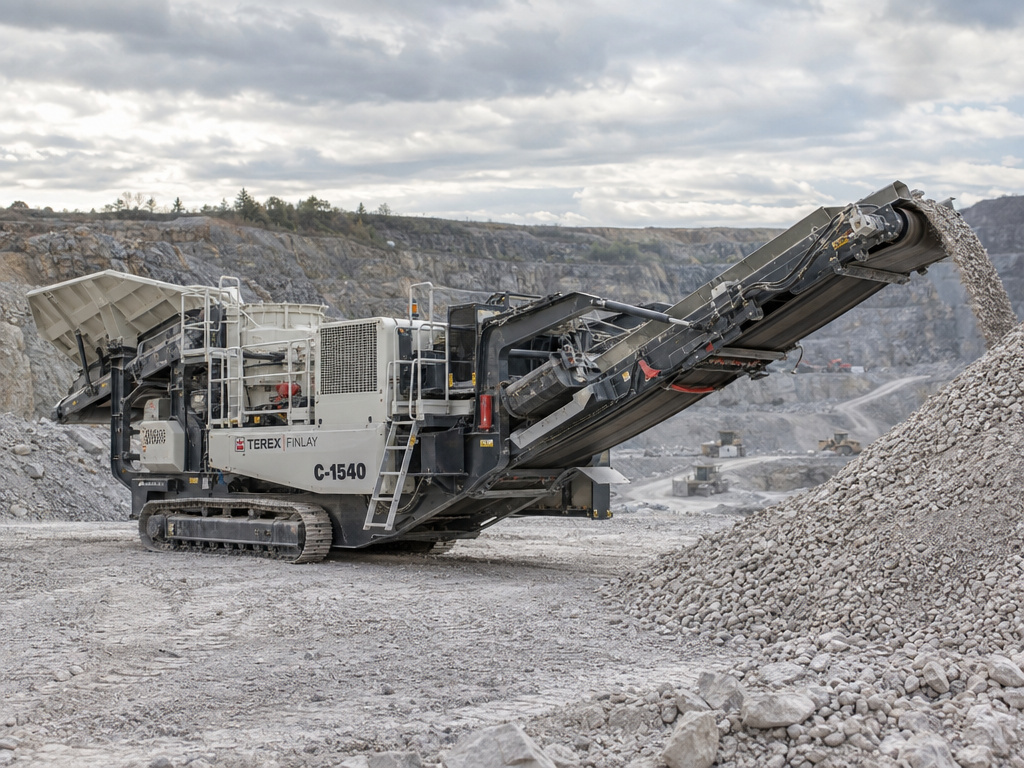
The Impact of Dynamic Gap Control on Component Longevity
Beyond the immediate gains in production volume, real-time adjustments significantly extend the life of expensive internal components. When a crusher operates with an incorrect setting, it can lead to uneven wear patterns or “pancaking” of material, which puts unnecessary stress on the bearings and the frame. Automated systems distribute the crushing work more evenly across the surface of the manganese liners. This balanced workload prevents localized thinning and allows the operator to use more of the available wear metal before a replacement is necessary, lowering the total cost-per-ton.
These systems also act as a first line of defense against operational hazards. While they are primarily used for sizing, the hydraulic nature of these adjustments allows the machine to react to uncrushable objects. If a piece of stray metal enters the chamber, the hydraulic relief system can instantly drop the mainshaft to let the object pass. This functionality is a precursor to more advanced protective measures, such as systems designed specifically for tramp metal detection, which protect the machine from catastrophic internal damage during high-speed operation.
For a beginner, it is helpful to think of this like a car’s cruise control, but for rock. Instead of the operator constantly fighting the “pedal” to stay at the right speed as the hills change, the machine feels the resistance and adjusts itself. This keeps the engine-or in this case, the crusher-in the “sweet spot” where it uses the least energy to produce the most aggregate. It is not just about convenience; it is a strategic choice to ensure the plant stays profitable even when the feed material is unpredictable.
The transition from manual to automated adjustments represents a shift in how quarries view their equipment. Rather than seeing a crusher as a static tool, it is treated as a responsive asset that can be fine-tuned every second. This level of precision is essential for meeting the strict quality standards of modern infrastructure projects, where even a slight deviation in stone size can affect the structural integrity of concrete or asphalt. Relying on a human to catch those deviations in the middle of a dusty, loud environment is a risk that modern automation is designed to eliminate.
- Liner Wear Compensation: Automatically closes the gap as manganese wears down to keep product size consistent.
- Load Stabilization: Adjusts the setting based on motor amperage to prevent overloads and maximize rock-on-rock crushing.
- Remote Calibration: Allows the operator to reset the “zero point” of the crusher from the safety of a control room.
- Data Logging: Records every adjustment made, providing a history that helps predict when the next liner change will be needed.
- Instant Relief: Provides a path for uncrushable material to exit the chamber, reducing the risk of a cracked frame.
Choosing a machine with these capabilities is an investment in the long-term health of the quarry. While the initial cost of a hydrocone system or a similar automated unit might be higher than a basic manual crusher, the reduction in downtime quickly pays for the difference. Avoiding just one or two manual shutdowns per day can add up to hundreds of extra tons of sellable material by the end of the month. In an industry where margins are often thin, those extra tons represent pure profit.
Ultimately, the goal of smart crushing is to remove the guesswork from the production line. When the machinery can sense its own wear and adapt to the rock it is breaking, the plant manager can focus on logistics and sales rather than constant mechanical troubleshooting. This level of control ensures that the facility remains competitive, producing high-quality aggregate at a lower cost than operations still relying on manual intervention. Sandvik’s hydrocone systems demonstrate that when the hardware and software work in unison, the result is a more resilient and productive crushing circuit.
Relying on manual surveillance to catch foreign objects in a feed stream is a gamble that most high-volume operations simply cannot afford to lose. While automated settings help maintain product consistency, they serve a different protective role than systems designed to handle tramp metal-unprocessed steel like loader teeth, drill bits, or broken tools that cannot be crushed. Advanced automation systems are crucial for preventing catastrophic damage from tramp metal by instantly detecting and diverting uncrushable objects, thereby protecting heavy duty crushing equipment and ensuring operational continuity.
The stakes of a tramp metal event are immediate and severe. When a piece of high-strength steel enters a crushing chamber, it does not fracture like rock; instead, it acts as a kinetic wedge that can crack mainshafts, shatter liners, or strip internal gearing. Modern facilities utilize a multi-layered defense strategy, beginning with high-sensitivity metal detectors mounted directly on the feed conveyor.
These units are calibrated to distinguish between the natural mineral content of the stone and the concentrated metallic signature of a stray excavator tooth or a piece of manganese steel from an upstream machine. I have found that skipping this initial detection layer is the most common mistake in budget-conscious plant designs, often leading to repairs that cost ten times the price of the sensor itself.
One plant experienced a near-miss when a stray excavator tooth was detected by a metal detector on the feed conveyor, automatically stopping the belt before it entered the cone crusher, saving thousands in potential repair costs. This incident highlights the necessity of the automatic stop sequence, which prevents the contaminated material from ever reaching the intake. Without this integration, the detector is merely an alarm that sounds while the damage is already occurring. A properly configured circuit ensures that the moment a metal signature is identified, the conveyor motor disengages and the feed gate closes, isolating the threat for manual removal.
Internal protection systems act as the final safety net when detection fails or when uncrushable material is hidden deep within the rock bed. In modern cone crushers, this usually takes the form of a hydraulic relief system. These systems use high-pressure cylinders to hold the bowl in place during normal operation but allow it to “jump” or lift instantly if the internal pressure exceeds a safe threshold.
This rapid increase in the crushing gap allows the tramp metal to pass through the machine and exit the bottom without transferring the full force of the impact to the crusher’s structural frame. While this prevents a total wreck, it is a violent event that should be viewed as an emergency measure rather than a routine operational feature.
Pressure sensors within the crushing chamber provide a secondary stream of data that helps automation software identify when a machine is “struggling” with something other than hard rock. Unlike the steady, rhythmic pressure of standard compression, tramp metal creates sharp, erratic spikes in hydraulic pressure. The control system can recognize these signatures in milliseconds, triggering a relief valve faster than any human operator could react. This level of responsiveness is what differentiates modern heavy duty crushing equipment from older, spring-reset models that often suffered fatigue or mechanical failure during repeated tramp events.
Recovery procedures after a tramp metal event are just as critical as the detection itself. Once the system has successfully diverted the metal or passed it through the relief cycle, the automation software logs the event and requires a formal reset. This isn’t just bureaucratic; it ensures that maintenance personnel can inspect the liners and the mantle for gouges or cracks before restarting.
Operating a crusher with damaged internals leads to uneven wear patterns and eventually catastrophic failure during normal crushing. Most operators now use these logged events as part of their broader maintenance strategy, tracking where the metal originated-such as a specific pit face or a failing primary feeder-to stop the problem at its source.
The integration of these protective measures is a core component of smart crushing. By removing the human element from the detection loop, the plant ensures that the machinery is always operating within its structural limits. It is a common misconception that these systems are only for the most abrasive environments; in reality, a single piece of tramp metal in a soft limestone quarry is just as capable of snapping a shaft as it is in a hard granite operation. The investment in automated relief and detection is essentially an insurance policy for the plant’s most expensive assets.
This focus on immediate machine protection also lays the groundwork for more sophisticated data analysis. As these systems monitor vibrations and pressure spikes, they contribute to a larger pool of information used for predictive diagnostics. If a crusher is frequently triggering its relief valves even when no metal is present, it may indicate a hydraulic calibration issue or an impending component failure.
Identifying these trends allows the maintenance team to schedule interventions during planned downtime rather than reacting to a mid-shift breakdown. Ultimately, a quarry that masters tramp metal prevention is one that can maintain a steady, predictable cost-per-ton without the looming threat of a million-dollar repair bill.
The effectiveness of these systems depends on regular calibration and testing. Sensors can drift over time, and hydraulic fluids can degrade, slowing the reaction time of the relief valves. A monthly “drop test,” where a known metallic object is passed over the detector to verify the belt-stop sequence, is a standard best practice for high-output sites.
This proactive stance ensures that when the inevitable stray bolt or tooth does make its way into the feed, the technology is ready to intervene. Protecting the crushing chamber is not just about saving parts; it is about preserving the rhythm of the entire production line.
Operators who ignore the necessity of integrated metal detection often find themselves dealing with “invisible” wear that shortens the life of expensive manganese liners. Even if a piece of metal is small enough to pass through without stalling the machine, it can create localized stress points on the crushing surfaces. These gouges become the starting point for larger cracks, leading to premature liner changes and increased operational costs. Consistent monitoring of the feed stream ensures that only the intended geology reaches the heart of the plant.
Predictive diagnostics utilize a continuous stream of operational data to identify mechanical irregularities before they escalate into catastrophic component failures. By monitoring specific variables such as lubrication pressure, bearing temperatures, and internal vibration levels, fleet operators can detect the subtle onset of wear that precedes a breakdown. This methodology shifts maintenance from a reactive schedule to a precision-based strategy, ensuring that heavy duty crushing equipment remains operational during peak production windows.
The integration of telematics allows for the remote observation of these critical health indicators, providing a factual basis for scheduling repairs. When a system identifies a deviation from standard performance parameters, it alerts the plant manager to intervene, thereby preventing the extensive damage associated with unplanned structural fatigue or hydraulic collapse. This proactive oversight is essential for maintaining the long-term structural integrity of high-value quarry assets.
Raw hardware performance reaches a ceiling when human operators cannot see inside the moving parts of a Heavy Duty Crushing Equipment circuit. While mechanical strength defines the capacity of a plant, the flow of digital information determines how long that capacity remains available before a component fails. Telematics systems serve as the nervous system for these machines, moving beyond simple on/off switches to provide a continuous stream of operational health data. This shift from physical inspection to digital oversight allows managers to monitor internal conditions that were previously invisible without a full teardown.
Telematics monitor temperature, vibration, and lubrication pressure to provide a comprehensive health profile of the machine. By the end of 2026, these systems will be standard on nearly all high-capacity sites, offering a direct window into the mechanical stress levels of secondary and tertiary units. This real-time data collection acts as the primary foundation for modern maintenance, moving the industry away from “run-to-fail” mentalities. Instead of waiting for a visible crack or a loud bang, the system flags subtle deviations in operating patterns that suggest internal fatigue long before a breakdown occurs.
Modern telematics platforms, such as Cat Product Link and Metso Outotec Metrics, aggregate data from a variety of specialized sensors. Accelerometers are mounted to the frame and bearing housings to track high-frequency vibrations that indicate misalignment or gear wear. Simultaneously, pressure transducers monitor the hydraulic circuits to ensure the clamping and adjustment forces remain within safe limits. These sensors don’t just record data; they transmit it via cellular or satellite links to a centralized dashboard where it is compared against historical baselines for that specific machine model.
The objective nature of this data removes the guesswork that often plagues manual reporting. A technician might miss a slight change in the hum of a bearing, but a sensor detects a 0.5mm increase in vibration amplitude instantly. This level of precision is what allows large-scale operations to maintain high uptime across multiple sites without needing a specialist at every hopper. It is about creating a transparent environment where the machine’s internal state is as clear as the production numbers on the daily ledger.
The Hardware Behind the Data Stream
The effectiveness of a telematics system depends entirely on the sensitivity of the instruments installed within the crusher’s chassis. Thermocouples are placed at critical friction points, such as the eccentric bushings and main shaft bearings, to watch for heat spikes. If the friction increases due to a lubrication failure, the temperature rise is captured in seconds. This speed is vital because, in high-speed crushing environments, the window between a heat warning and a seized bearing can be less than ten minutes.
Beyond heat and vibration, lubrication pressure monitoring provides a look at the “blood pressure” of the equipment. A sudden drop in pressure often signals a pump failure or a ruptured line, while a steady increase might indicate a blockage in the internal oil galleries. Telematics systems track these trends over weeks, not just minutes, allowing the software to distinguish between a temporary cold-start pressure spike and a genuine mechanical issue. This historical context is what makes the data actionable rather than just a series of alarms.
Consider the logistical advantage for a manager overseeing a fleet spread across a 500-acre quarry. Rather than sending a maintenance truck to every machine for a manual check, they can prioritize assets based on their actual health scores. This data-driven approach ensures that the most stressed machines receive attention first, optimizing the use of limited technical staff and reducing the risk of a surprise outage during a high-priority contract. It turns maintenance from a chore into a strategic advantage.
Remote Oversight and Proactive Management
Remote monitoring changes the relationship between the operator and the machine. When a crusher is connected to a platform like Metso Outotec Metrics, the data is often shared with the manufacturer’s service center. This creates a secondary layer of protection where factory experts can analyze the data and provide recommendations on chamber optimization or oil change intervals. This collaborative approach ensures that the equipment is not just running, but running within its most efficient design parameters.
A specific observation from the field illustrates the value of this trend-based monitoring. A plant manager once used telematics data to identify an abnormal increase in a cone crusher’s oil temperature trend over a three-day period. While the temperature had not yet hit the “emergency shut-off” limit, the steady upward crawl was unusual for the ambient weather conditions.
By identifying this trend early, they were able to schedule a preventive service during a natural break in the shift. They discovered a failing oil cooler fan, avoiding a total bearing failure that would have occurred during peak production the following afternoon.
- Vibration Analysis: Uses accelerometers to detect early-stage bearing fatigue and gear tooth wear.
- Thermal Tracking: Monitors thermocouples at friction points to prevent catastrophic overheating.
- Fluid Health: Tracks lubrication pressure and oil flow rates to ensure internal components are protected.
- Trend Mapping: Compares current performance against 30-day averages to spot “drifting” metrics.
- Remote Diagnostics: Allows off-site technicians to troubleshoot electronic faults without a site visit.
The accumulation of this data does more than just prevent immediate failures; it provides the raw material for deep analytical insights. When every temperature spike and vibration surge is logged, the quarry operator gains a clear picture of how different rock types or feed rates affect the machine’s longevity. This is the point where the equipment stops being a black box and starts being a predictable part of the production chain.
As these systems become more sophisticated, the focus shifts from what is happening right now to what is likely to happen in the near future. The ability to see a failure pattern forming days before it manifests as a physical break is the ultimate goal of smart quarrying. This transition into higher-level analytics relies entirely on the integrity of the real-time sensors currently feeding data into the telematics cloud.
Choosing to wait for a mechanical breakdown before performing maintenance is a gamble that rarely pays off in a high-volume quarry. Predictive diagnostics, powered by fleet telematics data analysis, transforms maintenance from a reactive “fix-it-when-it-breaks” chore into a proactive strategy that allows operators to address potential equipment failures before they escalate into catastrophic events. This shift is fundamental for maximizing Overall Equipment Effectiveness (OEE), as it replaces the chaos of emergency repairs with the precision of scheduled interventions. By moving beyond simple data collection, these systems interpret the health of heavy duty crushing equipment to tell a story about its future performance.
The direct answer to how these systems predict failure lies in the use of advanced algorithms and machine learning models that compare live performance metrics against historical “fingerprints” of healthy operation. When a machine begins to deviate from its established baseline, even in ways invisible to the human eye, the system flags the anomaly as an early warning sign. This allows a maintenance team to order parts and schedule a technician weeks before a component actually fails, ensuring the plant stays running during peak demand.
Relying on human intuition to catch a failing bearing or a misaligned shaft is increasingly difficult as machines grow more complex. Modern diagnostics look for specific indicators like subtle changes in vibration patterns or sudden, unexplained pressure drops within hydraulic circuits. These are the early whispers of a machine in distress. For example, by analyzing vibration data, a quarry team recently detected early signs of an imbalance in a secondary crusher’s eccentric assembly, enabling them to replace the component during a planned shutdown rather than facing an abrupt, costly stoppage that would have halted the entire production line.
The Logic of Algorithmic Oversight
At the heart of this technology are machine learning models designed to filter out the “noise” of a standard quarry environment. Heavy duty crushing equipment naturally produces significant vibration and heat; the challenge is distinguishing the standard roar of production from the specific frequencies of a failing gear. Algorithms are trained on thousands of hours of operational data, learning to recognize the difference between a temporary surge in feed hardness and a genuine mechanical defect. This intelligence prevents “cry wolf” scenarios where operators might otherwise ignore alerts due to frequent false positives.
When these models identify a trend-such as a slow, consistent rise in the operating temperature of a main shaft bearing-the system calculates the remaining useful life of that part. This is not a guess; it is a statistical probability based on how similar components have behaved in the past. It changes the conversation in the maintenance office from “What broke today?” to “What do we need to service during next Tuesday’s scheduled window?” This level of foresight is what separates a profitable, lean operation from one struggling with high overhead and unpredictable output.
The impact on the bottom line is significant when comparing scheduled versus emergency repairs. An emergency fix often involves expedited shipping costs for heavy parts, overtime pay for crews, and the massive opportunity cost of lost production tons. In contrast, a scheduled repair happens when the plant is already quiet, using parts that were ordered via standard freight. Predictive maintenance ensures that the equipment is only taken offline when it is absolutely necessary, rather than on a rigid, arbitrary calendar schedule that might result in replacing perfectly good parts too early.
Translating Data into Actionable Insights
Data is only as valuable as the action it inspires. For a quarry manager, a screen full of raw numbers is less helpful than a clear directive. Modern telematics interfaces now provide prescriptive advice, meaning they don’t just report a problem; they suggest the fix.
If a sensor detects a specific hydraulic pulse that indicates a leaking seal, the dashboard can automatically prompt the user to check that specific valve. This guided troubleshooting reduces the time spent on “discovery” and gets the machine back into the pile faster.
87% of quarry operators report that having this level of digital insight has fundamentally changed their staffing requirements. Instead of needing a large team of mechanics constantly patrolling the grounds for leaks and odd sounds, they can deploy a smaller, more specialized crew exactly where the data indicates a problem is brewing. This optimization of labor is a key component of the article’s core thesis: the smartest configuration, not the largest machine, is what drives down the cost-per-ton. Efficiency is born from knowing exactly how much life is left in every bushing and liner.
These diagnostic systems also play a role in training. By reviewing the data logs, managers can see if certain operators are pushing the equipment into “warning zones” more frequently than others. Perhaps a specific shift is over-feeding the machine or ignoring the initial alerts of a struggling motor.
This feedback loop allows for targeted coaching, ensuring that the human element of the quarry is just as optimized as the steel. It turns the machine itself into a teacher, providing a constant stream of information on how it prefers to be operated for maximum longevity.
As these digital systems become more deeply integrated into the iron, the line between the machine and the software blurs. A crusher is no longer just a heavy object that breaks rocks; it is a sensitive instrument that reports on its own health and environmental conditions. This evolution sets the stage for a broader set of operational best practices where the physical care of the machine-such as how it is fed and how its wear parts are selected-works in tandem with the digital alerts to create a nearly indestructible production chain. The machine provides the data, but the operator must still provide the discipline to act on it.
Extending the operational lifespan of heavy duty crushing equipment requires a rigorous commitment to choke feeding and the precise alignment of wear liner metallurgy with the specific abrasiveness of the processed rock. Operators maintain peak performance by ensuring the crushing chamber remains consistently full, which facilitates inter-particle attrition and prevents the uneven liner wear associated with trickle feeding. Selecting the correct manganese steel grade for specific geological conditions remains the most decisive factor in preventing premature component failure.
When plant managers prioritise these mechanical settings alongside disciplined daily inspections, they effectively lower the total cost-per-ton and avoid the catastrophic downtime caused by neglected internal fatigue.
Chamber Optimization for Crusher Performance
A 20% increase in manganese liner life is achievable by simply transitioning from intermittent feeding to a continuous, choke-fed operational model. This shift ensures that the crushing chamber remains full at all times, allowing the machinery to function as a pressurized system rather than a series of individual impacts. When the cavity is packed, the material is forced to crush against itself rather than against the steel liners, a phenomenon known as rock-on-rock crushing. This method is the single most effective way to protect the internal components of heavy duty crushing equipment while simultaneously improving the consistency of the final aggregate.
Maintaining a choke-fed cavity is paramount for optimizing compression crusher performance because it stabilizes the power draw and maximizes the reduction ratio. In a loosely fed or “trickle-fed” environment, rocks bounce and shift within the chamber, leading to uneven wear patterns and localized thinning of the manganese. I have observed that operators who allow the feed level to fluctuate often struggle with “pancaking” or slabby material because the crushing force is not evenly distributed across the rock mass. By keeping the head of the crusher buried under a constant column of material, the vertical pressure forces the rock into the crushing zone with higher density, which is the secret to achieving superior aggregate cubicity.
The difference between a haphazard feed and a managed one often comes down to how the material is distributed as it enters the hopper. If the feed material hits only one side of the chamber, the crusher will experience eccentric loading, which creates high-stress points on the bushings and main shaft. Proper chamber optimization requires a centered feed that spreads the load 360 degrees around the mantle.
This prevents the machine from tilting or “shivering” under the load, which can lead to premature structural fatigue. Many modern sites now use a dead-bed or a revolving distributor to ensure the material drops vertically and evenly into the crushing zone.
Rock-on-rock crushing does more than just save the steel; it fundamentally changes the internal dynamics of the crushing process. In a choke-fed state, the voids between larger rocks are filled with smaller particles, creating a dense “mat” of material. As the crusher head moves, the energy is transferred through this mat, causing internal fractures in the rock that result in a more cubical product.
This is particularly important when meeting strict specifications for high-strength concrete where elongated or flaky particles are prohibited. Without a full chamber, the crusher lacks the internal pressure required to snap these weaker, thin particles into the desired cubic shapes.
Consistency is the enemy of downtime, and automated feed control is the primary tool for maintaining that consistency. Using ultrasonic level sensors or microwave probes allows the plant’s logic system to monitor the height of the material column in real-time. If the level drops, the system can automatically increase the speed of the feeder or slow down the crusher slightly to maintain the choke.
This removes the human element of “slug feeding,” where a loader operator dumps a massive amount of rock at once followed by a period of empty running. That cycle of feast and famine is incredibly hard on the drive belts and motor, as it forces the machine to constantly hunt for a stable operating point.
I would argue that beginners overthink the mechanical settings of the crusher while ignoring the feed mechanics, yet the latter often dictates the success of the former. You can have the most expensive cone crusher on the market, but if you run it at 40% cavity capacity, you are effectively throwing away money through accelerated liner wear and poor product shape. A full chamber acts as its own internal buffer, smoothing out the variations in rock hardness and size that are common in run-of-mine material. This stability is what allows a plant to run for ten or twelve hours straight without needing manual adjustments to the closed-side setting.
To ensure a crushing circuit is operating at its peak, managers should implement a standardized checklist for feed management. These steps focus on the physical state of the material before it ever touches the manganese liners:
- Verify sensor calibration: Ensure feed level sensors are cleaned daily to prevent “ghost” readings that can lead to empty-running or overflows.
- Monitor feed gradation: Check that the incoming material size matches the chamber design, as oversized rocks can bridge the opening and prevent a true choke-feed.
- Inspect the feed box: Look for wear or holes in the distribution plates that might be causing material to favor one side of the crusher.
- Analyze the discharge: Examine the shape of the crushed stone; a sudden increase in flaky material often indicates the chamber is no longer being fed to capacity.
- Sync conveyor speeds: Adjust the variable speed drives on the surge bin feeders to match the crusher’s throughput, eliminating the stop-start cycle.
When these practices are ignored, the cost-per-ton rises sharply due to more frequent liner changes and higher energy consumption per ton of “on-spec” material. Even a slight gap in the feed column allows for liner-to-liner contact in some zones, which can cause the manganese to work-harden unevenly or even crack under the pressure. In my experience, the most profitable quarries are those that treat the crushing chamber as a precision instrument rather than a blunt force tool. They understand that the rock itself is a critical part of the crushing mechanism, acting as a buffer that protects the machine’s longevity.
The long-term health of the equipment is also tied to how these operational habits interact with the specific geology of the site. Hard, abrasive stone will punish an empty chamber much faster than limestone will, making choke-feeding a survival necessity in granite or basalt quarries. As the liners wear down over weeks of production, the geometry of the crushing chamber changes, which requires the operator to stay even more vigilant about feed levels to maintain the same reduction ratio. This constant balance between feed volume and liner condition is what separates a high-performing plant from one plagued by frequent maintenance stops.
Selecting the right manganese steel alloy for the liners is the logical next step once the feed mechanics are mastered. While a choke-fed chamber provides the best possible environment for the steel, the chemistry of that steel must still be matched to the specific abrasiveness and toughness of the rock being processed. High-manganese alloys are designed to harden under the very pressure that a choke-fed system provides, creating a synergistic effect between operational technique and material science.
Hadfield steel, containing approximately 12% to 14% manganese, has served as the industry baseline for decades due to its unique work-hardening properties. When the crushing chamber subjects this alloy to high-impact pressure, the surface of the metal actually becomes harder, while the core remains tough and ductile to prevent snapping. However, in modern high-capacity circuits where the material is more abrasive than it is “impactful,” this standard grade often wears away before it has the chance to fully harden.
Quarries dealing with high-silica feed or extremely hard granite often find that standard alloys are insufficient for maintaining a consistent closed side setting. For these applications, high-manganese alloys-often containing 18% to 24% manganese-provide a much deeper work-hardening layer. This extra manganese allows the liners to withstand the grinding friction of abrasive rock without the surface “washing away” prematurely.
The trade-off between toughness and hardness is the most critical decision a plant manager makes when ordering concaves or mantles. While a very hard alloy resists abrasion, it can become brittle; if a piece of tramp metal enters the chamber, a brittle liner might crack rather than deform. Conversely, an alloy that is too soft will mushroom at the edges, distorting the geometry of the crushing zone and reducing the quality of the final aggregate.
A quarry processing highly abrasive quartz found that upgrading to a specialized high-manganese alloy for their cone crusher liners extended their replacement cycle by 30%, significantly reducing maintenance frequency and costs. This shift transformed their maintenance schedule from a reactive “fix-it-when-it-breaks” scramble into a predictable, planned event. They stopped paying for emergency freight on heavy castings and started focusing on maximizing their tons-per-hour.
Choosing the right grade also requires an analysis of the specific wear patterns seen on used liners. If the bottom of a mantle is worn to the casting while the top remains thick, the alloy might be correct, but the feed distribution is likely the culprit. However, if the entire surface shows deep gouging and “polishing,” the rock is winning the battle against the metal, signaling that a move to a higher-chrome or higher-manganese variant is necessary.
“The chemistry of the liner must be a mirror image of the geological challenge; if you don’t match the manganese content to the Los Angeles Abrasion value of your rock, you are essentially burning money in the crusher cavity.”
– Industry Technical Report, 2024
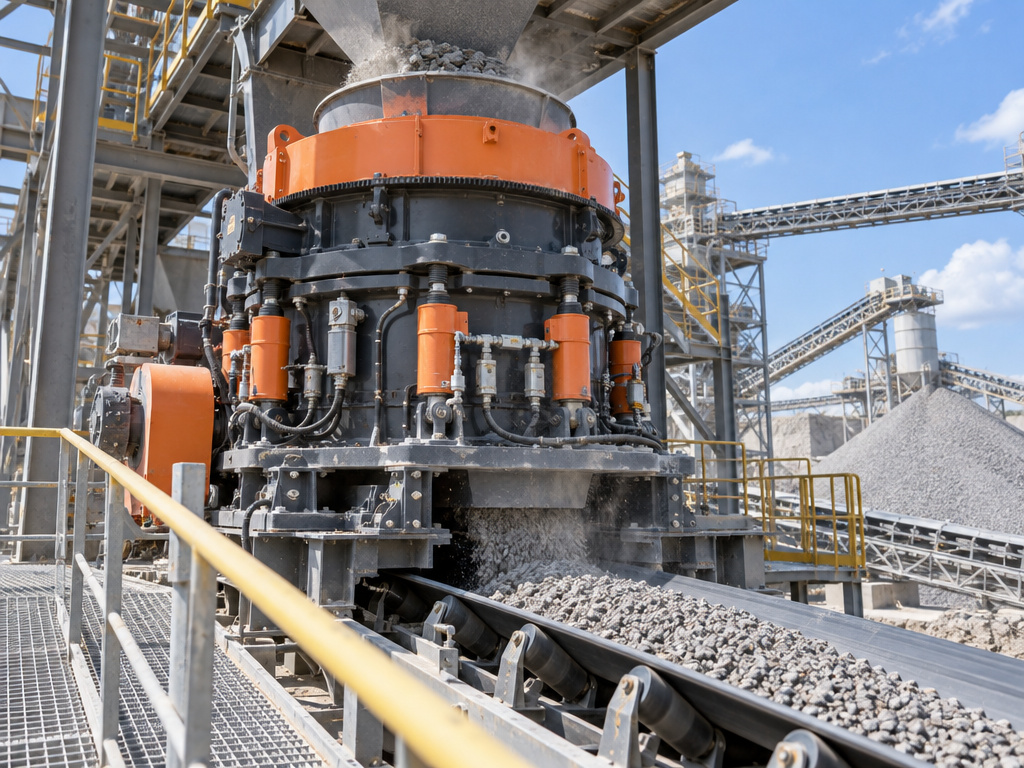
Selecting the right manganese steel alloy for the liners is the logical next step once the feed mechanics are mastered. It is a decision that affects the entire downstream process, as worn liners lead to oversized product that recirculates and overburdens the screens. Even the most advanced heavy duty crushing equipment cannot compensate for a liner that has lost its profile.
Performance optimization doesn’t stop at the alloy level; it extends to how these components are monitored during their service life. While the metallurgy provides the defense, the day-to-day survival of the machine depends on the physical integrity of the lubrication and support systems. A perfectly selected high-manganese mantle will still fail if the internal temperatures or pressures are ignored during the heat of a production shift.
Maintaining the operational reliability of heavy duty crushing equipment depends on the rigorous execution of daily inspection workflows that target high-wear components and fluid levels. These essential rituals ensure that minor mechanical deviations, such as a drop in hydraulic pressure or a slight misalignment in belt tension, are identified before they trigger a catastrophic system failure. By documenting these observations in a daily log, operators establish a historical data set that proves invaluable for predicting component fatigue and scheduling preventative repairs during planned downtime.
Consistent attention to lubrication and structural stress points remains the most effective strategy for protecting the massive capital investment required for primary and secondary crushing assets.
In 2026, the reliance on automated sensors has not replaced the fundamental necessity of the manual walk-around, particularly when assessing the fluid systems that keep heavy duty crushing equipment operational. Lubrication and hydraulic system checks are the primary defense against mechanical seizure and are performed by inspecting oil levels, pressure gauges, and hose fittings every single day before the first rock enters the chamber. These systems function as the circulatory network of the machine, where even a minor drop in pressure or a microscopic increase in fluid contamination can lead to a catastrophic failure of the main bearings.
The internal environment of a crusher is inherently hostile, characterized by extreme vibration and pervasive stone dust that seeks to penetrate every seal. Clean lubricant is not merely a preference; it is a mechanical requirement for the high-speed rotation of the eccentric assembly. When dust bypasses a seal and enters the oil supply, it transforms a smooth lubricant into an abrasive paste that can scour the surface of expensive bronze bushings in a matter of hours. This is why the daily inspection workflow focuses heavily on the visual state of the oil and the integrity of the breather caps that filter the air entering the tanks.
Hydraulic systems serve a different but equally vital role, providing the force required to adjust the crusher’s settings and managing the relief mechanisms that protect the frame. A crusher that cannot maintain hydraulic pressure is a machine that cannot maintain its product specification, as the gap between the crushing surfaces will inevitably drift. Operators must verify fluid levels and check for the tell-tale “weeping” of oil at hydraulic couplings, which often signals a fitting that has loosened due to the constant rhythmic oscillation of the plant.
I have observed that many operators treat the hydraulic tank as a “set and forget” component, which is a significant mistake in a high-output environment. Regular monitoring of the hydraulic pressure gauges during operation provides a window into the health of the internal relief valves. If the pressure fluctuates wildly while the machine is under load, it often indicates air ingestion or a failing pump, both of which are far cheaper to fix during a scheduled break than after a total system blowout.
A rigorous daily checklist ensures that nothing is overlooked during the frantic start-up period of a morning shift:
- Oil Level Verification: Confirming the lubrication tank is at the “full” mark while the oil is at operating temperature to ensure consistent cooling.
- Filter Indicator Inspection: Checking the bypass indicators on all oil and hydraulic filters to catch clogs before the system goes into unfiltered bypass mode.
- Hose and Fitting Audit: Searching for frayed outer jackets on high-pressure hoses or signs of oil pooling beneath the main cylinders.
- Breather Cap Maintenance: Ensuring that tank breathers are clean and unobstructed to prevent vacuum locks or pressure buildup within the reservoirs.
- Gauge Calibration Check: Verifying that digital and analog pressure readouts agree, which helps identify a failing sensor before it triggers a false emergency shutdown.
The consequences of ignoring these fluid systems are often measured in six-figure repair bills and weeks of lost production. In one instance, a plant implemented a strict daily lubrication check, which caught a slow hydraulic leak in a cone crusher’s relief cylinder. By identifying this early, the team prevented a potential overpressure event that would have cracked the upper frame during a tramp metal encounter. This type of proactive detection is the difference between a minor maintenance task and a complete plant overhaul.
Temperature monitoring is another critical aspect of the daily ritual that goes beyond simple fluid levels. Most modern heavy duty crushing equipment utilizes oil not just for lubrication, but as a primary cooling medium for the internal components. If the return oil temperature is consistently higher than the manufacturer’s baseline, it is a definitive sign that a bearing is beginning to fail or that the oil cooler is fouled with debris. Checking the heat exchanger for airflow blockages is as important as checking the oil itself.
Consistency is the only way to make these inspections effective. A single missed day might be the day a vibratory stress fracture finally opens up a hole in a hydraulic line. While automation provides the data, the human eye is still the most effective tool for spotting the subtle changes in machine behavior-like a new drip on the concrete or a slight change in the hum of a pump-that precede a major mechanical event. These rituals keep the cost-per-ton low by ensuring the machine never reaches the point of an unplanned stop.
The focus on fluids naturally leads to the broader physical state of the machine, as hydraulic leaks are often the first sign of excessive vibration or structural fatigue. When oil lines begin to rattle loose, it suggests that the energy of the crushing process is no longer being contained by the machine’s primary supports. Identifying these fluid-related red flags provides the necessary lead time to inspect the heavy steel framework and the tensioned belts that drive the entire assembly forward.
A single frayed strand on a drive belt or a hairline fracture in a support beam can halt a 500-ton-per-hour operation just as effectively as a total engine failure. While automated sensors provide a digital safety net for internal pressures, the physical exterior of heavy duty crushing equipment requires a manual, eyes-on approach to identify mechanical fatigue. Daily inspection of belt tension and structural stress points ensures that the vibration and force of the crushing process do not slowly dismantle the plant from the outside in.
The vibration inherent in aggregate processing makes every fastener and weld a potential point of failure. A visual sweep of the machine’s skeleton is the only way to catch the subtle shifts that precede a snap. This isn’t just about keeping the machine running; it is about protecting the massive capital investment of the quarry by catching small deviations before they become structural liabilities. It is the difference between a ten-minute adjustment and a week of emergency welding.
During a routine daily check, a maintenance technician noticed abnormal wear on a conveyor belt splice, allowing them to schedule a repair during a planned outage rather than suffering an emergency breakdown. This is a perfect example of how the human element complements digital telematics. A sensor might tell you the motor is pulling more amps, but it won’t tell you the splice is about to unzip until the belt is already in a heap on the ground.
Managing the Tension of Drive and Conveyor Systems
Drive belts are the literal connectors of power within the plant, and their health is entirely dependent on correct tensioning. If a belt is too loose, it slips, generating heat that glazes the rubber and reduces power transfer; if it is too tight, it puts an excessive load on the bearings, leading to premature failure of the very components the lubrication system is designed to protect. Technicians should look for “sidewall wear” or “glazing,” which are clear indicators that the belt has been slipping under load.
Conveyor health impacts overall plant flow more than almost any other secondary component. A belt that is mistracked even by a few centimeters will begin to rub against the frame, causing the edges to fray and eventually leading to a longitudinal tear. Inspecting the belt cleaners and idlers is a non-negotiable part of the morning walk-around. If material builds up on the return idlers, it changes the effective diameter of the roller, forcing the belt to “walk” to one side and creating a cascade of alignment issues.
Checking the fasteners and bolts for tightness is a tedious but necessary task in the high-vibration environment of a quarry. Constant oscillating forces can back out even the most secure locking nuts over time. I have seen entire motor mounts shift because a single mounting bolt vibrated loose, leading to a drive-train misalignment that shredded three sets of belts in a single afternoon. Using a simple “tap test” or a visual check for “rust bleeding” around a bolt head can reveal a loose connection that isn’t yet visible to the naked eye.
The condition of the belt splices-whether mechanical or vulcanized-must be scrutinized for any signs of pulling apart. A mechanical fastener that begins to lift can catch on a primary scraper, potentially ripping hundreds of feet of belt in seconds. It is much easier to replace a single bolt on a Flexco-style fastener during a lunch break than it is to re-string a main feed belt after a catastrophic failure.
Structural Integrity and Stress Point Analysis
The frame of a crusher is subjected to millions of cycles of high-impact loading, which can eventually lead to metal fatigue. Identifying cracks or deformations in crusher frames and support structures is the primary goal of the structural walk-around. Technicians should pay special attention to the corners of the main frame and the areas surrounding the mounting pads, as these are the zones where stress concentrations are highest. A fresh crack often reveals itself by a “clean” line in an otherwise dusty or dirty area, where the vibrating metal has shaken off the accumulated quarry fines.
Support structures, including the legs and the sub-frame, must be checked for any signs of shifting or “walking” on the concrete pads. If the anchor bolts are loose, the entire machine can develop a harmonic vibration that accelerates wear on every internal component. This structural stability is the foundation of a smart configuration; if the machine isn’t anchored correctly, no amount of automation can compensate for the resulting mechanical instability. It is a fundamental reality that the iron must be sound before the software can be effective.
A single sentence could summarize the philosophy here: if it moves, grease it; if it’s supposed to be still, bolt it down. This daily ritual ensures that the heavy duty crushing equipment remains a cohesive unit rather than a collection of vibrating parts. By treating the structure with the same respect as the engine, operators maintain the geometric alignment necessary for the crusher to perform at its rated capacity without overstressing its components.
Finally, the inspection must include the guards and safety housings that protect both the workers and the machine. A loose guard can fall into a moving fly-wheel or belt, causing a chain reaction of damage that goes far beyond a simple safety violation. Ensuring all protective shrouds are secure is a final, vital step in the daily maintenance ritual that keeps the quarry profitable and the staff safe. The most successful sites are those where the team treats the morning walk-around as a professional audit rather than a chore.
A technician in a high-capacity site noted that checking the torque on the main frame bolts twice a week reduced their unplanned structural repairs by nearly half. This level of diligence is what separates a high-output titan from a machine that is constantly under repair.
Achieving peak output within a quarry depends on the precise mechanical synchronization of primary, secondary, and tertiary stages to eliminate operational bottlenecks. A cohesive circuit ensures that heavy duty crushing equipment operates at its designed capacity by matching the reduction ratios of each machine to the specific geology of the processed rock. If the material flow between these stages remains imbalanced, the resulting surge loads or starved feeds lead to increased wear on liners and higher energy consumption per ton.
Operators must prioritize the integration of crushing mechanics with logistics, as even the most advanced automation cannot compensate for a physical mismatch in equipment sizing. By aligning these components into a single processing harmony, a plant maintains strict aggregate cubicity and maximizes throughput without risking the catastrophic downtime associated with circuit congestion.
Designing a quarry layout based on the maximum possible throughput of a single machine is a common mistake that leads to massive inefficiencies. True operational success requires a holistic view where the primary, secondary, and tertiary stages function as a synchronized unit rather than a collection of independent assets. When one stage processes material faster than the next can receive it, the resulting backup creates a bottleneck that forces the entire line to idle or run at sub-optimal speeds. Achieving a balanced output across all these stages is paramount for maximizing overall plant throughput and eliminating costly bottlenecks in heavy duty crushing equipment operations.
The calculation of circuit balance begins with matching the volumetric capacity of the primary jaw or gyratory system to the intake limits of the secondary cone crusher. It is not enough to simply look at the manufacturer’s “tons-per-hour” rating on a spec sheet; a technical editor must account for the reduction ratio-the relationship between the size of the rock entering the chamber and the size of the product leaving it. If a primary crusher produces a 6-inch minus product at a rate that exceeds the secondary stage’s ability to ingest that specific size, the plant will suffer from “surging,” where the secondary crusher is intermittently overwhelmed. Matching these capacities ensures that the “feed” and “discharge” cycles of different machines never conflict.
A quarry increased its overall production by 25% after re-evaluating its circuit balance and upgrading a secondary cone crusher to match the higher output of its primary jaw crusher, eliminating a persistent bottleneck. This real-world example highlights that the secondary stage is often the “choke point” of the entire operation. While the primary stage handles the raw brute force of breaking run-of-mine rock, the secondary and tertiary stages are responsible for the refined shaping and sizing that determine the final product’s value. If the secondary stage cannot keep pace, the high-capacity primary unit becomes a wasted investment, sitting idle for significant portions of the shift while downstream equipment catches up.
To manage these fluctuations in flow, successful operators rely on sophisticated inter-stage management and simulation tools. These strategies include:
- Optimizing surge pile management: Placing a buffer or “surge” pile between the primary and secondary stages allows the primary crusher to run at peak efficiency even if the secondary stage needs a brief pause for adjustment.
- Screen media selection: Choosing the right wire or polyurethane screen decks ensures that only the material requiring further reduction reaches the next crusher, preventing the “re-crushing” of already-sized aggregate.
- Circuit simulation software: Modern tools allow managers to input rock hardness and moisture data to predict how a specific Metso Nordberg HP or Sandvik CH unit will perform within a multi-stage configuration before a single bolt is turned.
- Closed-circuit feedback loops: Sending oversized material back to the secondary stage via return conveyors to ensure 100% compliance with size specifications without slowing the primary intake.
The selection of screen media is an underrated factor in balancing the circuit. If the screens are blinded or incorrectly sized, they send “fines”-material already small enough for the final product-back into the crushing chamber. This “parasitic load” consumes valuable space in the secondary or tertiary crusher, effectively reducing the machine’s capacity to process the larger rocks it was actually designed for. By ensuring screens effectively bypass correctly sized material, the crusher is free to focus only on the rocks that need a reduction in size, maintaining the intended flow rate across the entire site.
I have often seen plant managers focus exclusively on the primary stage’s power, but the smart money is on the tertiary stage’s precision. If the tertiary impactors or cones cannot handle the volume of the secondary discharge, the entire plant slows to a crawl. This is where simulation software becomes a necessity rather than a luxury; it allows for the “virtual” testing of different configurations to find the exact point where every motor in the circuit is working at its intended load. This level of planning is what separates a high-margin operation from one that is constantly fighting its own equipment.
The goal is to reach a state of “steady-state” processing where the material moves through the plant like water through a pipe. When the primary, secondary, and tertiary stages are perfectly balanced, the heavy duty crushing equipment operates with fewer starts and stops, which significantly reduces mechanical fatigue on the internal components. This alignment is the foundation of a smart configuration, ensuring that every kilowatt of energy used contributes directly to the final stockpile rather than being wasted on idling or handling recirculating loads. Precision in stage balancing directly dictates the final cost-per-ton and ensures the quarry meets the tightest material specifications without sacrificing volume.
Optimizing Material Flow and Logistics
Seamless material flow determines the actual profitability of a quarry. While the technical specifications of individual machines are important, the movement of rock from the face to the final stockpile dictates whether those machines ever reach their rated capacity. Optimized material flow ensures continuous operation by eliminating the idle time that occurs when crushers wait for feed or downstream belts become overwhelmed. In many operations, the logistics of moving stone are the primary drivers of the final cost-per-ton, often outweighing the direct costs of electricity or wear parts.
Logistics impact overall plant efficiency by dictating the rhythm of the entire site. If the haul distance between the primary station and the secondary circuit is too great, the fleet of trucks becomes a rolling bottleneck. I have seen sites where adding a single truck only increased congestion at the hopper rather than increasing throughput.
Transitioning to a more permanent infrastructure often yields better results than simply scaling up a mobile fleet. For instance, by implementing a new conveyor system that bypassed an intermediate truck haul, a quarry significantly reduced fuel costs and increased the uptime of its secondary crushing line, improving overall plant efficiency.
Strategic placement of crushers and conveyors is the first step in minimizing wasted energy. Moving a secondary crusher closer to the primary surge pile can drastically reduce the energy required to transport material against gravity or over long distances. Proper conveying reduces energy consumption by replacing the high-intensity diesel cycles of haul trucks with the more efficient, continuous electric drive of a belt system. This shift allows the heavy duty crushing equipment to maintain a steady-state load, which is far more beneficial for the mechanical health of the motors and gearboxes than the surge-and-starve cycles common in truck-fed operations.
Efficient haul road design is frequently overlooked as a factor in crushing performance. A road with steep grades or poor drainage slows down the cycle time of the loaders and trucks, leading to gaps in the feed. When a crusher runs empty, it loses the protective layer of material in the chamber, increasing the risk of metal-on-metal contact and unnecessary vibration. Keeping the road surface at an optimal grade ensures that the Caterpillar 988K XE or similar high-capacity loaders can maintain the precise and continuous feeding necessary for the primary stage to stay ahead of the secondary circuit’s demand.
Real-time tracking of material movements has become a standard requirement in 2026 for high-output sites. This is not just about knowing where the trucks are; it is about monitoring the volume of material currently sitting in surge piles and bins. Automated sensors can now communicate with the logistics fleet to slow down or speed up the delivery of raw stone based on the current consumption rates of the secondary cone crushers. This level of coordination prevents the “feast or famine” scenario that causes structural stress on the equipment and leads to inconsistent product sizing.
Stockpile management plays a massive role in operational efficiency and the final quality of the aggregate. If a stockpile is managed poorly, material segregation occurs, where larger rocks roll to the bottom and fines stay at the top. This uneven distribution creates a fluctuating feed for the tertiary stage, forcing the heavy duty crushing equipment to constantly adjust to different material densities. Using automated stackers or radial conveyors helps maintain a uniform blend, which simplifies the crushing process and ensures that the final product meets the strict cubicity requirements for high-strength concrete.
Minimizing re-handling of material is the most direct way to cut operational expenses. Every time a loader picks up a pile of stone and moves it twenty yards, the site is losing money. The goal should be a “one-touch” philosophy where material moves from the primary crusher to the final saleable pile with as little intervention as possible.
Over-handling not only increases fuel and labor costs but also creates more dust and degrades the shape of the stone through unnecessary abrasion. I recommend auditing the plant layout annually to identify any points where material is being moved twice for no functional reason; these are usually the easiest places to find “hidden” production capacity.
The configuration of the site must account for the specific geology and the environmental constraints of the 2026 regulatory landscape. In regions with high moisture levels, the logistics of material flow must include specialized transfer points that prevent sticky fines from clogging the system. If the flow stops at a transfer chute, the entire multi-million dollar crushing circuit stops with it. Using low-friction liners in chutes and ensuring that conveyor angles are appropriate for the specific moisture content of the rock are small details that prevent massive losses in uptime.
A quarry is a living ecosystem where the logistics chain serves as the nervous system. If the logistics fail, the “titans” of the quarry-the massive jaw and cone crushers-become nothing more than expensive monuments. Smart configuration means looking at the gaps between the machines as closely as the machines themselves.
By focusing on a seamless transition from excavation to the shipping gate, operators can ensure that their capital investment is always working at its peak potential. The most successful sites are those where the material moves so smoothly it appears effortless, though that fluidity is actually the result of rigorous planning and constant monitoring of the flow dynamics.
A plant manager at a high-volume granite site recently observed that optimizing their conveyor belt speeds to match the discharge rate of their secondary crushers eliminated a persistent “surging” issue that had been causing premature bearing wear for years.
Conclusion
The operational success of a quarry is rarely defined by the sheer scale of its machinery, but rather by the precision with which those machines are integrated. Efficiency hinges on the strategic alignment of primary, secondary, and tertiary stages to ensure that no single unit becomes a bottleneck for the rest of the circuit. When a plant achieves this balance, the result is a consistent flow that maximizes throughput and maintains strict compliance with material specifications.
A plant manager reported a 10% increase in daily production after upgrading to crushers with automated CSS adjustment. This specific improvement highlights how technology removes the human error and downtime associated with manual interventions. By shifting focus from reactive repairs to predictive diagnostics, operators protect their high-value assets and stabilize the cost-per-ton. Success in the modern quarry environment requires a transition from viewing machinery as isolated tools to seeing them as a single, automated ecosystem.
- Strategic Alignment: Matching the capacity of the primary jaw or gyratory crusher with the secondary cone crusher ensures a smooth material transition and prevents equipment starvation or overloading.
- Automation as a Safeguard: Systems like Sandvik’s hydrocone technology provide real-time adjustments and tramp metal protection, which are essential for preventing catastrophic internal damage and maintaining product cubicity.
- Data-Driven Maintenance: Telematics platforms such as Cat Product Link or Metso Outotec Metrics allow teams to monitor vibration and temperature, identifying potential bearing or eccentric failures before they cause an unplanned shutdown.
- Operational Discipline: Maintaining a choke-fed cavity in compression crushers is the most effective way to promote rock-on-rock crushing, which significantly extends the lifespan of expensive manganese liners.
- Material Logistics: Optimizing the haul roads and conveyor layouts reduces re-handling and energy consumption, ensuring that the crushing circuit remains the productive heart of the site.
The reader should begin by auditing the current feeding habits of the primary stage. Ensuring a consistent, non-intermittent flow from the wheel loader into the hopper is the first step toward stabilizing the entire downstream process. Following this, the maintenance team should review telematics logs from the past month to identify any recurring thermal or vibration spikes that suggest an underlying mechanical imbalance.
Effective management of heavy duty crushing equipment requires a commitment to both technical precision and proactive maintenance. The most profitable quarries prioritize smart configuration over raw power to ensure long-term durability. Productivity is a direct result of calculated equipment synergy.
Frequently Asked Questions
What is the primary function of heavy-duty crushing equipment in a quarry?
Heavy-duty crushing equipment reduces large rocks (run-of-mine) into smaller, specified aggregate sizes. This process is crucial for preparing raw materials for construction, road building, and other infrastructure projects, directly impacting a quarry’s cost-per-ton and productivity.
How does automation improve crushing plant efficiency?
Automation systems in crushing plants allow for real-time setting adjustments, counteract liner wear, prevent tramp metal damage, and offer predictive diagnostics. This reduces downtime, optimizes throughput, and ensures consistent product quality without constant manual intervention.
Why is aggregate cubicity important in material processing?
Aggregate cubicity refers to the particle shape, with more cubic particles being desirable for high-strength concrete and asphalt. Modern cone crushers are designed to achieve this shape, improving material quality and reducing voids in the final product, which is critical for structural integrity.