
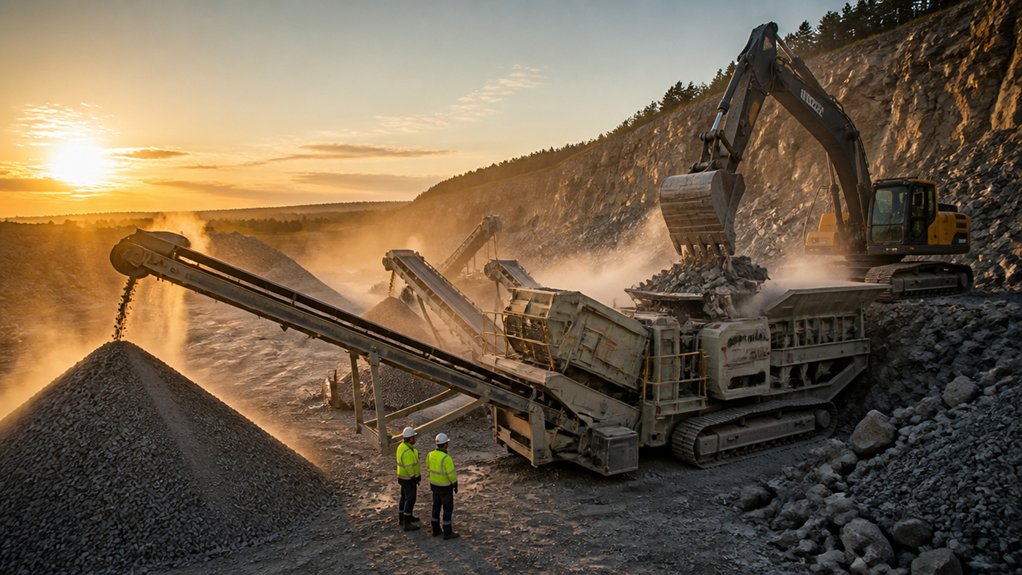
You can raise quarry output and lower cost per tonne by matching crushers to rock hardness, abrasiveness, moisture and feed size. Set baselines for throughput, grading, energy, fuel, downtime and emissions, then track them against weighbridge and plant records. Automate feed, load and belt-speed control to spot blockages early and stabilise production. Keep material within design limits, maintain wear parts and compare whole-life costs. The sections below explain how to set targets and improve performance across your operation.
Set Quarry Crushing Targets and Baselines
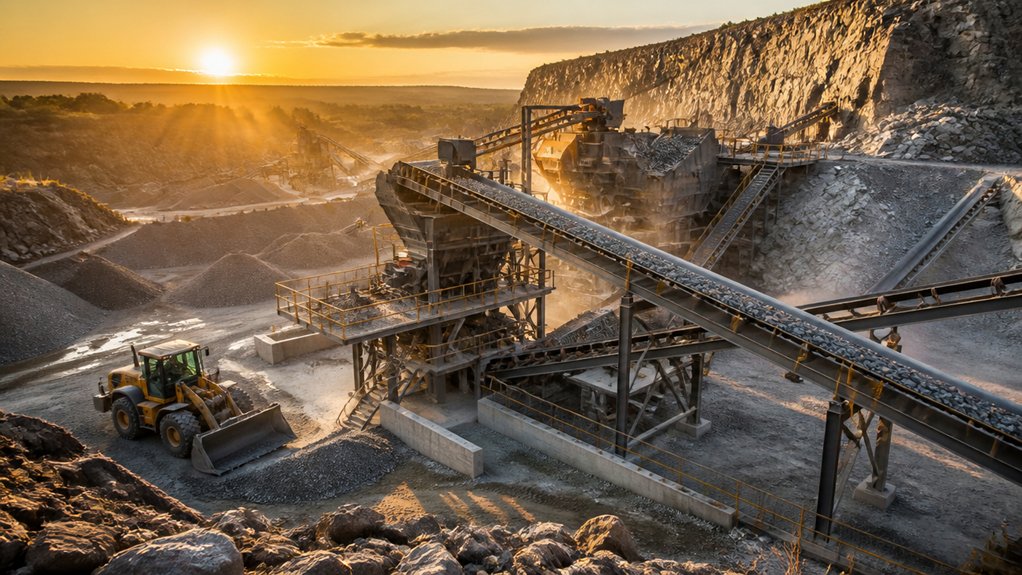
Before changing a quarry’s crushing setup, establish a reliable baseline: record throughput, product gradings, energy use, fuel, downtime and cost per tonne under normal operating conditions. Use weighbridge tickets, plant logs and maintenance records to check figures across shifts and material conditions.
Then set measurable targets, such as tonnes per hour, specification compliance, availability and pounds per saleable tonne. Include emissions, dust, noise and water use in your Environmental impact measures, alongside fuel and electricity costs.
Agree targets with production, maintenance and sales teams so gains don’t compromise product quality or safety. Provide Workforce training on data collection and operating procedures; consistent records make comparisons meaningful.
Review results weekly, investigate deviations and adjust actions against verified costs. This disciplined approach helps you prioritise improvements and confirm whether changes deliver lasting savings.
Match Crushers to Rock Type and Output
Match the crusher to both the rock’s properties and the product you need: jaw crushers suit hard, abrasive feed and primary reduction, while impact crushers can produce well-shaped aggregate from softer, less abrasive rock.
Assess rock hardness, abrasiveness, moisture and feed size before crusher selection; these factors affect throughput, wear and energy use.
For secondary stages, cone crushers handle tougher stone efficiently, while impact units may reduce softer material in fewer passes.
Check the required grading, shape and output rate against your plant’s capacity and customer specifications.
In UK quarries, consider the cost and availability of wear parts, power demand and maintenance access.
A suitable combination of primary and secondary crushers can limit recirculation and unnecessary wear.
Compare whole-life costs, not purchase price alone, before committing to equipment.
Automate Quarry Crushing to Reduce Downtime
Once you’ve selected crushers for your rock and output, automation can help keep the line running reliably. A central control system lets you monitor feed rates, crusher load, belt speed and stockpile levels from one screen. You can spot blockages or abnormal readings early, then adjust settings or stop equipment safely before a minor fault becomes an expensive breakdown.
Use predictive analytics to assess operating data and flag components that need attention. Automated maintenance alerts can prompt inspections and help your team schedule work around shifts, planned stoppages and production targets. Connect alarms to clear procedures, so operators know when to investigate and when to call an engineer.
For UK quarries, dependable remote monitoring can also support lean staffing across dispersed sites. Track downtime causes and response times to prioritise practical improvements and protect saleable output.
Cut Crushing Energy and Wear-Part Costs
To cut crushing energy and wear-part costs, start by keeping material flow steady and within each crusher’s design limits. Set feeder rates to prevent surges, and match the feed size to the machine’s chamber. Oversized or sticky material can drive up power demand, blockages and premature damage.
For energy efficiency, check that motors, drives and conveyors suit the duty; variable-speed control can help you avoid running equipment harder than necessary. Keep liners and jaw plates correctly fitted, and select grades suited to your rock’s abrasiveness.
Wear part optimization also means maintaining consistent settings: excessive closed-side settings can increase recirculation, while overly tight settings may accelerate wear. Use your automation system to stabilise feed and respond promptly to changing conditions.
These practical adjustments can lower electricity use and replacement costs without compromising throughput or product specification.
Track Quarry Crushing Metrics and Results
Track key crushing metrics consistently so you can spot inefficiencies before they raise costs or disrupt production. Record tonnes per hour, feed size, product grading, fuel use and energy consumption for each shift. Compare results with plant targets and weighbridge data to identify bottlenecks, excessive recirculation or screen blinding.
Track downtime by cause, including blockages and wear-part changes, so you can prioritise maintenance and estimate cost per saleable tonne. Use crusher controls and simple dashboards to review trends, not isolated readings; verify sensors and keep records consistent across operators.
Monitor dust, noise and water use to assess Environmental impact and meet permit conditions. Log incidents and near misses alongside safety protocols checks, then act on recurring risks.
Review performance weekly with your team and adjust settings to improve output without compromising product quality or safe operation.