

Quarry automation combines connected machinery, sensors and software to help you manage extraction, crushing and haulage across a UK site. Smart equipment shares live data on location, output, fuel use and faults, while automated drills and loaders follow controlled plans and routes. You can use this information to reduce downtime, waste and environmental impacts, but safe deployment still needs training, human oversight and tested controls. Explore how careful planning turns these technologies into practical gains.
What Does Quarry Automation Include?
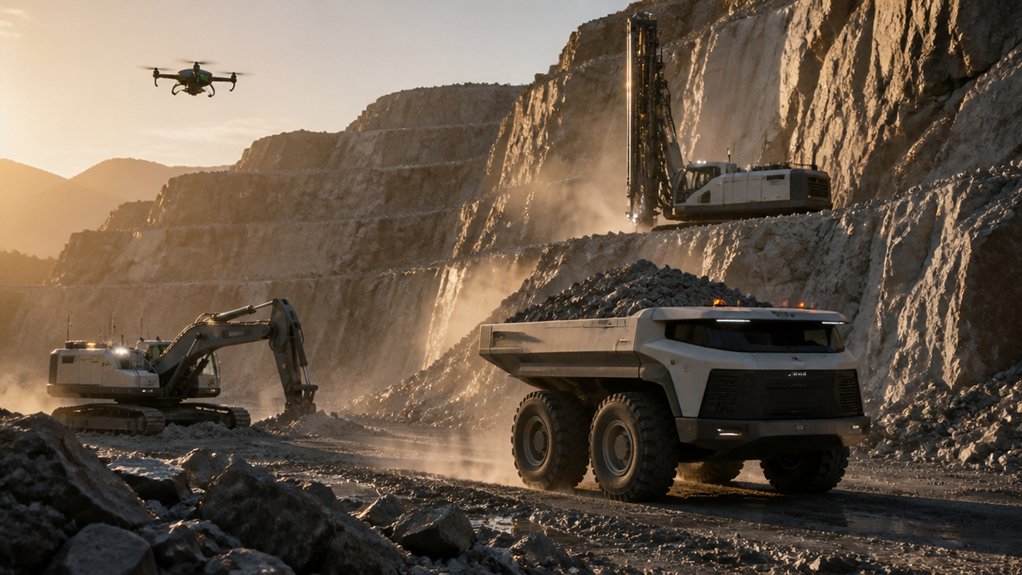
Quarry automation combines connected machinery, sensors and software to monitor and control tasks such as drilling, crushing, screening and materials handling. You can use it to coordinate production, track equipment condition and manage site processes from a control room or at the machine.
Automation includes programmable logic controllers, telemetry, machine vision, weighbridges and fleet-management systems. Sensors can flag abnormal vibration, temperature or pressure, helping your team plan maintenance before a fault causes downtime.
Automated alarms and interlocks can also reduce exposure to hazardous areas, but you’ll still need trained operators, clear procedures and reliable emergency stops.
For UK sites, Environmental impact matters: monitoring dust, noise, water use and energy can support practical controls. Regulatory compliance remains your responsibility; keep records, assess risks and check that systems meet applicable health, safety and environmental requirements.
Review performance regularly and update controls when conditions change.
Where Does Smart Machinery Fit in a Quarry?
Smart machinery can automate extraction, helping you maintain consistent output while keeping people clear of hazardous areas.
Real-time monitoring gives you live data on equipment performance, material flow and site conditions.
Use these insights to spot risks early and support safer, more efficient quarry operations.
Automated Extraction
As extraction moves beyond manual control, smart machinery is changing how UK quarries drill, load and haul rock. Automated rigs can follow planned drill patterns, while driverless or remotely operated loaders move material along controlled routes. You can use these systems to improve accuracy, reduce unnecessary machine movements and keep people away from hazardous faces and vehicle interactions.
Automation doesn’t remove your responsibility for safe operations. You’ll need trained operators, clear exclusion zones, emergency stop procedures and maintenance checks suited to site conditions. Match equipment to the geology, haul roads and production plan, and retain manual controls for safe intervention when required.
Consider Environmental impact when selecting routes and machinery: efficient extraction can reduce fuel use, dust and disturbance. Community engagement helps you explain operational changes and address local concerns as automation develops.
Real-Time Monitoring
With sensors and connected systems, you can monitor machinery, production and site conditions in real time. On a UK quarry site, telematics can track fuel use, engine temperature, vibration and equipment location. You can spot faults early, schedule maintenance before breakdowns and reduce unplanned downtime.
Live data also helps you manage crushing rates, stockpiles and vehicle movements. Set alerts for unsafe conditions, such as excessive dust, high noise or restricted-zone entry, so supervisors can act promptly.
Monitoring water use, emissions and dust supports compliance and reduces Environmental impact.
Reliable systems need clear procedures: check sensor accuracy, protect data links and make sure operators understand alerts. Invest in Workforce training so your team can interpret dashboards, report anomalies and respond safely.
Use monitoring to support decisions, not replace site inspections or competent judgement.
How Do Sensors Connect Quarry Equipment?
You connect quarry sensors through data networks that carry readings from plant and mobile equipment to control systems.
Communication systems let you monitor performance and spot faults, helping you act before a problem creates a safety risk.
Choose links that suit site conditions and keep critical alerts reliable.
Sensor Data Networks
Sensor networks connect quarry equipment through wired links, short-range wireless signals and site-wide radio or cellular systems, sending readings from machines and fixed monitoring points to control platforms.
You can use sensor integration to combine data on vibration, temperature, fuel use, dust and conveyor movement. Gateways collect readings where coverage is limited, then pass them to secure systems for storage and review.
Data analytics can reveal rising bearing temperatures, abnormal vibration or excessive dust before conditions become hazardous.
You’ll need to check signal coverage across benches, crushers and stockpiles, especially where terrain or metal structures obstruct transmission.
Protect cables and devices from impact, water and dust, and maintain them under site procedures.
Set clear alerts and verify sensor readings against inspections; technology supports, but doesn’t replace, competent supervision and safe working practices.
Equipment Communication Systems
Reliable equipment communication starts with choosing links that suit each quarry’s layout and operating conditions. Your sensors can send readings to machines and control rooms through wired Ethernet, industrial Wi-Fi or private radio networks.
Use cables where fixed plant needs dependable, low-latency connections; wireless links suit mobile crushers, excavators and haul trucks moving across the site.
Rugged gateways collect data from sensors, translate protocols and forward information to a central platform. In remote areas, cellular or satellite links can relay updates, though coverage and delay need checking.
Configure access controls and encryption to protect operational data, and use fail-safe alerts when connections drop.
With dependable links, you can support fleet management, coordinate machine movements and improve maintenance scheduling.
Keep communication tests in your inspection routine, and ensure operators follow site traffic plans and safety procedures when alerts or equipment status change.
How Does Automation Enable Hauling and Drilling?
As quarries adopt automation, haul trucks and drilling rigs can follow programmed routes and work plans with less direct operator input. You can use these Mining innovations to schedule movements between loading points, crushers and tipping areas, while onboard systems regulate speed and braking on defined routes.
Automated drilling rigs position accurately, set hole depth and spacing, and adjust feed parameters to suit rock conditions. This Technology integration helps you maintain consistent blast patterns and coordinate drilling with production plans.
Operators still review designs, supervise equipment and intervene when conditions change; automation doesn’t remove the need for competent people or site procedures. Before deployment, you’ll need to map routes, validate machine settings and train crews.
Clear operating limits and maintenance checks help keep automated haulage and drilling reliable across UK quarry conditions.
How Does Connected Equipment Improve Quarry Safety?
When connected equipment shares location, status and alarm data, quarry teams can spot hazards sooner and coordinate a safer response. You can use machine telematics to track vehicle movements, set geofences around exclusion zones and alert operators when people or plant approach.
Proximity sensors and camera systems can warn drivers about blind spots, while fatigue monitoring can prompt a safe stop before concentration falls.
These tools support, but don’t replace, your risk assessments, supervision or legal duties under UK health and safety regulations. Set clear Safety protocols for responding to alerts, checking sensor limits and reporting faults.
Include connected systems in Training programs so operators understand warnings, protect personal data and know when to take manual control.
Review incidents and near misses with your workforce, then update procedures to reflect changing site conditions and emerging risks.
How Can Quarry Automation Reduce Downtime and Waste?
Beyond improving safety, quarry automation can keep production moving and cut material waste by coordinating plant, conveyors and stockpiles in real time. Sensors can flag bearing temperatures, vibration or belt slippage before a fault stops your line, giving maintenance teams time to act safely.
Automated feed control helps crushers run within their design limits, while belt scales and stockpile monitoring reveal bottlenecks and misplaced material. You can adjust throughput to match demand, reducing unnecessary crushing, rehandling and fuel use.
This improves energy efficiency and supports consistent product grading, so fewer loads need reprocessing. In UK quarries, where planning conditions and environmental permits matter, less dust, noise and wasted stone can reduce your environmental impact.
Keep operators informed with clear alerts and retain manual controls for safe intervention.
How Do You Plan a Quarry Automation Rollout?
Plan a quarry automation rollout around clear operational goals, not technology for its own sake. Identify where connected plant, autonomous vehicles or remote monitoring could address specific site constraints, then map dependencies across extraction, processing and haulage.
Check equipment compatibility, network coverage and data security before choosing a phased pilot. Set safety requirements with your quarry manager and consult workers, maintenance teams and contractors early.
You’ll need clear procedures for isolating automated equipment, managing vehicle interactions and responding to system faults. Assess Environmental impact, including noise, dust, emissions and effects on water or habitats, against planning conditions and permits.
Plan Workforce adaptation through practical training, revised responsibilities and time for supervised operation. Use pilot findings to refine controls and procedures before extending automation across the site, keeping changes aligned with UK health and safety duties.
How Do You Measure Smart Machinery’s Return?
A phased automation pilot gives you a baseline for measuring smart machinery’s return. Before deployment, record comparable figures for tonnes moved, fuel use, machine availability, maintenance hours and near misses. Then track the same measures across shifts and material conditions, using telematics and weighbridge data where available.
Your cost analysis should include purchase or lease costs, software, servicing, downtime and employee training, not just headline productivity gains. Compare these costs with verified savings in fuel, labour hours and unplanned repairs over an agreed period.
Check that faster cycles don’t compromise safe operating procedures, separation distances or site traffic controls. Ask operators and maintenance teams to review results, since practical feedback can explain anomalies that dashboards miss.
Use like-for-like periods and document assumptions; UK weather, geology and shift patterns can distort comparisons. Report payback alongside safety and reliability, so you judge value without trading risk for output.
What’s Next for Quarry Automation?
As sensors, connectivity and machine learning improve, quarry automation will extend from individual machines to coordinated site operations. You’ll see haul trucks, crushers and conveyors share live data, helping your team balance production, reduce idle time and spot faults before they cause downtime.
Remote monitoring can also keep people away from hazardous faces and moving plant, but automation won’t remove the need for robust risk assessments, safe systems of work and human oversight.
Expect Environmental impact to shape investment. Connected systems can track fuel use, dust, noise and water, helping you target reductions and demonstrate compliance with UK permits.
To realise these gains, prioritise Workforce training: operators and engineers need skills in data, automation and emergency response. Introduce changes in stages, validate safety controls and involve workers early.
Quarry automation will progress best when technology supports—not replaces—competent people.