
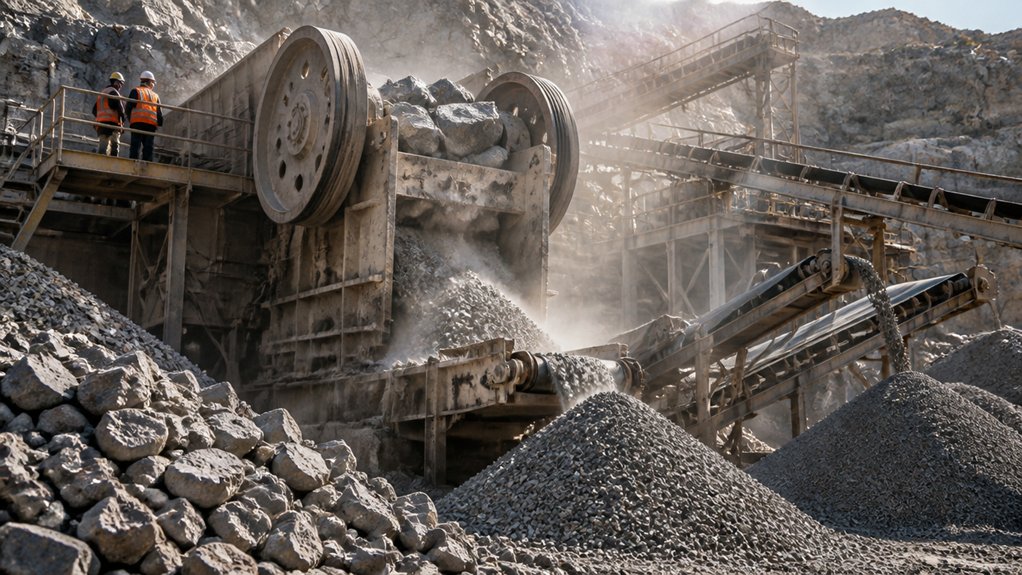
A quarry turns blasted rock into aggregate through controlled feeding, crushing, screening, and stockpiling. You first inspect the blast area for loose stone and misfires, then feed material steadily into primary crushers that reduce large blocks. Secondary crushers refine stone to meet product requirements, while screens separate it by size. Conveyors move rock between stages; out-of-spec material returns for reprocessing. Operators monitor equipment and use lockout/tagout before maintenance. Finished aggregate is sampled, stored separately, and shipped to order. The steps below explain how each stage works safely and efficiently.
How Does a Quarry Turn Rock Into Aggregate?
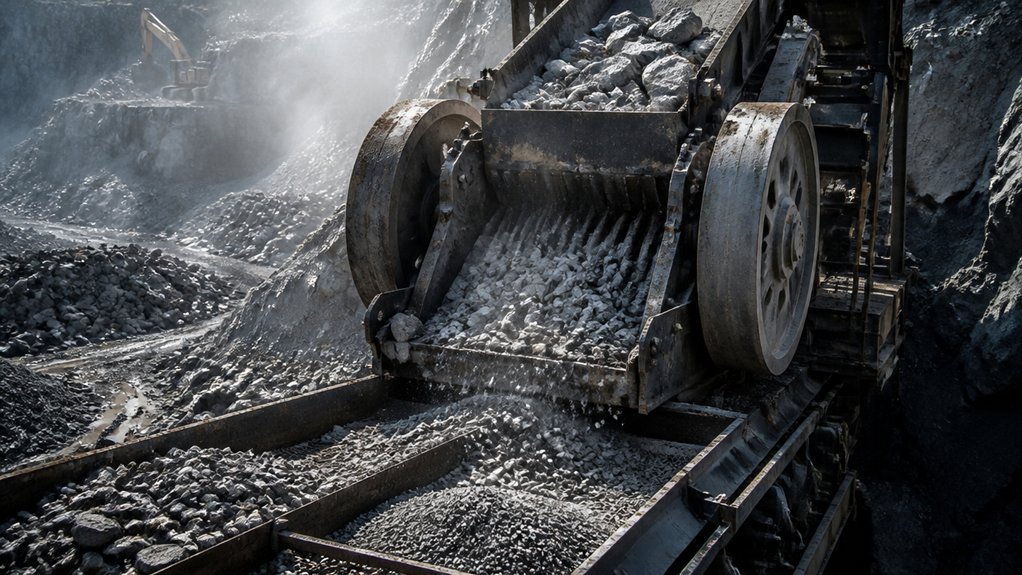
A quarry turns solid rock into aggregate by drilling and blasting it from the face, then feeding the broken material through crushers and screens. You’ll find that each stage reduces stone to specified sizes for construction, drainage, or roadwork.
After primary crushing, conveyors move material to secondary crushers, which refine it further. Screens separate particles by size; oversized rock returns for additional crushing, while finished aggregate goes to stockpiles.
You’ll need to monitor feed rates, equipment condition, and product gradation to keep production consistent. Follow safety protocols around moving machinery, dust, noise, and vehicle routes, and never clear a blockage while equipment runs.
Good water management, dust suppression, and careful site planning can limit quarry environmental impact. Test samples regularly to confirm that aggregate meets project specifications before delivery.
How Is Quarry Rock Blasted and Prepared?
Before blasting, quarry crews survey the rock face, map fractures, and design a blast pattern that controls fragmentation and protects workers and nearby structures. You’ll see them select blasting techniques, charge depths, and timing based on rock strength, bench geometry, and site limits.
Trained crews place explosives in drilled holes, connect initiation systems, and clear the exclusion zone before firing. They monitor vibration, flyrock, and air pressure to keep the blast within approved limits.
Afterward, you’ll find crews inspect the face for loose blocks, misfires, and unstable ground; only authorized personnel handle suspected misfires. Excavators then remove the broken stone and separate oversized pieces for secondary breaking.
Crews also check the rock fragmentation and remove debris so the material is ready for transport to the crushing plant.
How Do Feeders Control Rock Flow?
Once blasted rock reaches the plant, feeders regulate how quickly and evenly it enters the crusher. You’ll typically use a vibrating, apron, or belt feeder to move material from the hopper while limiting surges. Adjust the feed rate to match plant capacity and keep the incoming stream steady; uneven loading can cause blockages, excess wear, or interruptions.
Grizzly bars may screen out undersized pieces before they reach the next stage, reducing unnecessary handling. For effective flow regulation, monitor feeder speed, hopper level, and material size, then make controlled adjustments as conditions change.
Keep guards in place, follow lockout procedures before clearing buildup, and never reach into moving equipment. Regular inspections of liners, belts, and drive components help you spot wear early and maintain reliable, safe material delivery.
How Do Primary Crushers Break Large Rock?
As the steady feed reaches the primary crusher, its crushing mechanism reduces the largest rock to a size the next stage can handle. In a jaw crusher, an oscillating jaw presses stone against a fixed plate; in a gyratory crusher, a rotating mantle compresses rock against a lined chamber.
Both rely on controlled force to initiate rock fragmentation and release material through the discharge opening.
You can adjust the opening and operating settings to suit the feed, but don’t exceed the machine’s limits. Keep oversized or uncrushable metal out; tramp material can damage components or cause dangerous blockages.
Before clearing a jam, isolate and lock out the equipment, then follow site procedures. Regular inspections, lubrication, and crusher maintenance help preserve crushing performance and protect workers around moving parts.
When Does Stone Need Secondary Crushing?
When primary crushing leaves stone too large for the required product or the next processing stage, it needs secondary crushing. You’ll use a secondary crusher to reduce coarse material to a controlled size for the specified aggregate or further processing. Check product specifications and measure the primary crusher’s output; don’t assume every rock needs another reduction stage.
Stone durability affects crusher selection and wear. Hard, abrasive rock can demand more power and tougher wear parts, while weaker stone may break readily. Match the crusher setting and feed size to the material to support crushing efficiency and limit excess fines.
Inspect the chamber, guards, and wear components before operation, and follow lockout procedures before clearing blockages or making adjustments. Keep people clear of the feed and discharge zones, and monitor product size and equipment condition during crushing.
How Do Conveyors Move Rock Through a Quarry?
You move crushed rock through the quarry on conveyor belts, which carry material steadily between processing stages.
At transfer points, chutes guide rock onto the next belt and help control spillage and dust.
Keep guards in place and stay clear of moving belts and transfer areas.
Conveyor Belt Operation
Conveyor belts move blasted rock from the quarry face to crushers, screens, and stockpiles along a continuous route. A drive motor turns the head pulley, pulling the belt and its load forward; idlers support the belt and limit sag. You control speed and feed rate to match crusher capacity, prevent overloading, and keep production steady.
Choose belt material selection to suit rock size, abrasion, moisture, and operating conditions. Before startup, check guards, emergency stops, belt tracking, and the travel path. Keep people clear of moving equipment, and never reach beneath a running belt.
Use lockout/tagout before clearing jams or performing repairs. Routine conveyor maintenance includes inspecting splices, rollers, pulleys, and belt wear, then correcting damage promptly. Monitor for unusual noise, heat, or vibration so you can stop equipment before a failure causes injury or downtime.
Material Transfer Points
At each material transfer point, a chute guides rock from one conveyor to the next or into a crusher, screen, or stockpile. You rely on properly sized chutes to control flow, limit spillage, and reduce impact that can damage belts or create dust.
Skirts and impact beds contain material as it lands, while liners resist abrasion from sharp, heavy stone. Keep transfer areas clear so you can spot buildup, blockages, and unsafe conditions before they interrupt production.
For safe Material handling, never reach into a chute or clear a jam while equipment runs; isolate and lock out the system first.
Include chute liners, belt scrapers, seals, and supports in routine Equipment maintenance. Check alignment and wear regularly, and repair leaks promptly to protect workers, equipment, and aggregate quality.
How Do Screens Sort Aggregate by Size?
As crushed rock moves across a vibrating screen, the openings let smaller particles pass through while larger pieces travel onward. You control size grading by selecting decks with apertures matched to each product specification. The top deck removes the coarsest fraction; lower decks separate progressively finer material into distinct streams.
Vibration spreads the feed and helps particles reach openings, while screen angle and speed affect throughput and accuracy. Check Screen calibration against the required cuts, and inspect panels for wear, blinding, or damage. A blocked or enlarged opening can shift product sizes and reduce capacity.
Before inspection or adjustment, stop and lock out the equipment; never reach beneath moving decks. Keep feed even across the screen width, and verify samples regularly so you can maintain consistent gradation and safe, reliable operation.
What Happens to Oversized or Out-of-Spec Rock?
Screening separates the target sizes, but oversized or out-of-spec rock needs another route. You’ll typically send Oversized rocks back through a crusher for another reduction pass. A return conveyor or chute directs material to the appropriate crushing stage, where settings control the resulting size.
If rock misses specifications because of shape, contamination, or inconsistent grading, you may divert it for separate handling rather than blend it into acceptable product.
Use Quality control checks to identify the cause and confirm whether reprocessing will correct it. Inspect screens, crusher wear parts, and feed conditions; adjust settings or repair equipment when needed.
Before clearing a blockage or inspecting a conveyor, isolate and lock out the equipment, then verify zero energy. Never reach into moving machinery.
Track recirculated loads and resample the output to confirm it meets the required gradation and product limits.
How Is Finished Aggregate Stored and Shipped?
Once aggregate meets the required gradation and quality limits, conveyors move it to designated stockpiles or storage bins. You’ll keep each product separated and label it clearly to prevent contamination or loading errors. Shape stockpiles to limit segregation, and use controlled discharge points to maintain consistent material quality.
Inspect storage facilities for drainage, dust control, and structural hazards; keep walkways clear and restrict access around conveyors and reclaim equipment.
For shipping logistics, you’ll coordinate orders, vehicle capacity, and pickup times before loading. Use calibrated scales to verify each load meets the customer’s quantity and product specifications.
Load trucks or railcars with approved equipment, and secure the area before starting. Keep drivers clear of moving machinery, use designated traffic routes, and follow site signals.
Record product, weight, and destination for traceability, then issue shipping documents before dispatch.