

Aggregate washing plants improve product quality by removing clay, silt, dust, organic matter and excess fines that can affect grading, bonding, drainage and durability. Screens separate stone by size, while sprays, scrubbers and hydrocyclones clean particles and remove lighter contaminants. Dewatering screens reduce moisture, helping you handle and stockpile aggregate consistently. Recycled process water also supports responsible UK site operation. The right setup can help you meet grading requirements and customer specifications, as the following sections explain.
What Do Aggregate Washing Plants Remove?
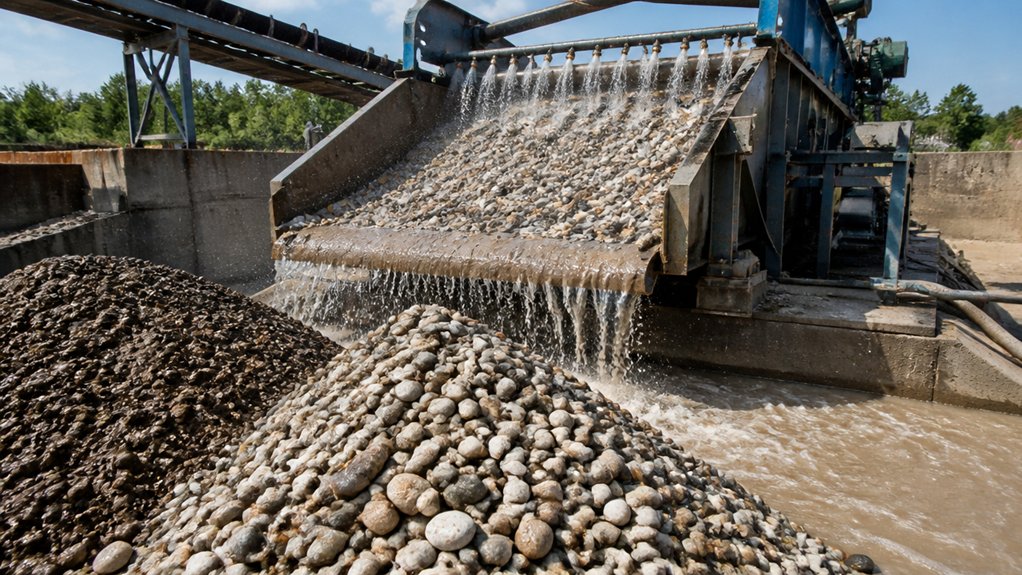
Aggregate washing plants remove clay, silt, dust and other unwanted fines from sand and gravel, along with organic matter and contaminants such as coal or lignite. These materials can impair concrete performance, affect asphalt mixes and push products outside UK specification limits.
Washing also targets soluble salts and lightweight debris that may stain finished surfaces or reduce aggregate durability. You can adjust water flow, scrubbing and classification settings to suit feed conditions and the required end product, while avoiding unnecessary treatment of clean material.
This control supports operational efficiency and helps you maintain consistent product quality across variable deposits. Effective removal can also reduce environmental impact by limiting contaminants in saleable aggregate and enabling process water to be recovered and reused.
Your plant must manage wash-water residues responsibly, in line with site permits and environmental requirements.
How Does Screening Separate Aggregate by Size?
How does screening separate aggregate by size? Your plant feeds material across vibrating decks fitted with apertures of set dimensions. Smaller particles pass through each screen, while larger stones travel onwards or discharge separately. This staged process creates graded products for UK construction specifications, from fine sand to coarse aggregate.
You can select mesh or perforated plate sizes to match required Particle size ranges and feed characteristics. Deck angle, vibration, throughput and moisture all affect Screening accuracy; excessive feed depth or worn panels can let undersize material report to the wrong fraction.
Regularly inspect screen media and adjust settings to maintain consistent grading and reduce recirculation.
How Does Washing Remove Clay, Silt, and Dust?
In an aggregate washing plant, you dislodge adhering fines with water jets, agitation or scrubbing.
Hydrocyclones and settling equipment then separate clay and silt from the saleable material.
A final rinse removes residual dust, helping you meet UK specification limits.
Dislodging Fine Particles
As water and aggregate move through a washing plant, sprays and agitation loosen clay, silt and dust from the stone surfaces. In a UK quarry, you can use log washers, scrubbers or high-pressure spray bars to apply the action suited to your feed.
Rotating paddles create attrition, rubbing particles against one another and breaking weak clay coatings from gravel. Spray nozzles direct water into voids and across the load, helping dislodge fines lodged between larger particles.
You’ll need to match water pressure, residence time and machine settings to the material; excessive energy can damage softer aggregate, while insufficient agitation leaves contamination attached.
Effective fine particle removal starts with this controlled release. By freeing adhering material, you support surface contamination elimination and prepare the aggregate for consistent grading and improved product quality across construction applications.
Separating Clay and Silt
Once agitation releases the fines, washing separates them from saleable aggregate by size and settling behaviour. In a UK washing plant, you can direct the slurry through a hydrocyclone, where centrifugal force sends heavier sand towards the underflow while finer clay and silt leave with the overflow. This controlled split supports effective Clay removal without sacrificing valuable product.
For Silt separation, you can use settling tanks or thickeners: reduced flow lets suspended particles settle, and rakes gather the solids for removal. Adjust water flow, feed rate and cyclone pressure to suit the feed’s grading and clay content.
Regular sampling helps you confirm that the finished aggregate meets specification and that fines aren’t recirculating into the product. These stages manage contaminated process water and recover usable material, while keeping separation focused on clay and silt.
Rinsing Away Dust
How does washing remove clay, silt, and dust? In an aggregate washing plant, water loosens fine particles clinging to stone surfaces. You feed material through a scrubber or log washer, where agitation breaks up clay coatings and releases silt and dust. Spray bars then rinse the aggregate, carrying suspended fines into a sump or settling system.
Effective Dust removal depends on matching water flow, pressure, and residence time to your feed’s grading and contamination. Too little rinsing leaves fines attached; excessive flow can waste water and disrupt plant balance.
Screens drain washed aggregate while retaining saleable material, and recycled process water supports efficient operation.
This Surface cleaning improves consistency, helping you meet UK customer specifications for concrete, asphalt, and drainage stone. Regularly inspect nozzles, screens, and water circuits to maintain performance and limit carry-over into finished stockpiles.
How Does Dewatering Dry Washed Aggregate?
After washing removes silt and clay, dewatering reduces the water carried with the aggregate so it can be conveyed, stockpiled and sold at the required moisture level.
You’ll typically use a dewatering screen, where vibration moves material across a sloping, perforated deck while water drains through the apertures. For finer sand, a hydrocyclone can separate solids from process water before a dewatering screen removes further moisture.
These dewatering techniques help you recover usable fines and return clarified water to the washing circuit. The result isn’t completely dry material; it’s aggregate with lower, more consistent moisture.
That supports dry aggregate handling, reduces water pooling around conveyors and stockpiles, and helps you meet customer specifications. You can then manage runoff and store products separately, ready for dispatch by lorry or rail.
What Affects Aggregate Washing Results?
Aggregate washing results depend on feed material, process settings and plant condition. Clay content, particle size distribution and incoming moisture all influence how effectively you remove silt and contaminants. Test representative samples before setting up your circuit; variable quarry faces may need different treatment.
You’ll also need to match screen apertures, water flow and scrubber residence time to the feed. Too little agitation leaves clay attached, while excessive washing can break down weaker particles and increase fines. Check spray bars, pumps and screens regularly, as blockages or worn components reduce separation performance.
Water quality matters, too: recirculated water with high suspended solids can limit washing efficiency. Monitor settlement and treatment systems to control discharge and meet UK environmental requirements. Balance water use and throughput for energy efficiency without compromising product cleanliness or consistent grading.
How Does Clean Aggregate Improve Concrete?
Clean aggregate helps concrete achieve consistent strength, workability and durability by limiting clay, silt and other contaminants that can weaken the bond between cement paste and particles. When you use washed sand and stone, cement paste coats the particles more effectively, supporting reliable mix performance and strength development.
Reduced surface contamination also limits unwanted fines that can increase water demand, helping you maintain the specified water-to-cement ratio without sacrificing workability. You’ll find batching more predictable when aggregate grading is controlled and material is free from excess debris.
Check moisture content regularly, as changes affect the water added at the mixer and can alter slump and strength. In UK concrete production, consistent aggregate quality helps you meet mix designs, comply with project specifications and deliver durable concrete suited to its intended exposure conditions.
How Does Washing Improve Stone Appearance?
Beyond improving concrete performance, washing also reveals the stone’s natural colour and texture by removing clay, silt, dust and organic residue from its surface.
In a UK quarry, you can use washing to produce a cleaner, more consistent finish for decorative aggregates, gabion stone and exposed-aggregate applications. Screens and washing equipment separate fine material from saleable stone, while controlled water flow helps preserve each particle’s shape and character.
The result is a clearer view of colour variation, grain and mineral detail, supporting accurate grading and more confident product selection.
Washing isn’t Stone polishing: it doesn’t mechanically abrade or gloss the surface. Instead, it provides practical Surface enhancement by exposing the stone’s inherent appearance, helping you meet customer specifications and present products effectively without altering their natural finish.
What Aggregate Problems Can Washing Solve?
When clay, silt or organic matter contaminates stone, washing removes these unwanted fines before they affect grading or end use. Excess fines can push your aggregate outside specification, impair drainage and reduce concrete or asphalt performance.
Washing also tackles dust, adhering clay and soluble salts that may cause staining, poor bonding or inconsistent batching. For UK quarries, this helps you meet customer requirements for clean, reliably graded products across construction and infrastructure applications.
It can also reduce material sent to landfill by recovering usable sand and aggregate from dirty feed. Consider Environmental impact when managing wash water: settlement and recycling systems limit discharge and conserve water.
Regular inspection of screens, pumps and dewatering equipment addresses maintenance considerations, helping you control wear, prevent blockages and maintain consistent product quality through changing feed conditions.
How Do You Choose an Aggregate Washing Setup?
Choose an aggregate washing setup around your feed material, required product specification and site constraints. Assess the feed’s grading, clay content and contamination, then match plant capacity to your quarry’s production rate.
A log washer or scrubber may suit heavily soiled material, while a rinsing screen and hydrocyclone can remove fines and manage silt in a closed water circuit.
Check that the configuration produces the required UK end-product grading and meets customer or project specifications. Allow space for conveyors, settlement tanks, access and safe maintenance.
Plan water supply, recycling and permitted discharge before installation, and consider seasonal changes in feed moisture.
Your Aggregate storage areas should keep washed products separate and prevent recontamination.
Factor Equipment maintenance, spares availability and operator access into selection, so you can sustain throughput, product consistency and reliable plant performance.