
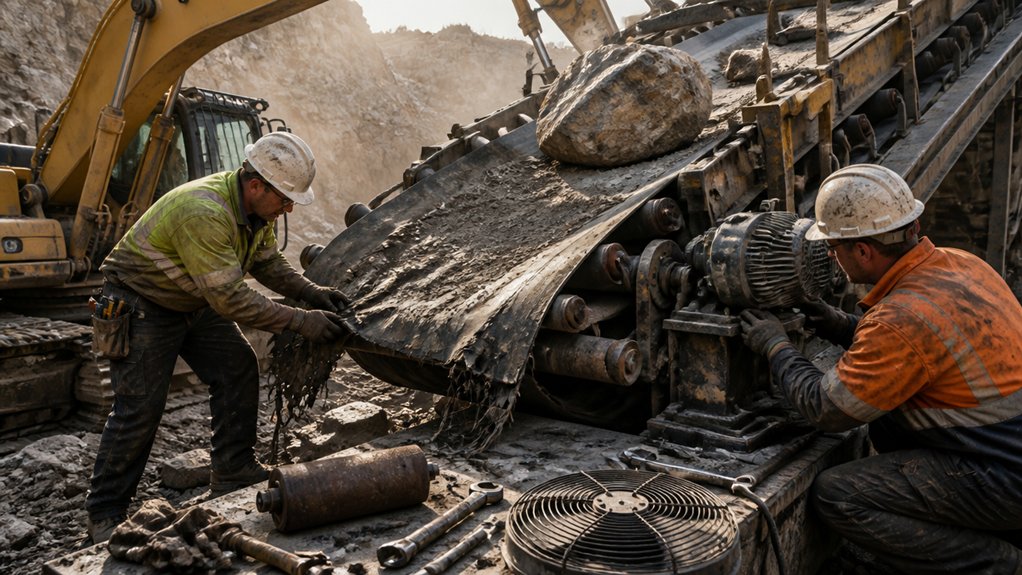
Common quarry plant problems include crusher blockages, belt slippage, uneven feed, dust, spillage, screen blinding, and unexpected wear. Stop equipment before clearing obstructions, then isolate, lock out, and verify zero energy before servicing. Match feeder speed to crusher capacity, maintain belt alignment and tension, and inspect screens, liners, scrapers, and seals for wear. Track alarms, throughput, moisture, and recurring faults to catch problems early. The following guidance explains practical fixes and safer maintenance steps.
Clear Crusher Blockages and Restore Material Flow
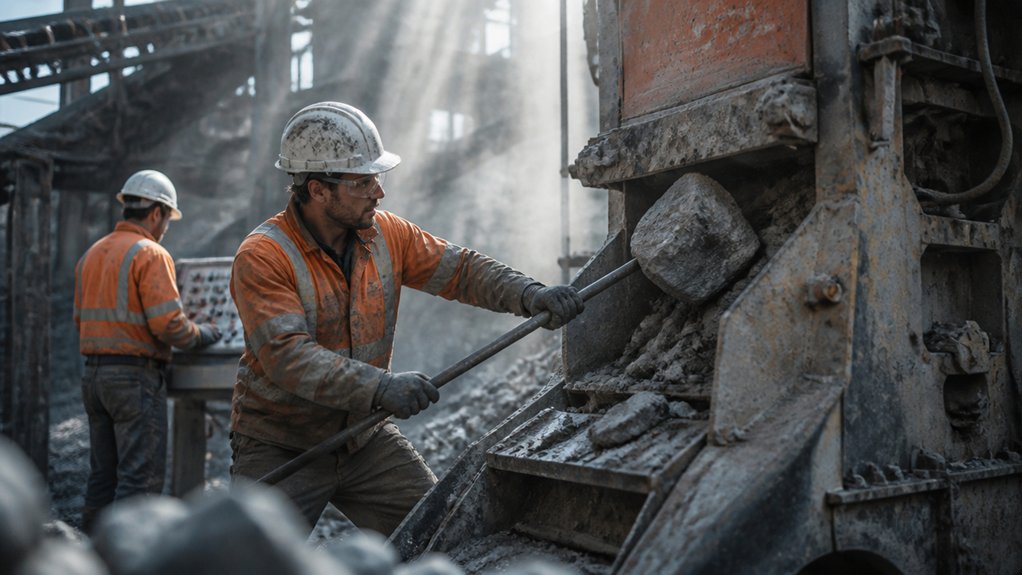
Crusher blockages can stop production and create serious hazards, so isolate and lock out the machine before investigating. Verify zero energy, secure moving parts, and follow your site’s lockout procedure. Never reach into a crusher or loosen a jam while stored pressure or suspended material could release.
Once the area’s safe, identify the cause: oversized feed, tramp metal, wet fines, or worn liners can restrict material flow. Use approved tools and lifting equipment to remove obstructions; keep clear of pinch points and follow the manufacturer’s instructions. Don’t use explosives or improvised methods.
Before restarting, inspect the chamber, wear components, and discharge path. Remove tools, replace guards, and account for everyone. Restore power only after you’ve cleared the exclusion zone and authorized restart.
Record the cause and corrective work in your crusher maintenance log to help prevent repeat blockages.
Stop Quarry Conveyor Belt Slippage and Misalignment
If your conveyor belt slips or wanders, stop and isolate the system before inspecting it.
Check belt tension, then align the pulleys and idlers to keep the belt tracking straight.
If it still slips, improve traction by cleaning the belt and drive pulley or fitting an appropriate lagging.
Correct Belt Tension
Correct belt tension keeps a quarry conveyor moving material without slipping or drifting off-center. Before checking Belt tension, stop and lock out the conveyor, then verify that stored energy can’t move the belt or take-up. Follow the manufacturer’s procedure and wear required protective equipment.
Inspect the belt, take-up, and tensioning components for damage or seized movement. Use the specified tension measurement or sag limits; don’t guess or overtighten. Too little tension can cause drive slippage, while excess tension increases stress on belts, bearings, and splices.
Make small, even changes with the approved conveyor adjustment method. Keep hands clear of pinch points, and never adjust a moving belt. Restore guards before restarting.
Run the conveyor empty, then under load, and watch for slipping. If tension won’t hold, investigate wear or take-up faults before continuing operation.
Align Pulleys and Idlers
When a quarry conveyor belt drifts or slips, misaligned pulleys or idlers may be the cause. Before inspecting, stop and lock out the conveyor, then verify that stored energy can’t move the belt.
Check pulley alignment with a straightedge or laser, comparing pulley faces and shafts against the manufacturer’s tolerances. Look for loose bearings, bent shafts, or shifted mounts; correct these faults before restarting.
Inspect idlers for seized rollers, damaged frames, and uneven spacing. Make small idler adjustment changes, then run the belt briefly from a safe position and observe its tracking.
If it still wanders, adjust the appropriate idler in small increments rather than making large corrections. Keep guards in place, stay clear of moving parts, and recheck fasteners after alignment.
Record your findings so you can spot recurring movement early.
Improve Belt Traction
Belt slippage often points to inadequate traction, not just a tracking problem. First, stop the conveyor, isolate its power, and follow lockout procedures before inspecting the drive.
Check the Belt surface for mud, fines, oil, or glazing; clean it with approved methods and correct the source of contamination.
Inspect the pulley lagging for wear, damage, or buildup, since a smooth or dirty surface reduces grip.
Verify belt tension against the manufacturer’s specifications: too little tension encourages slip, while excessive tension strains the belt, bearings, and splices.
If cleaning and adjustment don’t solve the issue, consider suitable traction technology, such as replacement lagging or a belt cleaner designed for your material.
Don’t apply sprays or improvised coatings.
Restart only after guards are secured, then monitor tracking and slippage under load.
Keep Quarry Plant Feed Rates Steady
Steady feed rates help quarry plants maintain consistent throughput, product quality, and equipment performance. To improve feed rate consistency, check that the feeder, hopper, and upstream conveyor work together at the required capacity. Adjust feeder speed to match the crusher’s operating limits, and avoid sudden surges that can overload the chamber or cause uneven product sizing.
Inspect liners, gates, and feeder components for wear or blockage during scheduled shutdowns. Use level sensors or a controlled loading routine to keep material flow predictable, and review production data to spot fluctuations early. If the feed becomes erratic, reduce incoming material safely before investigating the cause; never reach into moving equipment.
Follow lockout procedures before clearing obstructions or making repairs. Train operators to communicate changes in source material and adjust settings gradually, so your plant remains stable without stressing equipment or compromising safe operation.
Reduce Quarry Plant Dust and Spillage
Dust and spillage around quarry plant equipment can reduce visibility, damage components, and create slip or respiratory hazards. Inspect transfer points, chutes, seals, and loading areas to find where material escapes.
For Dust suppression, use correctly positioned sprays or misting systems, and adjust flow to control airborne fines without soaking material or creating muddy walkways. Enclose dusty transfers where practical, and maintain extraction filters according to the manufacturer’s schedule.
Use Spillage containment such as skirts, liners, and catch trays to keep material within the conveyor path. Check belt alignment and scraper condition; correct mistracking and replace worn blades before buildup spreads.
Shut down and isolate equipment before clearing blockages or cleaning near moving parts. Remove accumulated material with suitable tools, not compressed air, which can re-suspend dust. Record recurring leaks and repair their causes promptly.
Improve Screening and Prevent Screen Blinding
If your screen’s output is inconsistent, check whether the media suits the material’s size, shape, and moisture.
Choose an appropriate aperture and open area, and inspect for wear or damage during lockout.
To prevent blinding, control feed rate and moisture, and use suitable cleaning aids.
Optimize Screen Media
When screens blind or pass too much oversize material, check whether the media suits the feed and the job. Match aperture size and shape to your product specification, then select wire, polyurethane, or rubber based on particle size, moisture, abrasion, and impact. The right choice can improve Screen efficiency without sacrificing media durability.
Inspect the deck layout and confirm each panel fits securely, with no gaps that let material bypass the screen. Use the manufacturer’s recommended tension and fastening method; loose or damaged panels can reduce accuracy and create hazards.
Before changing media, isolate and lock out the screen, verify zero energy, and follow site procedures. Track product gradation, throughput, and wear after installation. If results remain poor, review feed rate and operating settings before selecting a different aperture or media type.
Prevent Material Blinding
Even well-matched screen media can blind when damp fines or sticky material plug the openings. Check feed moisture and gradation; adjust water addition or blend in drier material when practical. Use a controlled feed rate and spread material evenly across the deck to prevent overloading and material segregation.
Select self-cleaning media or suitable apertures for the feed, and inspect tension, wear, and support components. Consider approved ball trays or other anti-blinding devices, following the screen manufacturer’s limits.
Don’t clear plugged openings while equipment is running. Isolate, lock out, and verify zero energy before inspection or cleaning.
Dust suppression can reduce airborne hazards, but excess water may worsen blinding. Apply only enough to control dust, and monitor the deck during operation.
Record moisture, throughput, and screen performance so you can identify recurring causes and adjust settings safely.
Reduce Wear on Quarry Plant Components
To reduce wear on quarry plant components, match each machine to the material and operating conditions, then keep it correctly adjusted and maintained. Set crusher gaps and feeder rates to suit the feed; excessive force accelerates wear and wastes energy.
Choose suitable liners, screens, and belt materials for the rock’s abrasiveness, and rotate or replace wear parts according to manufacturer guidance.
Apply the correct Lubrication techniques, using specified lubricants and intervals; contamination or overgreasing can damage bearings.
Schedule component inspections to check liners, belts, rollers, bearings, and fasteners for uneven wear, heat, cracks, or looseness.
Isolate and lock out equipment before inspecting or servicing it, and use suitable protective equipment.
Record wear patterns and adjustments so you can refine settings and extend component life without compromising safe operation.
Prevent Unexpected Quarry Plant Downtime
Prevent unexpected quarry plant downtime by spotting faults early and addressing them before they stop production. Check control panels, alarms, and process readings at shift start; investigate unusual vibration, heat, noise, or pressure changes promptly.
Use condition-monitoring data to identify trends in bearings, motors, belts, and hydraulic systems, then schedule repairs during planned stoppages. Keep critical spares available and confirm suppliers can deliver parts quickly.
Accurate equipment calibration helps prevent misleading readings and poor process control, so verify sensors and scales at the intervals your manufacturer recommends.
Operator training helps your crew recognize warning signs, follow shutdown procedures, and report faults clearly. If a machine behaves unpredictably, stop it using approved procedures and isolate it before inspection.
Record faults, actions, and recurring causes so you can target the right corrective measures and reduce repeat interruptions.
Improve Quarry Plant Safety and Maintenance
When you improve quarry plant safety and maintenance, make safe access and isolation part of every task. Before servicing crushers, conveyors, or screens, you must stop equipment, isolate every energy source, lock and tag controls, and verify zero energy. Never rely on an emergency stop as isolation.
Set clear Safety protocols for inspections, guarding, confined spaces, and working at height. You should check guards, pull cords, interlocks, and access platforms routinely; record defects and remove unsafe equipment from service until repairs are complete.
Schedule lubrication and component checks around operating conditions, not just calendar intervals.
Effective staff training helps your team recognize hazards, use lockout procedures, and report near misses. You should assign competent workers to maintenance, provide suitable tools and protective equipment, and review procedures after incidents or plant changes.
Keep inspection and repair records current.