
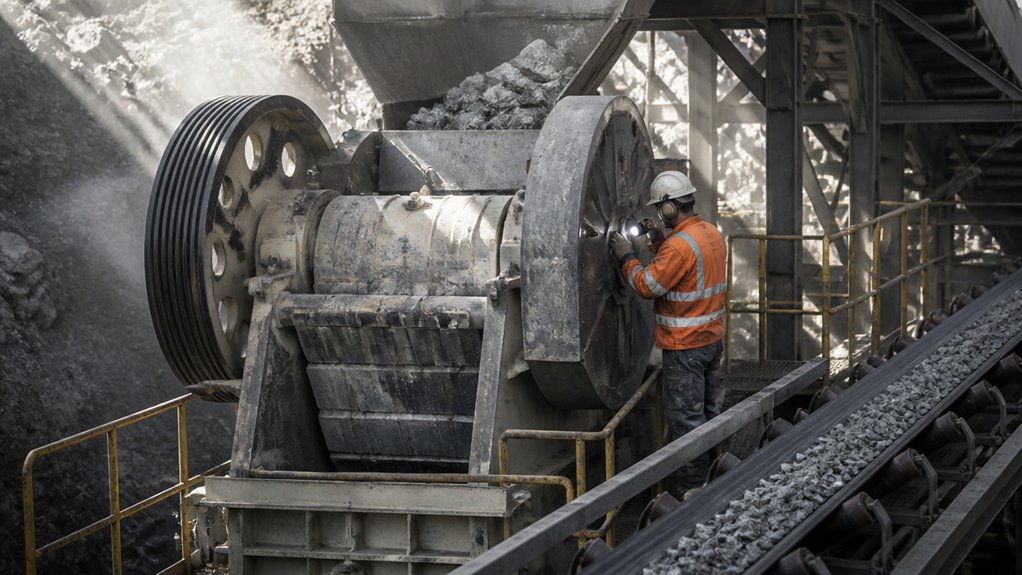
Reduce wear and maintenance costs by matching crusher settings and wear parts to your feed’s hardness, abrasiveness and impact. Remove tramp metal and oversize rock before they reach the crusher, and keep feed rates steady. Inspect liners at planned intervals, measure wear against manufacturer limits, and lubricate components with the specified grade and quantity. Track tonnes processed, operating hours, downtime and energy use to spot costly trends early. The following steps show how to put this approach into practice.
Diagnose the Causes of Crusher Wear

To reduce crusher wear, first identify what’s causing it rather than simply replacing parts. Record where wear appears, how quickly it develops and whether it’s even across the chamber. Compare findings with the crusher’s manual and recent maintenance records; changes can reveal a developing fault.
Inspect liners, mantles, bearings and drive components during planned shutdowns. Look for cracking, deformation, loose fixings, heat damage or unusual vibration. Material fatigue can weaken metal over time, particularly where components face repeated impact or stress. Check alignment, lubrication and clearances against the manufacturer’s specifications.
Review operating logs and speak with your operators. Operator error, such as incorrect settings or poor start-up and shutdown procedures, can accelerate wear. Use condition-monitoring data where available, and photograph defects for comparison. If the cause remains unclear, ask your supplier or a qualified engineer to assess the machine before ordering parts.
Check Your Feed for Abrasive Rock and Debris
Identify highly abrasive rock in your feed, as hard quartz-rich material can accelerate wear on crusher liners and screens.
Remove tramp metal and other foreign debris before it reaches the crusher to prevent damage and unplanned stoppages.
Inspect feed regularly, especially after changes in the quarry face or loading area.
Identify Abrasive Rock
Before adjusting crusher settings or replacing wear parts, check the feed for abrasive rock and debris. To identify abrasive material, assess the geology of your quarry face and compare fresh samples with the site’s known strata. Quartz-rich sandstone, flint, chert and some granites can accelerate wear, especially when they’re hard and angular.
Record Abrasive rock characteristics, including visible quartz content, grain size, shape and any changes between extraction areas. Don’t rely on appearance alone: arrange Rock hardness analysis, such as laboratory testing or an appropriate site assessment, to compare samples and inform operating decisions.
Review results alongside wear patterns on liners and other components. If wear rises after a face change, tell your supervisor and update feed records. This evidence helps you plan inspections and select suitable wear materials for your conditions.
Remove Foreign Debris
Alongside abrasive rock, remove tramp metal, timber, plastic and other foreign debris from the feed before it reaches the crusher. Foreign debris can jam the chamber, damage liners and screens, or cause costly stoppages.
Fit suitable magnets and metal detectors to your conveyor system, and use a grizzly or scalping screen to separate oversized material. Where timber or plastic is likely, consider a picking station with safe access and clear procedures.
Don’t rely on one device: combine separation methods to reduce crusher contamination and protect downstream equipment. Set magnet strength and detector sensitivity for your material and belt speed, then route detected items to a safe reject point.
Train operators to isolate equipment before clearing blockages, and follow site risk assessments and UK safety requirements. Keep removal equipment maintained and correctly positioned.
Inspect Feed Regularly
Regularly inspect the feed to spot changes in rock abrasiveness, particle size and foreign debris before they cause wear or blockages. Check the material at the hopper and conveyor transfer points, where contamination or uneven loading can go unnoticed. Look for hard, silica-rich rock, oversized pieces and tramp metal; each can damage liners, screens and crusher components.
Record what you find during each feed inspection, noting the source, shift and any changes in wear or throughput. Use operational monitoring data, such as motor current, vibration and crusher pressure, to identify sudden changes that may indicate a tougher feed or restriction.
Adjust the feed rate and settings to suit the material, and remove unsuitable debris safely before it reaches the crusher. Share findings with your team and quarry manager so they can plan maintenance and address problems at source.
Choose Wear Parts for Your Rock Type
Because each rock type wears crushing equipment differently, choose liners and other wear parts to match the material’s hardness, abrasiveness and impact level. Check your quarry’s geological information and wear records to identify how local stone behaves.
High rock hardness can increase stress on components, while abrasive sandstone or granite may quickly wear standard manganese steel. For these conditions, consider alloy grades or composite parts designed to improve wear resistance; confirm suitability with your crusher manufacturer.
If feed contains tough, variable material, choose parts that can withstand impact without cracking. Balance service life against purchase cost and the labour needed for change-outs.
Ask suppliers for evidence from comparable UK operations, and track tonnes processed between replacements. Review results by rock type, then refine your specification to reduce unplanned stoppages and avoid paying for unnecessary premium materials.
Set Your Crusher for the Feed
Match your crusher to the material’s hardness, abrasiveness and moisture content to limit wear and blockages.
Keep feed size within the machine’s specified range, and remove oversize rock before it reaches the chamber.
Control the feed rate to maintain a steady, even load without choking the crusher.
Match the Crusher to Material
Your crusher wears less when its design suits the feed. Material compatibility should guide your crusher selection: consider hardness, abrasiveness, moisture and particle shape before choosing a machine.
A jaw crusher often suits primary reduction of tough, blasted rock, while an impact crusher can produce well-shaped aggregate from less abrasive stone.
For highly abrasive granite or quartz-rich material, a cone crusher may limit wear compared with impact crushing.
Check the manufacturer’s limits for feed strength and the duty you expect; a mismatch can accelerate damage to liners, blow bars and bearings.
UK geology varies widely, from hard igneous rock to softer limestone, so use site data and trials where needed.
Select wear parts for the actual material, then inspect them routinely and replace them before uneven wear harms performance or other components.
Optimize Feed Size and Rate
Set the crusher’s feed size and rate to suit its design, and you’ll reduce unnecessary stress on wear parts and drive components. Check the manufacturer’s limits and match your settings to the material and required product.
Oversized rock can bridge at the opening, causing blockages, uneven wear, and damaging impacts. Use a grizzly or scalping screen to remove fines before crushing; they can otherwise consume capacity without improving output.
Keep the feed rate steady rather than flooding the chamber or letting it run empty. A consistent, well-distributed feed helps maintain the crushing chamber’s operating condition and reduces load fluctuations.
Monitor motor current, throughput, and product size during each shift, then adjust the feeder to suit changing conditions. In wet UK weather, watch for sticky material that can restrict flow and disrupt feed rate.
Inspect Crusher Liners on Schedule
To prevent unexpected downtime, inspect crusher liners at the intervals recommended by the manufacturer and after any unusual noise, vibration or drop in throughput.
Before opening the crusher, isolate it, lock off the power and follow your site’s safe system of work.
Check for cracking, loose fixings, uneven wear, thinning and damage around feed and discharge areas. Compare measurements with the manufacturer’s limits; don’t rely on appearance alone.
Record wear depth, operating hours and findings so you can track deterioration and plan replacements before performance falls.
Good Inspection scheduling helps you coordinate checks with planned stoppages and avoid rushed work during production.
Review Liner material selection against the rock’s abrasiveness and your operating conditions, using inspection records to identify whether the chosen grade is lasting as expected.
Replace liners as a matched set where specified.
Lubricate and Maintain Your Crusher
Regular lubrication reduces friction, heat and wear in crusher bearings, shafts and other moving parts. Follow the manufacturer’s Lubrication schedules, adjusting intervals for operating hours, load and site conditions. Use the specified grade and quantity of lubricant; too little won’t protect components, while over-greasing can cause overheating.
Isolate and lock off the plant before servicing, following your quarry’s procedures and UK health and safety requirements.
Build maintenance checklists around daily, weekly and planned shutdown tasks. Record lubricant type, quantity, service date and any work completed, so you can track maintenance and plan parts and labour.
Keep grease lines, breathers and seals clean, and use dedicated, labelled equipment to prevent contamination. Train operators to complete routine checks and report faults promptly.
Consistent servicing helps you reduce unplanned downtime, extend component life and control crushing costs.
Spot Early Signs of Crusher Wear
Spotting wear early helps you plan repairs before a small defect causes unplanned downtime or damages other components. Check liners, mantles, jaw plates and blow bars during planned inspections, following your manufacturer’s isolation and guarding procedures. Look for uneven profiles, cracks, loose fixings, thinning edges and fresh metal contact. Compare measurements with the OEM’s wear limits rather than relying on appearance alone.
Listen for new knocks or changes in crushing sound, and watch for unusual movement, heat or leakage around bearings and drive components. Record findings, operating hours and photographs so you can compare inspections consistently.
Where suitable, vibration analysis can reveal developing bearing or rotor faults before they’re obvious. Use these checks as part of predictive maintenance, and set inspection frequency to suit material abrasiveness, throughput and site conditions. Escalate abnormal findings promptly to your maintenance lead.
Track Wear, Costs, and Crusher Performance
Consistent records turn wear inspections into useful maintenance decisions. Log liner thickness, operating hours, tonnes processed and material conditions for each crusher. Compare measurements at set intervals, and note changes after adjustments or repairs. This helps you spot accelerated wear before it disrupts production.
Track spend on parts, labour, downtime and energy alongside throughput and product size. You’ll see whether a cheaper component actually raises your cost per tonne or affects grading. Use this evidence to plan replacements around planned shutdowns, reducing emergency call-outs and lost shifts.
Innovative tracking tools can centralise inspection data across your UK site. Advanced diagnostics, including vibration and temperature monitoring, can flag developing faults, but confirm alerts with physical checks. Review trends with operators and maintenance teams, then update service intervals to match your quarry’s conditions and production targets.