

To increase aggregate output, match your crushing plant to the feed’s size, hardness, moisture, and variability, along with your target gradation. Balance crusher settings, screen openings, feeder rates, and conveyor capacity so material flows without starving equipment or creating bottlenecks. Choose screens that resist blinding, and plan surge capacity and stockpiles around production demand. Track throughput, power, product quality, and downtime; maintain wear parts proactively. Always isolate equipment before adjustments. The setup steps below can help you improve results safely.
Match the Crushing Plant to Feed and Output Targets
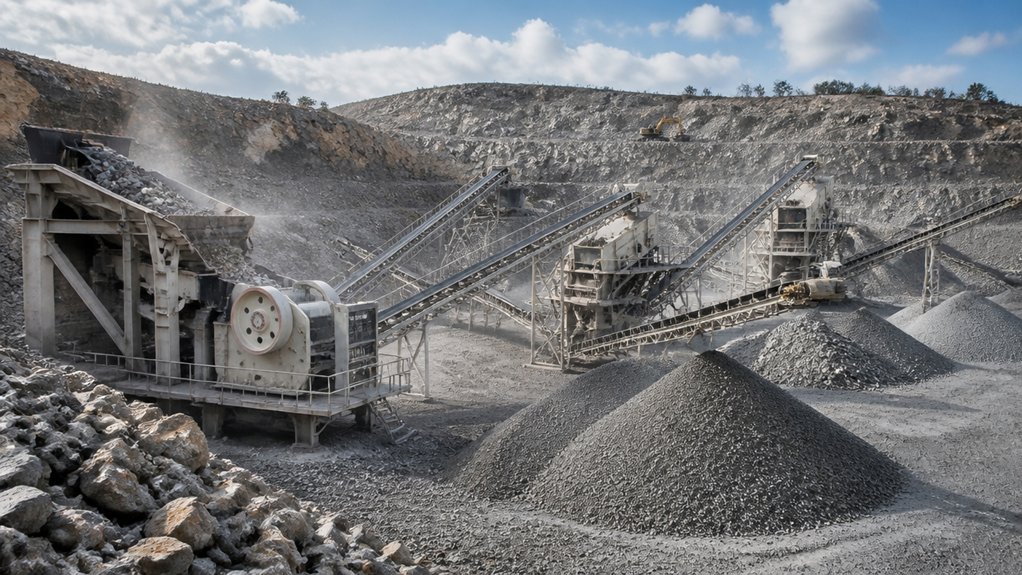
Before selecting equipment, define the feed’s size, hardness, moisture, and variability, then set a realistic target for saleable output.
Match crusher type and capacity to those conditions: jaw crushers handle primary reduction of tough, coarse rock, while impact or cone crushers suit different secondary duties and product requirements.
Check feedstock compatibility against the manufacturer’s limits for maximum lump size, abrasiveness, and moisture; unsuitable feed can cause plugging, excess wear, or unsafe clearing work.
Specify the required gradation and shape, and confirm the machine can produce them without exceeding its rated throughput.
Consider environmental considerations, including dust, noise, vibration, and site permits, when choosing equipment and controls.
Review maintenance access, guarding, and emergency stops before commissioning.
A well-matched plant protects workers, limits downtime, and delivers consistent saleable material.
Balance the Crushing Plant Circuit
Once the equipment matches the feed and product targets, balance each stage so material flows steadily through the circuit. Check crusher settings, screen openings, and conveyor rates together; a bottleneck at one stage can starve another or cause excessive recirculation.
Adjust the feed rate gradually, then monitor throughput, product gradation, motor load, and bearing temperatures. Keep screens clean and replace worn liners before they reduce capacity or compromise product quality.
Coordinate adjustments with operators, and never reach into running equipment; isolate and lock out machinery before inspection or maintenance.
Track power use per ton to identify opportunities for energy efficiency without overloading equipment. Control dust with properly maintained suppression systems, and limit unnecessary crushing to reduce environmental impact.
Review operating data each shift and correct imbalances before they develop into costly downtime.
Plan Material Flow and Stockpile Capacity
A balanced crushing circuit still needs a clear path for material from the feed point to the finished-product stockpiles. Map each transfer point, conveyor, and haul route, then remove bottlenecks that cause queues or unnecessary handling. Size bins and surge capacity to absorb normal flow changes without letting material overflow or starve downstream equipment.
Plan material storage around product demand, expected production rates, and delivery schedules. Give each product a clearly defined stockpile area, with enough capacity to buffer interruptions and support loading.
Stockpile management also means controlling pile shape, segregation, and contamination; keep loaders and trucks on designated routes, and maintain safe access around conveyors and pile faces. Use barriers, signage, and clear sightlines where mobile equipment and people share space.
Review flow and capacity as production targets or product mixes change.
Choose Screens That Keep Production Moving
Choose screen media and deck configuration to suit your feed’s gradation, moisture, and abrasiveness.
Set openings to meet product specs without sacrificing throughput or causing blinding.
Inspect and clean screens routinely, and isolate equipment before maintenance to keep screening efficient and safe.
Match Screens to Material
To keep your crushing plant producing steadily, match each screen’s opening and design to the material’s size, shape, moisture, and abrasiveness. Choose a screen medium that handles your feed without blinding, pegging, or wearing out too quickly.
Wet, sticky material may need a self-cleaning surface, while sharp, abrasive rock calls for robust construction. Consider particle shape, too: flaky pieces can lodge in openings and disrupt material segregation.
Check the screen’s capacity against your expected feed rate, and inspect it regularly for tears, loose fasteners, and uneven wear. Screen durability matters, but don’t trade safe access for longer service life.
Shut down and isolate equipment before clearing blockages or replacing panels. When your screen suits the feed, you’ll reduce interruptions, protect downstream equipment, and keep product flow consistent through the plant.
Optimize Screen Openings
When you set screen openings to match your target product and feed, you help the plant separate material efficiently without creating bottlenecks. Choose each Screen aperture based on the required product sizes and the crusher’s discharge, not guesswork.
Openings that are too small can restrict throughput and send excess material back for another pass; openings that are too large can let oversize rock enter the next stage. Check your gradation targets and consider how feed size and shape affect material separation.
Adjust openings in measured steps, then verify the resulting product with representative samples. Coordinate screen settings with crusher output so each stage handles a suitable load.
Before changing panels or settings, stop and isolate equipment, follow lockout procedures, and use approved lifting methods. Record the selected openings and resulting gradation for consistent production across shifts.
Maintain Screen Efficiency
As material moves across the deck, an efficient screen keeps separation accurate without slowing the plant. Match screen capacity to your feed rate, target gradation, and crusher output so you don’t create a bottleneck.
Choose a Screen deck design that suits the material’s moisture, abrasiveness, and particle shape; the right media and deck angle help limit blinding and wear.
Inspect panels, tension, fasteners, and support springs on a planned schedule, and replace damaged components before they disrupt production.
Use Vibration analysis to identify changes in motion that may signal loose parts, bearing wear, or uneven loading.
Check feed distribution and discharge flow during operation, but never reach into moving equipment. Isolate and lock out the screen before maintenance.
Track throughput and oversize trends, then adjust settings to keep separation consistent as conditions change.
Size Feeders and Conveyors to Prevent Bottlenecks
Undersized feeders or conveyors can starve crushers, create pileups, and limit plant output, so size each component to handle the expected peak flow—not just the average rate. Check equipment capacity against your highest planned tonnage, material density, and feed size. Include margin for surges, but avoid excessive speed that can cause spillage or uneven loading.
Set feeder width and discharge rate to maintain feed consistency across the belt. Match conveyor speed and belt capacity to the feeder’s maximum delivery, then verify that transfer points, chutes, and stockpile routes can pass the same volume without plugging. Consider moisture and fines, which can increase sticking and buildup.
Inspect belts, idlers, guards, and emergency stops regularly. Keep walkways clear, and never remove guards or reach into moving equipment. Monitor loading and spillage; correct restrictions before they create a bottleneck.
Tune Crusher Settings for Usable Output
Set crusher settings to produce the sizes your operation can sell or use, not simply to maximize throughput. Match the closed-side setting to your target gradation, feed characteristics, and downstream screening capacity.
A tighter setting may increase fines and wear, while a wider setting can leave oversize material that needs another pass. Check crusher calibration against measured product samples, then adjust one parameter at a time so you can track its effect on output quality.
Use representative samples from steady operation, and compare sieve results with your product specifications. Watch power draw and listen for abnormal changes, but don’t use sound alone to judge performance.
Before measuring or adjusting settings, follow lockout procedures and verify the machine is fully stopped. Record settings and results for each product, so operators can repeat proven configurations and respond consistently when feed conditions change.
Prevent Downtime With Routine Maintenance
Schedule inspections to catch loose fasteners, leaks, and abnormal wear before they interrupt production.
Lock out and verify equipment is de-energized before inspecting or servicing it.
Replace worn liners, belts, and other components promptly to prevent secondary damage and unplanned downtime.
Schedule Routine Inspections
To keep your crushing plant running reliably, inspect key components on a routine schedule rather than waiting for a failure. Set intervals based on operating hours, material abrasiveness, and manufacturer guidance.
Check belts, bearings, screens, liners, lubrication systems, guards, and emergency stops; record readings and note unusual vibration, heat, noise, or leakage.
Use predictive analytics to track trends in temperature, vibration, and energy use, helping you spot developing problems before they interrupt production.
Assign trained staff, use clear checklists, and review findings at each shift handover.
Before inspections, follow lockout procedures and site safety protocols; never reach into moving equipment or bypass guards.
Keep inspection records accessible, then prioritize follow-up work according to risk and operating impact.
Consistent checks help you plan maintenance windows, protect workers, and sustain dependable aggregate output.
Replace Worn Components
Inspection records help you replace worn parts before they fail and interrupt production. Track liner thickness, jaw profiles, blow bars, screens, belts, and bearings against manufacturer limits. Schedule wear part replacement during planned shutdowns, and keep critical spares on hand to reduce delays. Match each part to your crusher model, feed material, and operating conditions; incorrect parts can lower output or damage equipment.
Before work begins, isolate and lock out energy sources, relieve stored pressure, and verify zero energy. Use approved lifting points and handling tools, since liners and other components are heavy. After installation, check clearances, fasteners, alignment, and lubrication before restarting.
Monitor vibration, temperature, and product size during the first run. Record results and consider component upgrades when recurring wear or bottlenecks limit throughput.
Track Crushing Plant Performance and Find Losses
When you track each stage of the crushing circuit, you can pinpoint where production is lost instead of guessing. Record feed rate, crusher throughput, screen efficiency, belt scale readings, and downtime by cause.
Compare actual tonnage with targets, then check whether bottlenecks come from bridging, poor settings, worn liners, or uneven feed. Use trend data—not isolated readings—to guide adjustments and verify their effect.
Inspect equipment only under lockout/tagout, and keep clear of moving belts and suspended loads. Train operators to log stoppages consistently, including delays for clearing blockages or changing screens.
Track fuel, water, and dust-control use alongside output to understand Environmental impacts and support Regulatory compliance. Review results at shift handovers, assign corrective actions, and recheck performance.
This routine helps you protect workers, reduce avoidable losses, and increase saleable aggregate without overloading equipment.