

Modern technology is reshaping UK quarrying by helping you make safer, faster, better-informed decisions. Connected sensors, GPS, drones and digital maps show site conditions, vehicle movements and stockpiles in near real time, reducing hazardous inspections. Integrated plant controls and fleet data help you coordinate extraction, processing and maintenance, while environmental monitoring supports permit compliance. Adoption still requires training, reliable connectivity and robust safety procedures. Explore how these tools work, where challenges remain and what’s coming next.
What Does Digital Quarrying Mean?
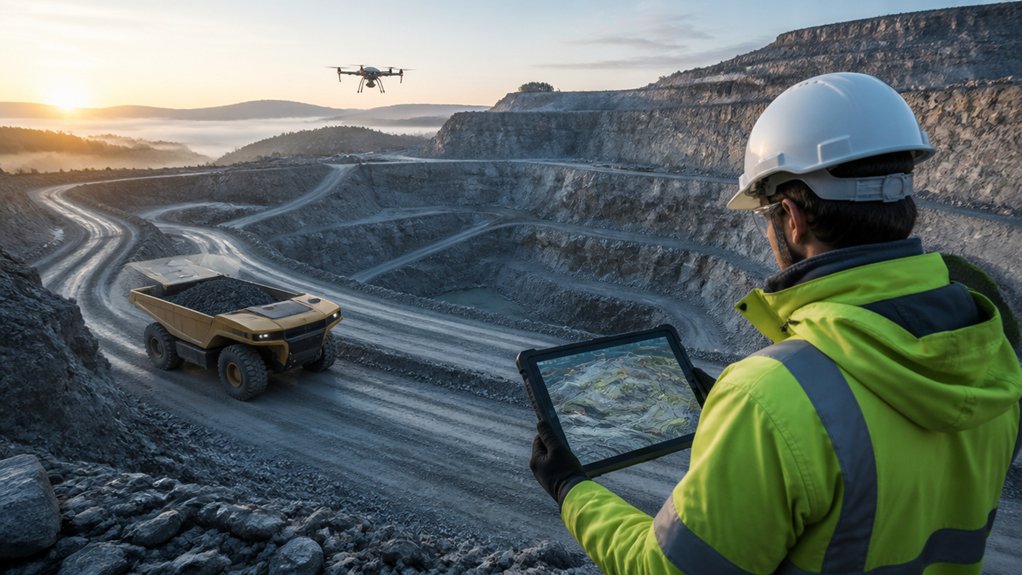
Digital quarrying means using connected technologies—such as sensors, GPS, drones and data platforms—to monitor and manage quarry operations in real time. For you, it’s a practical way to turn site information into safer, better-informed decisions, not simply a move to replace established expertise.
You can use virtual mapping to understand quarry boundaries, haul routes, faces and stockpiles, then compare plans with conditions on the ground.
Remote monitoring lets you check equipment status, environmental readings and operational activity without entering hazardous areas unnecessarily. These records can help you spot developing risks, coordinate work and maintain traceability.
In the UK, you’ll still need to meet relevant health and safety duties, planning conditions and environmental requirements. Digital tools support competent supervision; they don’t replace inspections, risk assessments or workers’ judgement.
Use accurate data, clear procedures and trained staff to make digital quarrying reliable.
Which Technologies Are Changing UK Quarries?
Across UK quarries, connected sensors, drone surveys, GPS-guided machinery and automated plant controls are making operations more measurable and efficient. You can use these tools to track equipment condition, map faces and stockpiles, and maintain accurate site plans.
LiDAR and photogrammetry help you assess changing ground conditions without sending surveyors into hazardous areas.
Automation integration links crushers, conveyors and screening systems, while interlocks and emergency stops help protect workers near moving plant.
Environmental monitoring uses dust, noise, vibration and water sensors to record conditions against permit limits and support reporting to regulators.
You can also use telematics and proximity detection to monitor vehicle movements and reduce collision risks.
Choose systems suited to your site, train operators, and check data quality regularly; technology supports, but doesn’t replace, competent supervision and safe procedures.
How Does Quarry Technology Improve Operations?
When quarry systems share reliable data, you can plan production more accurately, reduce unplanned downtime and use fuel and materials more efficiently. Linking weighbridges, plant controls and fleet-management software helps you match extraction rates to processing capacity and customer demand.
Predictive maintenance can flag abnormal vibration or temperature before equipment fails, letting your team schedule repairs around production and improve availability.
Automation efficiency comes from coordinating crushers, conveyors and screens, while operators monitor performance from safer control rooms. You can use machine guidance and real-time alerts to keep mobile plant within authorised routes and exclusion zones.
These safety enhancements support risk controls under UK quarry regulations, but don’t replace competent supervision, inspections or safe systems of work.
Track energy use, product quality and dust controls through operational dashboards, then adjust settings to meet site targets and environmental permit conditions. This gives you clearer oversight across shifts and locations.
What Challenges Come With Digital Adoption?
Although connected systems can improve quarry performance, adopting them brings practical risks. You’ll face cost barriers when upgrading plant, fitting sensors and maintaining reliable connectivity across remote UK sites. Budget for licences, cybersecurity and integration with older machinery, not just the initial purchase.
Skill gaps can also limit safe, effective use: operators and maintenance teams need training to interpret alerts, manage automated controls and spot faults without relying blindly on software. Poor data or network outages may disrupt production, while rushed changes can introduce hazards around mobile plant and conveyors.
Keep risk assessments current, protect access to operational data and provide clear procedures for manual operation. You’ll also need to meet UK health and safety duties, including competent supervision, before digital tools become part of routine quarry work.
What’s Next for Technology in UK Quarries?
As quarries address the costs, skills and safety risks of digital adoption, the next advances are likely to focus on practical gains: better-connected machines, AI-assisted maintenance and lower-carbon operations.
You’ll see equipment share live data on fuel use, output and condition, helping your team spot faults before they cause breakdowns or expose workers to danger. AI can support maintenance decisions, but operators must verify alerts and follow site procedures.
Reliable connectivity and clear data governance will matter, especially across remote UK sites.
Electrification, renewable power and smarter haul routes can cut emissions while supporting sustainable practices. You’ll also need workforce training so staff can operate new systems, interpret information and respond safely when technology fails.
As regulations and standards evolve, assess each investment against quarry risks, environmental targets and measurable productivity gains. Start with controlled trials, then scale proven tools across your operations.