
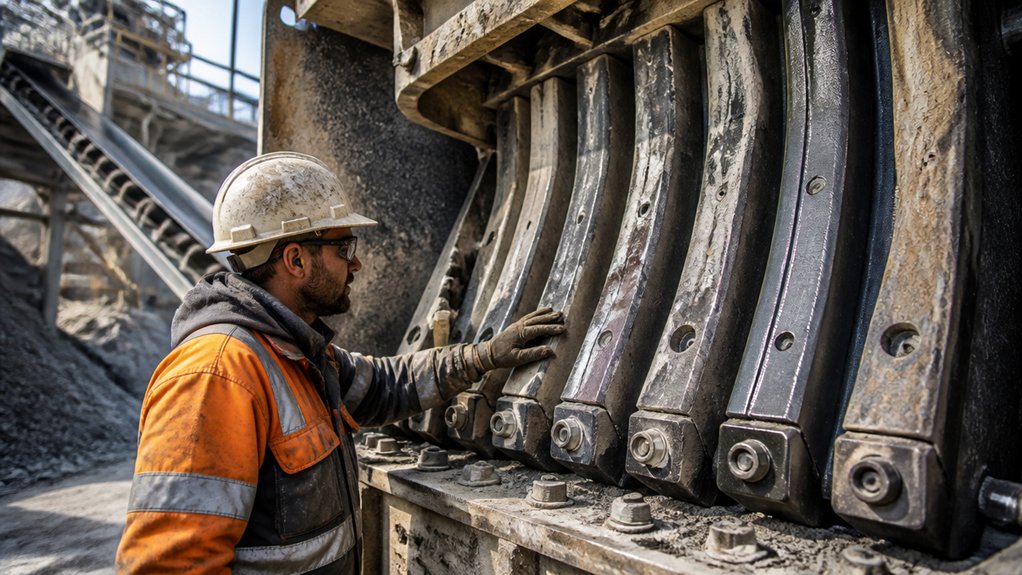
Crusher wear parts protect high-contact surfaces, absorb impact and abrasion, and maintain the clearances needed for steady output. Choose jaw plates, cone mantles and concaves, impact blow bars, or gyratory liners to match your crusher, feed, and operating conditions. Inspect for uneven wear, cracks, looseness, and buildup only after locking out and securing the machine. Replace parts at manufacturer service limits, not after failure. Consistent feeding, correct alloys, and measured maintenance help extend service life; the sections below explain each step.
What Do Crusher Wear Parts Do?
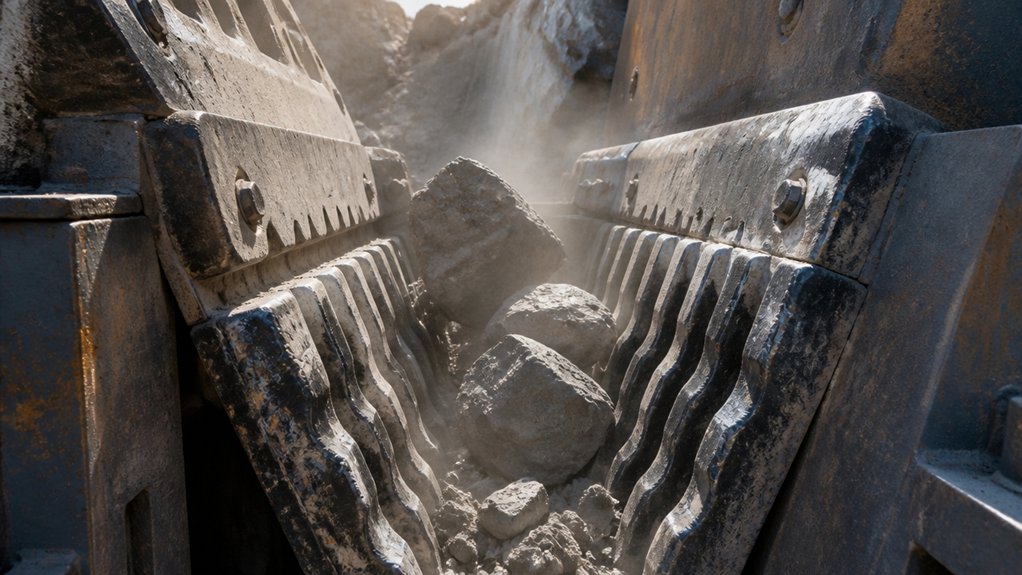
Crusher wear parts protect high-contact surfaces and apply the force needed to break and shape material as it moves through the machine. They absorb impact and abrasion, helping you limit damage to the crusher’s frame and other costly components.
As rock passes through, these parts maintain the clearances and crushing action needed for steady output. Their Material composition affects hardness, toughness, and resistance to wear; the right balance helps parts withstand impact without becoming brittle.
Manufacturing processes, including heat treatment and precision casting, influence strength and fit.
Inspect contact surfaces regularly for cracks, thinning, or uneven wear. Replace damaged parts promptly, following the equipment manual and lockout procedures.
Secure components correctly before restarting, and keep personnel clear during testing. These checks help you reduce unplanned downtime and maintain safe, predictable crushing performance.
Which Wear Parts Fit Each Crusher Type?
Because each crusher uses a different crushing action, its wear parts must match the machine’s design and material flow. In jaw crushers, you’ll typically fit fixed and movable jaw plates, plus cheek plates, to handle compression.
Cone crushers use mantles and concave liners; choose profiles suited to your feed and desired product size.
For impact crushers, select blow bars and impact plates that can withstand repeated strikes and manage abrasion.
Gyratory crushers rely on mantles and concaves sized for their crushing chamber.
Material selection matters: match alloy hardness and toughness to the feed’s abrasiveness and impact level.
Check your crusher model, OEM specifications, and operating conditions before ordering.
You can use customization options, such as alternative profiles or alloys, to suit your application.
Install parts only with approved procedures and proper lockout.
How to Check Crusher Wear Parts for Wear
To check crusher wear parts, inspect them at scheduled intervals and whenever product size, throughput, vibration, or power draw changes. Follow your site’s Maintenance procedures: stop and lock out the crusher, verify isolation, and secure moving components before opening access points. Never inspect inside operating equipment.
Use approved access platforms, lighting, and tools. Check liners, plates, blow bars, and other contact surfaces for uneven wear, grooves, cracks, looseness, and material buildup.
Compare measurements at consistent locations with installation records or manufacturer guidance; note profiles, thickness, clearances, and fastener condition. Inspect matching components together, since uneven patterns can indicate feed, alignment, or operating problems.
Record findings, photographs, operating conditions, and Material selection for the processed feed. Share results with maintenance staff, and investigate unusual wear patterns before returning the crusher to service.
Use the same measurement method each inspection for reliable comparisons.
When to Replace Liners, Plates, and Blow Bars
Inspection records help you decide when liners, plates, and blow bars need replacement. Compare measured wear with your crusher manufacturer’s minimum thickness and service limits. Replace parts when they reach those limits, crack, loosen, deform, or no longer protect the chamber. Don’t wait for a failure: worn components can damage supporting structures and create unsafe operating conditions.
Check wear at consistent locations, and document measurements, operating hours, and any unusual damage. Use these records for Maintenance scheduling, coordinating replacement with planned shutdowns while allowing time for inspection and parts delivery.
Confirm Material selection matches the crusher model, feed characteristics, and specified duty before ordering replacements.
Before changing parts, isolate and lock out the machine, relieve stored energy, and verify components are secure. Follow the manufacturer’s lifting, removal, installation, and torque instructions; never work beneath unsupported components.
How to Extend Crusher Wear Part Life
You can extend crusher wear part life by matching liners, plates, and blow bars to the feed material and operating conditions, then keeping the crusher within its specified settings and capacity.
Material selection matters: choose alloys and profiles suited to the rock’s abrasiveness, hardness, and size.
Feed evenly, remove tramp metal, and avoid overloading or running the chamber empty; these practices reduce impact and uneven wear.
Check clearances, fasteners, and wear patterns during inspections, and correct misalignment or feed problems promptly.
Set a Maintenance scheduling routine based on operating hours and measured wear, not guesswork.
Before inspecting or changing parts, isolate and lock out the machine, release stored energy, and follow the manufacturer’s procedures.
Record measurements and operating conditions so you can refine settings and replacement intervals safely.