
To reduce silicosis risks in your British quarry, assess exposure task by task, considering how often and how long workers drill, cut, crush or load silica-containing stone. Map dust sources, then enclose plant, use extraction or apply water suppression at source. Inspect controls before shifts and verify airflow or pressure; keep maintenance records. Provide fit-tested RPE when controls aren’t enough, train workers, and arrange appropriate health surveillance. Review assessments regularly to meet UK duties, as the following guidance explains.
Assess Silica Dust Risks Across Quarry Tasks
Because respirable crystalline silica can be released at several stages of quarrying, assess exposure task by task rather than relying on a site-wide estimate.
For each role, consider how often you perform the work, how long it lasts, and whether conditions vary between shifts.
Review existing controls and decide whether they keep exposure below the UK workplace exposure limit of 0.1 mg/m³, averaged over eight hours.
Don’t treat this limit as a safe target: reduce exposure as far as reasonably practicable.
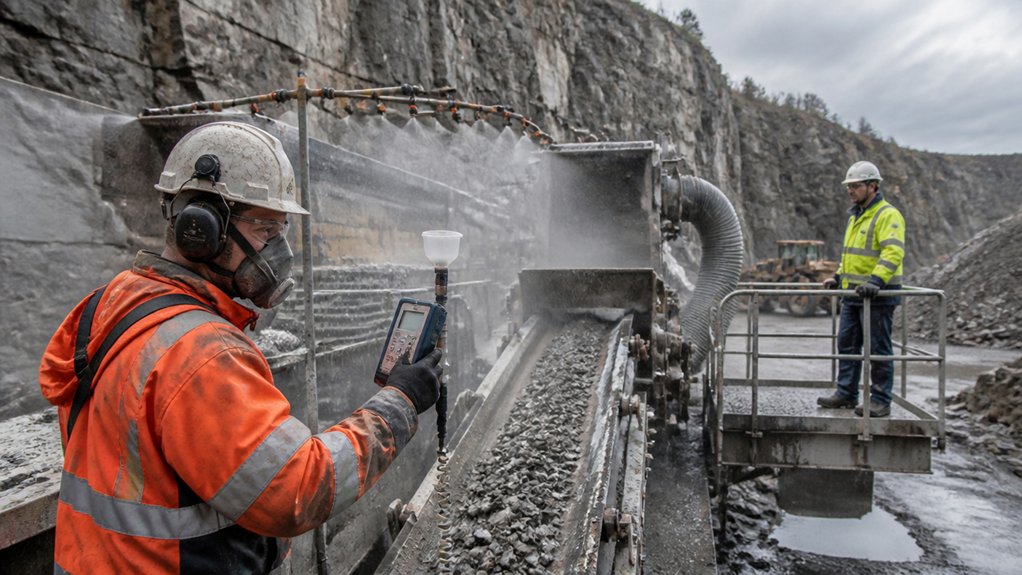
Use suitable monitoring, including personal sampling where needed, to verify your assessment and identify workers who may require health surveillance.
Record significant findings, control measures, and review dates.
Apply Quarry safety protocols consistently, consult workers, and reassess risks after changes to equipment, materials, processes, or work patterns.
Identify Where Silica Dust Is Generated
Map each stage of quarry work where stone is disturbed, as respirable silica dust can be generated during drilling, blasting, cutting, crushing, screening, conveying and loading.
Note which materials contain crystalline silica, including sandstone, granite and many other common UK quarry rocks.
Trace how dust moves through fixed plant, mobile equipment and work areas, including transfer points, stockpiles and haul roads.
Check tasks that create fine particles, such as dry sweeping, cleaning machinery and maintaining plant, as well as routine production.
Consider who may be exposed: operators, fitters, drivers, contractors and workers nearby.
Observe operations during different shifts and conditions, since activity and weather can change where dust travels.
Record these locations and tasks in your site risk assessment.
This evidence supports Quarry safety by showing where Silica dust may arise.
Control Silica Dust at Its Source
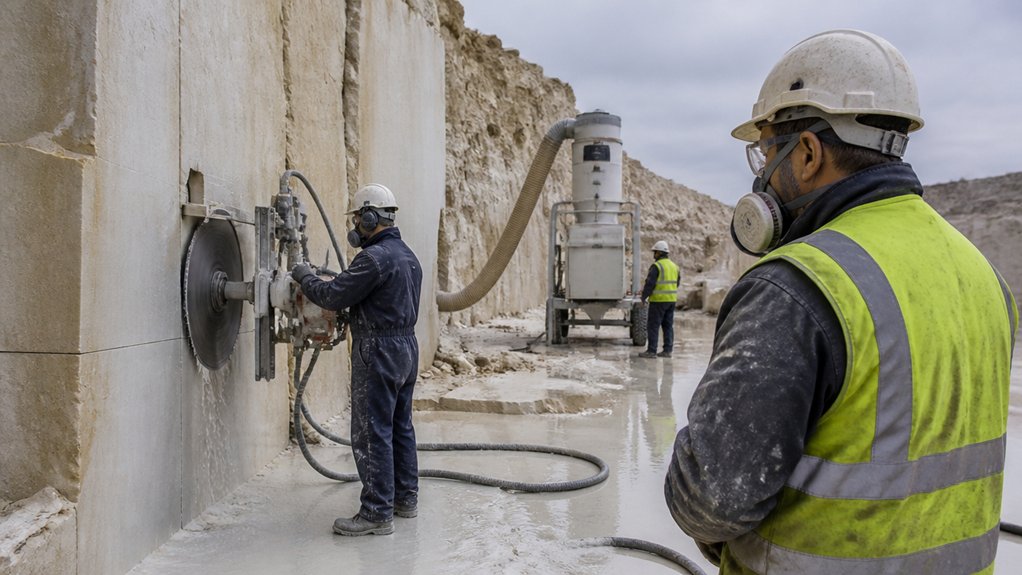
Control silica dust at the point where it’s generated, before it spreads through the quarry or reaches workers’ breathing zones. Enclose crushers, screens and transfer points where practicable, and use effective local exhaust ventilation to capture airborne particles.
Apply water sprays at cutting, drilling and crushing operations, directing them onto the material without creating additional hazards. These Dust suppression techniques work best when you choose them for the task, equipment and site conditions.
Use Silica dust monitoring to assess exposure and identify whether source controls are reducing airborne respirable crystalline silica. Select suitable monitoring methods and interpret results against UK workplace exposure requirements.
Where wet methods aren’t suitable, consider properly designed extraction or other engineered controls; don’t rely on respiratory protective equipment alone. Keep workers away from dust-generating areas where possible, and explain how controls limit exposure during routine quarry operations.
Maintain and Check Dust Controls
Even well-designed dust controls can fail if you don’t maintain them. Check extraction systems, water sprays and enclosed transfer points before each shift, and follow your site’s inspection schedule. Look for blocked nozzles, damaged ducting, leaks, weak airflow and failed seals; report defects promptly and take affected equipment out of service until repaired.
Use suitable instruments to verify airflow and pressure, rather than relying on appearance alone. Keep inspection, maintenance and repair records, and review them for recurring faults.
Test Dust suppression techniques under operating conditions, including during dry weather and busy production periods, to confirm they’re controlling visible emissions effectively.
Train workers to recognise failures and report concerns. Keep Personal protective equipment clean and serviceable for assigned tasks, but don’t treat it as a substitute for effective engineering controls.
Use Respiratory Protection When Needed
When dust controls can’t keep respirable crystalline silica below safe levels, use suitable respiratory protective equipment (RPE) as an additional measure—not a replacement for those controls.
Choose RPE through a competent assessment of exposure, task duration, and working conditions. Your respirator selection must provide an adequate assigned protection factor for the measured or reasonably foreseeable silica concentration; seek occupational hygiene advice where needed.
Check that the model fits the wearer and works with other Personal protective equipment, such as eye protection and hard hats. Tight-fitting masks require a face-fit test for each wearer and a clean-shaven sealing area.
Use the respirator in line with its instructions, keep it clean, inspect it before use, and replace damaged or exhausted filters promptly.
Provide suitable storage so dust doesn’t contaminate the equipment between shifts.
Train Workers and Monitor Their Health
Effective RPE depends on workers knowing when and how to use it, so training should cover silica hazards, dust controls, safe work methods and the correct use, care and limits of protective equipment.
Worker education should also show you how to recognise failures in extraction or suppression systems and report concerns promptly.
Refresh training when tasks, equipment or control measures change, and check understanding through practical demonstrations rather than relying on attendance alone.
Arrange suitable health screenings for workers exposed to respirable crystalline silica, following occupational health advice and UK guidance.
Keep confidential health records securely, and explain how workers can access their results.
Screening can help identify changes early, but it doesn’t prevent exposure or replace effective controls.
Encourage workers to report breathing symptoms promptly and seek medical advice; don’t wait for routine appointments if their health worsens.
Include agency and temporary staff in training and health arrangements.
Review Risk Assessments and Meet UK Duties
Review your silica risk assessment whenever work, equipment or exposure controls change, and at regular intervals to confirm it remains suitable and sufficient.
Identify tasks that generate respirable crystalline silica, assess who could be exposed, and record findings, including exposure duration and control effectiveness.
Under the Control of Substances Hazardous to Health Regulations 2002, you must prevent exposure where reasonably practicable; otherwise, control it adequately.
Check extraction, water suppression, enclosed cabs, housekeeping and respiratory protective equipment, ensuring controls work as intended.
Set out actions, owners and review dates, and update assessments after incidents or monitoring results.
Use clear Workplace communication to explain hazards and controls to workers and contractors.
Encourage Employee engagement by consulting your workforce and acting on concerns.
Keep records accessible, and verify that supervisors implement agreed measures across quarry operations.