
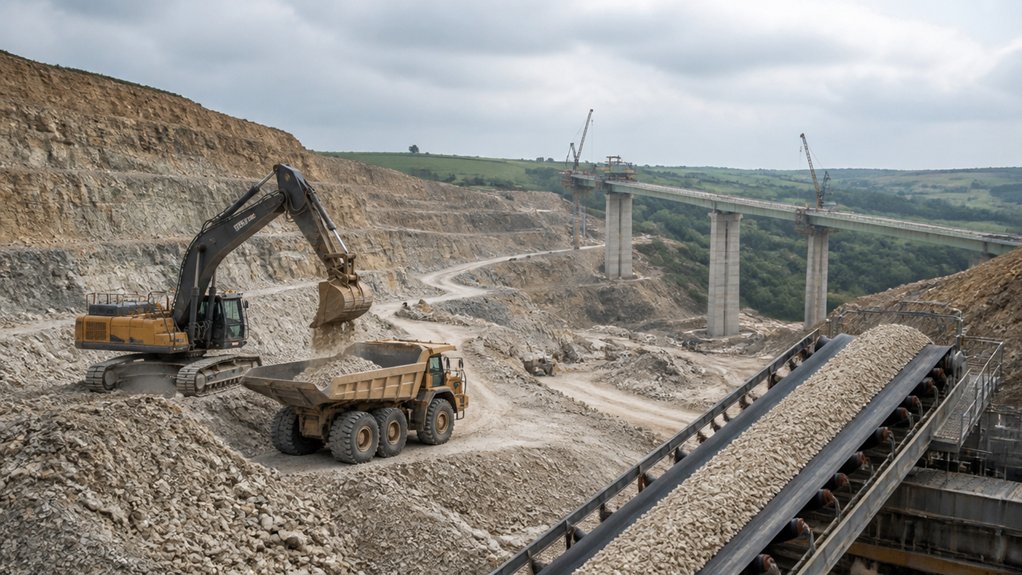
UK quarrying keeps major infrastructure projects moving by supplying the crushed stone, sand and gravel you need for roads, railways, housing and energy schemes. Local sources provide reliable volumes and specified grades for foundations, concrete, asphalt and drainage, while shorter journeys can cut costs, delays, emissions and congestion. Quarry operators also manage dust, noise, water and habitats under UK planning and environmental controls. Discover how material choices, local supply and future projects shape this essential contribution to infrastructure.
How Does UK Quarrying Support Infrastructure?
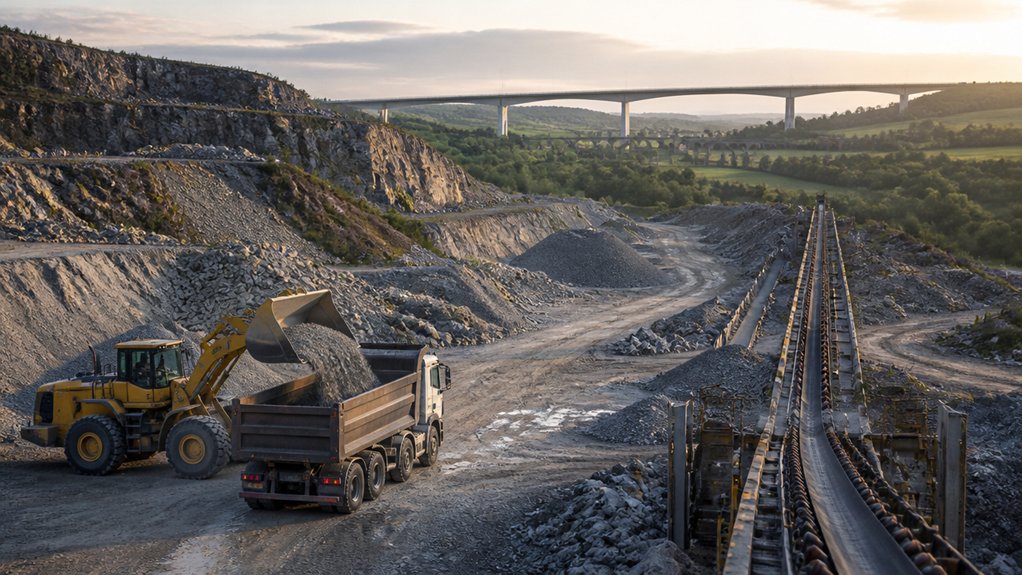
UK quarrying supplies the crushed stone, sand and gravel needed to build roads, railways, bridges and other essential infrastructure. By sourcing aggregates close to construction sites, operators can help you guarantee reduce haulage distances, delivery times and transport-related emissions.
Reliable local production also supports project schedules, helping contractors maintain a steady flow of materials as work progresses.
Quarries contribute beyond supply. They provide skilled employment, sustain specialist businesses and generate investment in regional economies.
Operators must follow quarrying regulations covering planning, environmental protection, health and safety, and site restoration. These controls help assure extraction proceeds responsibly and that land can serve a beneficial purpose after operations end.
Through transparent community engagement, you can understand how operators address traffic, noise, dust and environmental concerns. This oversight helps balance infrastructure needs with local priorities and long-term stewardship.
Which Materials Do UK Infrastructure Projects Need?
You’ll need graded aggregates to form stable foundations for UK roads, railways and structures.
Roadbuilding also relies on durable stone that meets specification for strength and skid resistance.
For concrete, you’ll need quality-assured sand alongside cement and coarse aggregate.
Aggregates for Foundations
For foundations, UK infrastructure projects need aggregates that provide reliable load-bearing capacity, drainage and compaction. You’ll typically specify well-graded crushed stone, gravel or recycled aggregate, selected to suit ground conditions, design loads and the relevant British Standards.
Coarse aggregate forms stable sub-bases beneath buildings, bridges, rail infrastructure and utilities, while finer particles fill voids and improve compaction.
Where water management matters, clean, open-graded stone can support drainage and reduce pressure around structures.
Your geotechnical assessment should confirm particle size, strength, frost resistance and contamination limits before placement.
UK quarries supply consistent materials close to project sites, helping you control transport impacts and delivery reliability.
Responsible operators also advance quarry sustainability through restoration, efficient resource use and innovative extraction, supporting resilient foundations without compromising local environments or future supply.
Stone for Roadbuilding
When specifying stone for roadbuilding, match each aggregate to its position in the pavement and the traffic it must carry. For the surface course, you’ll need durable, angular crushed rock that resists polishing and provides reliable skid resistance.
In the base and binder courses, graded crushed stone supplies strength, stability and load distribution. Lower layers typically use well-graded sub-base aggregate, such as crushed rock or recycled material, to support the pavement and aid drainage.
Check that products meet the relevant UK specifications and project requirements for grading, strength, shape and durability. Your choice should reflect traffic levels, ground conditions, drainage design and expected service life.
Responsible sourcing matters too: Mining regulations govern extraction and environmental controls, while Quarry safety protects workers and supports consistent production. Confirm supply capacity, testing records and traceability before approving material for construction.
Sand for Concrete
Unlike road aggregates, concrete sand must support workability, strength and durability within the mix. Across UK infrastructure projects, you’ll typically specify clean, well-graded fine aggregate that complies with relevant British Standards and the project’s concrete specification.
Its particle size distribution affects water demand, cohesion and finish; excessive fines, clay or organic contamination can weaken performance and complicate placement.
Your supplier should demonstrate consistent material quality through sampling, testing and traceable production controls. Quarrying innovations, including automated grading and improved washing, help producers manage variability and conserve water.
You’ll also need to contemplate whether land-won or marine-dredged sand suits the application, accounting for grading, chloride limits, transport and environmental requirements. Confirm suitability with mix trials, especially for structural concrete, precast elements and major pours, so the specified sand performs reliably under site conditions.
Where Are Quarry Materials Used Across the UK?
Across the UK, quarry materials form the foundations, surfaces and drainage systems of essential infrastructure. You’ll find crushed stone beneath motorways, local roads and railway tracks, where graded aggregates provide load-bearing strength and stability.
Concrete and asphalt use carefully specified sand, gravel and crushed rock in bridges, tunnels, stations and airport runways. For drainage, you’ll see permeable aggregates in pipe bedding, filter layers and sustainable drainage systems, helping manage surface water and protect structures.
Quarry material diversity supports projects from Scottish rail upgrades to flood defences in England and coastal infrastructure in Wales. Regional quarry variations reflect local geology: granite, limestone, sandstone and other resources differ in strength, durability and availability.
You’ll need materials matched to engineering specifications and site conditions, ensuring each application performs reliably across the UK’s varied terrain and climate.
How Do Local UK Quarries Keep Projects on Track?
When you source aggregates from a local UK quarry, you can secure a reliable supply aligned with your project schedule.
Shorter transport routes reduce delivery times, haulage costs, and exposure to road disruption.
Together, these advantages help you maintain material availability and keep construction moving.
Reliable Material Supply
Local UK quarries help infrastructure projects stay on schedule by supplying aggregates close to site, reducing haulage time and the risk of transport delays. They also provide dependable volumes and consistent grades, helping you maintain planned construction sequences and meet engineering specifications.
Quarry operators coordinate extraction, processing and stock management with contractors’ forecasts. This lets you secure the right materials when each work phase begins, while quality-control testing checks grading, strength and compliance with relevant British and project standards.
When demand changes, established suppliers can adjust production and communicate availability early, reducing the chance of costly site stoppages.
Many UK quarries use innovative technologies to monitor output, manage stockpiles and improve production planning. They also apply sustainable practices, including efficient resource use and responsible site management.
Shorter Transport Routes
Beyond securing reliable volumes, sourcing aggregates from nearby UK quarries shortens the route from extraction site to project. This proximity reduces vehicle mileage, fuel use and exposure to traffic disruption, helping you control costs and emissions. It also gives site teams greater flexibility to coordinate deliveries with construction phases, storage capacity and changing demand.
Improved Transport efficiency depends on more than distance. Quarry operators can schedule loads around site access windows, use suitable vehicle combinations and provide advance delivery updates. These logistical innovations help you avoid queues, minimise empty running and maintain a predictable flow of stone, sand and gravel.
Shorter journeys also make it easier to respond to urgent requirements or weather-related delays. By selecting a local source with dependable road links and clear dispatch processes, you can protect programme continuity while reducing the transport burden on communities and infrastructure.
How Do UK Quarries Manage Environmental Impacts?
UK quarries manage environmental impacts through planning conditions, regulatory permits and site-specific controls that limit effects on air, water, soil, wildlife and nearby communities. As a project team, you can check operators’ monitoring records and environmental management plans before sourcing aggregates.
Dust suppression, covered conveyors and wheel washing help control airborne particles; acoustic barriers and restricted operating hours reduce noise.
Settling ponds, drainage systems and spill procedures protect watercourses, while progressive restoration stabilises worked land.
Operators also use recycling initiatives to recover suitable construction materials, reducing demand for virgin aggregate.
Ecological surveys guide biodiversity conservation, including habitat protection, species safeguards and restoration plans agreed with local authorities.
You’ll need to evaluate these controls when reviewing supply reliability, planning permissions and compliance with UK environmental regulations throughout construction and delivery.
How Will Future Projects Shape UK Quarrying?
As major transport, housing and energy schemes advance, they’ll shape where UK quarries operate, which materials they supply and how quickly capacity must expand. If you plan infrastructure, you’ll need reliable local aggregates to reduce haulage, costs and emissions.
Demand will rise for graded stone, cement inputs and lower-carbon materials as rail upgrades, roads, housing and renewable energy projects progress.
You’ll also face tighter planning constraints, so early coordination with operators can secure permitted reserves and resilient supply routes.
Technological innovations, including automated extraction, real-time monitoring and improved processing, will help quarries raise efficiency while limiting noise, dust and energy use.
By specifying recycled aggregates where suitable and supporting investment in cleaner equipment, you can strengthen future sustainability.
Project pipelines will consequently influence quarry locations, skills needs and capacity decisions across the UK.