
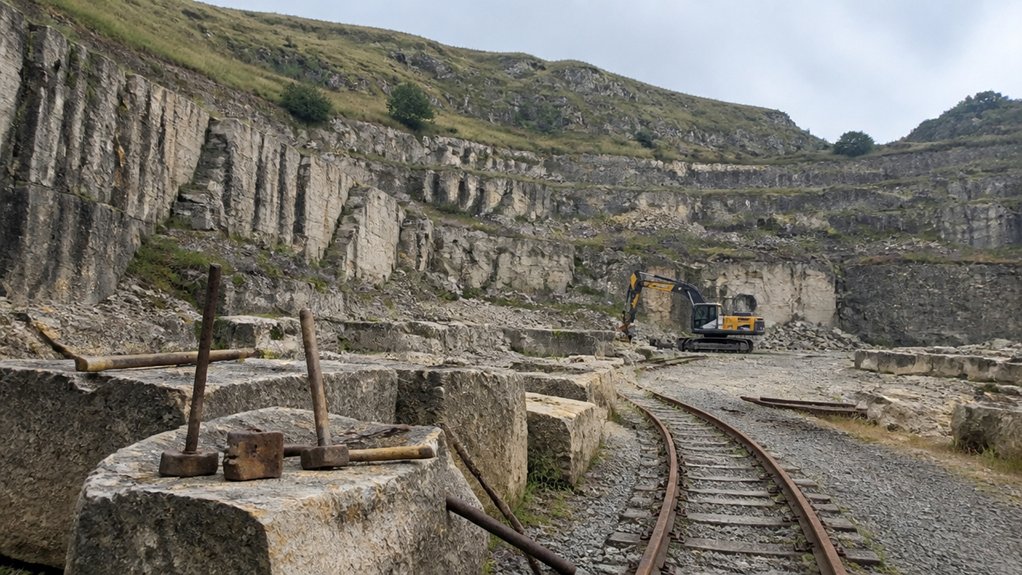
Britain’s stone quarrying history begins with communities gathering rock from outcrops, riverbeds and glacial deposits, then shaping it with hammerstones and careful handwork. As you follow the story, Roman builders reuse stone for roads, forts and walls, while medieval masons quarry and dress local materials for castles and churches. Steam power, explosives and railways later expand production and markets. Today, technology and environmental safeguards guide extraction, while traditional skills and regional stone continue to shape Britain’s landscapes and heritage. Further on, you’ll see how each era left its mark.
How Did Britain’s Earliest Communities Work Stone?
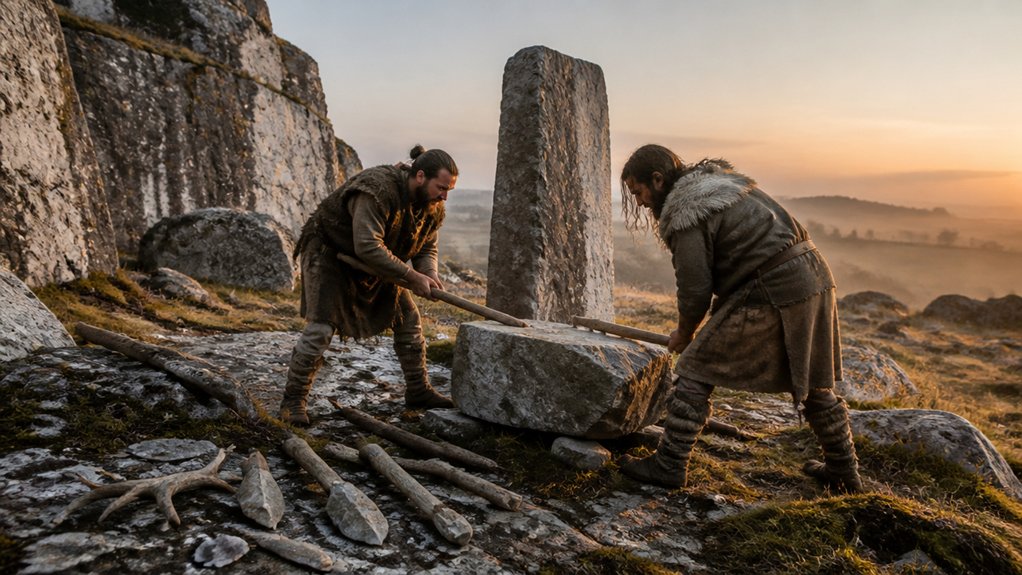
Long before Britain’s first quarries took shape, communities gathered stone from exposed outcrops, riverbeds and glacial deposits. You can trace this practice through Palaeolithic tools and later Neolithic monuments across Britain. Early workers selected pieces by size, grain and fracture, then struck them with hammerstones to create sharp edges, scrapers and axes.
They chipped flint and other knappable rocks, while tougher stones could be pecked, ground and polished through repeated abrasion. These methods demanded close knowledge of each material’s structure and patient control of force.
As farming communities grew, you can see Stone craftsmanship in shaped tools, boundary markers and chambered tombs. Moving and setting large blocks required coordinated labour, not just technical skill.
Such monuments carried Cultural significance, linking communities with ancestors, place and ritual. Stonework thus began as both practical making and a lasting expression of shared identity.
Which British Stones Were Used for What?
As quarrying developed, British builders matched each stone to its properties and purpose. If you needed durable foundations, you chose hard granite from Cornwall, Devon or Scotland; its resistance to weather also suited paving and harbour works.
For dressed façades and carving, you turned to workable limestone, including Bath stone, whose fine grain took crisp detail.
Sandstone offered varied colours and strengths: Yorkshire gritstone served mills and robust buildings, while softer beds supplied ashlar.
Slate split into thin, water-shedding sheets, making it ideal for roofs in Wales, Cumbria and the Highlands.
Historical quarrying techniques reflected these differences: workers split slate along natural cleavage, but cut blocks from other beds.
Your choice also carried Cultural significance, linking local geology to regional identities, craft traditions and distinctive townscapes across Britain.
How Did Romans and Medieval Builders Use Stone?
When Roman builders arrived in Britain, they quarried local stone for roads, forts, baths and town walls, choosing materials suited to each task. You can still trace their Ancient quarrying at sites such as Bath, where limestone supplied building blocks and decorative work. They also reused stone from earlier structures, while skilled masons cut ashlar for precise, durable walls.
After Rome’s withdrawal, builders continued working local quarries, though supply and construction varied by region. In the medieval period, you’ll find stone shaping castles, churches, bridges and manor houses. Masons selected harder stone for foundations and exposed surfaces, and easier-to-work stone for detailed mouldings.
Artistic carving brought capitals, doorways and tombs to life, while tracery framed church windows. Builders transported stone by cart or river, then dressed it on site, matching local geology to structural needs and religious ambition.
How Did the Industrial Revolution Change Quarrying?
With steam power and expanding railways, the Industrial Revolution transformed British quarrying from largely local work into a larger, more mechanised industry. You could now see steam engines pump water from deeper workings and power cranes, saws and dressing machinery.
Explosives, including gunpowder and later dynamite, helped workers break rock faster, while rail links carried Welsh slate, Cornish granite and Yorkshire stone to distant markets.
Yet Artisanal techniques endured: skilled quarrymen still split blocks along natural beds and joints, then dressed stone by hand. As output grew, larger pits, spoil heaps, tramways and workers’ settlements reshaped the quarry landscape across Britain.
New transport and machinery expanded production, but quarrying remained dangerous, labour-intensive work, dependent on geological knowledge and the judgement needed to extract sound, usable stone.
How Does Modern Quarrying Meet Today’s Needs?
Today, you’ll find UK quarries balancing demand for stone with careful resource management and site restoration. Modern surveying, cutting and handling technology helps you extract more precisely and reduce waste.
These methods connect centuries-old quarrying traditions with the needs of today’s construction and heritage projects.
Sustainable Stone Extraction
Modern UK quarrying must meet demand for durable building stone while limiting harm to landscapes, habitats and nearby communities. Unlike earlier workings, today’s operators plan extraction around geology, water, transport and restoration from the outset. You can see this in phased quarry plans: firms remove stone in defined sections, retain topsoil and overburden, then restore worked areas as operations advance.
Eco friendly practices include managing dust and noise, recycling suitable waste as aggregate, and reducing water use through settlement and reuse. Conservation efforts may protect rare species, create wildlife corridors and preserve historic quarry features.
Planning conditions and environmental assessments guide these measures, while local consultation helps address traffic and working hours.
When you choose British stone, you support a material that can last for generations; responsible sourcing also asks you to think about how its extraction affects the place it comes from.
Advanced Quarry Technology
As demand shifts towards precise, lower-impact production, UK quarries use digital surveying, GPS-guided machinery and remote sensors to plan cuts and monitor conditions in real time.
Where generations of quarry workers relied on experience, plumb lines and hand tools, you can now combine that knowledge with detailed digital models.
Laser scanning records rock faces and reveals fractures, helping you choose extraction lines that protect valuable stone and reduce waste.
Automated drilling follows those plans with consistent spacing and depth, while operators retain control over safety-critical decisions.
Sensors can flag movement, vibration or changing weather, giving crews time to respond before conditions worsen.
From Scottish granite workings to English limestone quarries, these tools refine established craft rather than replace it, helping you work accurately within Britain’s varied geology and heritage.
Meeting Modern Demand
To meet demand for housing, infrastructure and restoration, UK quarries must supply stone in the right quantities, sizes and finishes without wasting scarce resources. Today, you’ll find operators combining geological surveys, digital planning and precise cutting to improve yields and match each stone to its purpose.
Local sourcing can also reduce transport emissions and sustain regional skills, from Scottish slate to Portland limestone.
Modern production serves new construction, but you’ll also see it supporting Heritage preservation. Historic buildings need compatible stone, carefully selected for colour, weathering and texture.
Here, artisanal craftsmanship remains essential: skilled masons shape replacement blocks to suit traditional details that machines can’t always reproduce.
Where Do Britain’s Quarrying Traditions Continue?
Though quarrying methods have changed, Britain’s stone traditions continue in regions where local geology, skilled labour and demand still align. You’ll find slate extraction thriving in North Wales, where the slate landscape records centuries of roof-tile production.
In the Pennines, gritstone and sandstone quarries supply paving, walling and restoration stone. Portland limestone remains quarried in Dorset, while granite working continues in parts of Scotland and Cornwall.
These Regional variations reflect Britain’s varied bedrock and the craft knowledge built around it. When you choose stone, you’re also engaging with its Cultural significance: local materials shape familiar streets, churches and civic buildings.
Quarries preserve traditional skills, from identifying sound beds to dressing blocks, while modern planning and machinery guide extraction. By specifying British stone, you help sustain regional supply chains and the working landscapes that keep these traditions visible.