
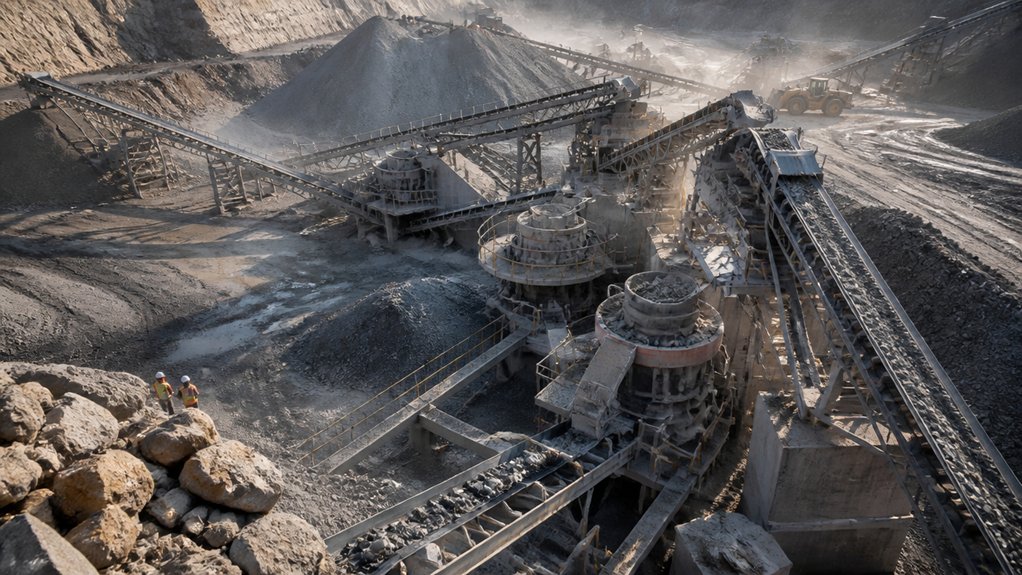
Your quarry crushing plant can cost from a few hundred to several thousand pounds per hour, depending on capacity, equipment, energy, labour and site conditions. To find your cost per tonne, divide operating costs—including fuel, electricity, wages, maintenance, wear parts, loading and screening—by saleable tonnes produced; state separately whether you include depreciation. Low output, downtime, abrasive or wet feed, and poor equipment matching can push unit costs up. The sections below show where savings are possible.
What Does It Cost to Run a Quarry Crushing Plant?
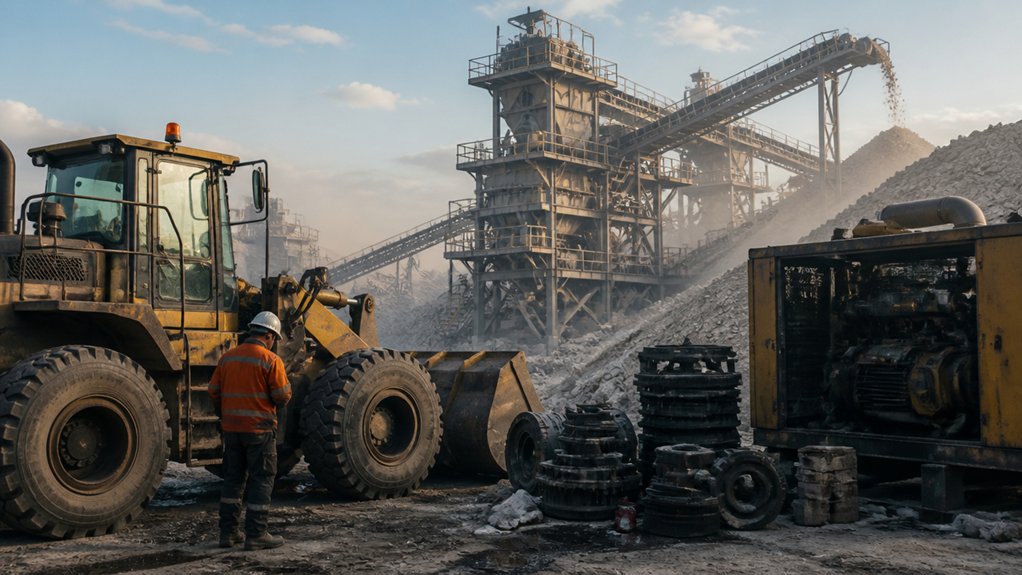
Running a quarry crushing plant in the UK can cost from a few hundred to several thousand pounds per hour, depending on its capacity, equipment, fuel or electricity use, labour and site conditions.
Your main expenses include crusher and screen hire or ownership, diesel or grid power, operator wages, maintenance, wear parts and mobile plant.
Older machinery may cost less upfront but consume more fuel and need more repairs.
You’ll also need to budget for haulage, site preparation and downtime when material or equipment isn’t available.
Environmental impact controls, such as dust suppression, noise management and water treatment, add operating costs.
You must meet UK safety regulations, including guarding, inspections and staff training.
Actual costs vary with rock type, production demands, access and local energy prices, so obtain site-specific supplier quotations.
How Do You Calculate Cost per Ton?
To calculate a quarry crushing plant’s cost per tonne, divide its total operating costs for a set period by the tonnes of saleable material produced in that period. Include fuel, electricity, labour, maintenance, wear parts, mobile plant, and site overheads. Use consistent records from your accounts and weighbridge, and match the cost and production periods.
Exclude capital expenditure unless you’re allocating depreciation, and state that choice clearly.
Check what your figure covers: crushing alone or the wider operation, including loading and screening. Account for Environmental regulations, such as dust suppression and water management, alongside the costs of meeting safety standards. These obligations aren’t optional, so omitting them understates your true unit cost.
Report the result in pounds per tonne, then compare it with sales revenue to assess operating margin.
How Does Production Volume Affect Cost per Ton?
As production rises, cost per tonne usually falls because fixed costs—such as supervision, site overheads and plant depreciation—are spread across more saleable material. You’ll see this benefit only when your crusher, screens and conveyors can handle the extra throughput without creating bottlenecks.
If you push beyond their practical capacity, breakdowns, maintenance and unscheduled stoppages can reduce output and raise unit costs.
Use cost analysis to compare tonnes produced with total operating costs over consistent periods. Check saleable output, not merely feed tonnage: poor grading or excessive fines can leave you paying to process material you can’t sell at the intended value.
Production scaling may also require longer shifts, more labour or additional maintenance cover, so model these costs before increasing targets. Track cost per tonne at different utilisation levels to identify the point where extra volume stops improving margins.
What Do Fuel and Electricity Cost?
Your fuel bill depends on litres burned per tonne, engine load, and haul distance.
Electricity costs reflect crusher and conveyor demand, measured in kilowatt-hours and your tariff.
You’ll need to track fuel consumption and compare energy prices, including standing charges and peak rates, to control costs.
Fuel Consumption Rates
Fuel costs depend on how hard your quarry crushing plant works, the type of equipment it uses and the price you pay per litre. Track litres per operating hour and tonnes processed to compare machines fairly.
A diesel crusher’s consumption varies with feed size, material hardness, throughput and idle time; excavators, loaders and screeners add to your site’s total. Use manufacturer figures as a starting point, then record actual usage across representative shifts.
Keep engines serviced, match equipment capacity to demand and avoid unnecessary idling to reduce fuel burn without sacrificing output. Check fuel invoices and delivery records regularly, since UK prices can fluctuate.
Consider Environmental impact alongside cost: efficient operation can lower emissions. Confirm your fuel storage and handling practices support regulatory compliance, and include delivery charges when budgeting.
Electricity Usage Costs
Diesel isn’t the only energy cost to track: electrically driven crushers, conveyors and screens add to your quarry’s power bill. Your electricity spend depends on how long each machine runs, its power demand and the tonnes processed. Record meter readings by plant area, then compare kilowatt-hours with production figures to identify energy-intensive stages and track cost per tonne.
You can reduce consumption by avoiding idle running, matching feed rates to capacity and maintaining motors, belts and bearings. Variable-speed drives may help conveyors and pumps use less power when full output isn’t needed.
Assess equipment upgrades against measured savings and expected service life, rather than purchase price alone. On suitable sites, renewable energy, such as rooftop solar, can offset some grid electricity, though generation must align with operating hours.
Include these measures in your operating budget and review results regularly.
Energy Price Factors
Energy prices vary by region, contract and demand, so don’t rely on a single headline rate when budgeting. Your UK electricity bill may include wholesale charges, network fees, levies and standing charges, each affected by your contract and site connection. Compare suppliers’ unit rates and review renewal terms before committing; time-of-use tariffs can help if you schedule crushing outside peak periods.
Diesel costs depend on pump prices, delivery charges and fuel duty. Track litres per tonne across loaders, excavators and mobile crushers, rather than judging spend by purchase price alone.
Efficient Material handling reduces idling and double handling, cutting fuel use and emissions. Check whether grid constraints, generator hire or backup power add costs, too.
Include price volatility and the environmental impact of fuel choices when forecasting budgets, and test scenarios against output and operating hours.
How Do Labor and Training Affect Costs?
Although labour is a smaller cost than fuel or wear parts at some quarries, it directly affects plant uptime and output. Your staffing costs include wages, shift premiums, recruitment, and cover for absence. Poor operator decisions can reduce throughput, increase rejected material, or leave expensive capacity unused.
Labour efficiency improves when you match crew numbers to production demand and define clear responsibilities across the crushing circuit. Training programs help operators set feed rates, recognise process changes, and use controls safely, reducing avoidable stoppages and costly mistakes.
You’ll also need to account for UK requirements, including site inductions, competence checks, and refresher training. Cross-training can provide cover across shifts, but don’t rely on fewer people than safe operation requires.
Track output per labour hour alongside downtime and overtime to identify where staffing or skills are limiting production.
What Do Maintenance and Wear Parts Cost?
Skilled operators can limit avoidable damage, but every crushing plant still needs regular servicing and replacement wear parts. Your annual budget should cover planned inspections, lubrication, filter changes, belt checks and servicing of screens, feeders and crushers. Costs vary with plant capacity, operating hours, material abrasiveness and access to competent local technicians.
Track wear on jaw plates, mantles, concaves, screen media and conveyor components against tonnage processed. Hard, abrasive rock can shorten service life, so compare suppliers on alloy, fit and expected tonnes—not purchase price alone.
Keep critical Spare parts on site where lead times are long, but avoid tying up cash in slow-moving stock. Replacement costs also depend on whether you choose OEM or compatible parts; check warranties and performance evidence before switching.
Review invoices and usage records each quarter to refine forecasts and negotiate supply terms.
How Does Downtime Increase Plant Costs?
When a crusher, screen or conveyor stops unexpectedly, the cost goes beyond lost production: labour and site overheads continue while saleable tonnes fall. You may also miss delivery slots, incur haulage or contractual charges, and leave downstream processes waiting.
If the fault lasts, overtime or hired equipment can help recover output, but both add cost. Unplanned repairs often cost more than scheduled work because you may need urgent parts and specialist support.
Track downtime by asset and cause to identify repeat failures and quantify lost tonnes, labour and margin. Planned inspections, critical spares and operator training can reduce stoppages.
Consider Equipment upgrades where reliability data supports the investment, and maintain safety protocols during fault-finding and restart. Safe isolation may extend a repair, but rushing it risks injury, enforcement action and far greater expense.
How Do Feed Material and Plant Design Affect Costs?
Feed material sets the demands on your crushing plant: hard, abrasive rock wears liners and screens faster, while wet or clay-rich feed can block chutes and reduce throughput. These conditions increase your spend on parts, labour and lost production.
Feed material also influences crusher settings, power draw and the achievable product size, so your operating costs depend on the geology and moisture you handle.
Plant design determines how efficiently you manage those demands. A layout with suitable surge capacity, correctly sized screens and accessible maintenance points can limit bottlenecks and servicing time.
Poorly matched equipment may leave your primary crusher underused or overload downstream stages, raising energy use and wear per tonne.
In the UK, consider seasonal moisture, required aggregate specifications and site constraints when evaluating whether your plant design fits the material and production duty.
How Can You Reduce Quarry Crushing Plant Costs?
You can cut costs by keeping crushers and screens operating close to their design capacity, reducing bottlenecks and unplanned idling.
Track energy use per tonne and optimise settings to lower electricity or diesel consumption.
A planned preventive maintenance schedule helps you catch wear early and avoid costly breakdowns.
Optimize Equipment Efficiency
Optimising equipment efficiency cuts the cost per tonne by reducing wasted fuel, power and wear. You’ll get more saleable aggregate from each shift when you match the crusher, screens and feed rate to the material and required product size.
Keep the feed consistent: Material segregation in the stockpile can send oversized rock or fines into the wrong stage, causing blockages, recirculation and unnecessary wear.
Schedule inspections around operating hours, not just calendar dates. Check liners, belts, bearings and screen media, then replace components before failure stops production.
Equipment calibration matters too: set CSS, screen angles and belt scales accurately, and verify them after maintenance or material changes. Use plant data to track throughput, downtime and wear rates by tonne.
These checks help you spot declining performance early, plan repairs and protect output without oversizing equipment.
Reduce Energy Consumption
Cutting energy use lowers the cost per tonne without sacrificing output. Start by measuring electricity and fuel consumption across your crushing circuit, then compare usage with tonnes processed. This reveals energy-intensive stages and helps you target practical savings.
Match crusher settings and feed rates to the material, avoiding unnecessary recirculation and idle running. Use variable-speed drives on conveyors and screens where load fluctuates; they can reduce power demand without compromising throughput.
Schedule crushing during lower-tariff periods if your supplier offers time-of-use rates, and check your half-hourly data before changing operating hours.
Assess Renewable energy options, such as rooftop solar or a power purchase agreement, against your site’s demand profile and grid connection costs. Where suitable, alternative fuels can cut mobile plant fuel costs, but compare availability, emissions compliance and equipment compatibility.
Track savings per tonne to confirm changes deliver lasting value.
Improve Preventive Maintenance
Lower energy use helps control the cost per tonne, but unplanned breakdowns can quickly erode those savings. A planned maintenance routine helps you protect availability and avoid expensive emergency repairs.
Inspect crushers, screens, conveyors and bearings at intervals suited to operating hours, material abrasiveness and manufacturer guidance. Use condition monitoring, such as vibration checks and oil analysis, to spot wear before it causes failure.
Keep critical spares on site, but balance stock costs against lead times and the risk of lost production. Record downtime, repair costs and recurring faults; these figures help you target maintenance where it delivers the strongest return.
Reliable equipment also supports compliance and reduces leaks, dust and noise, limiting Environmental impact. By preventing disruptive failures, you can strengthen community engagement and keep deliveries predictable.
Train operators to report unusual heat, vibration or sound promptly. You’ll catch problems earlier.