
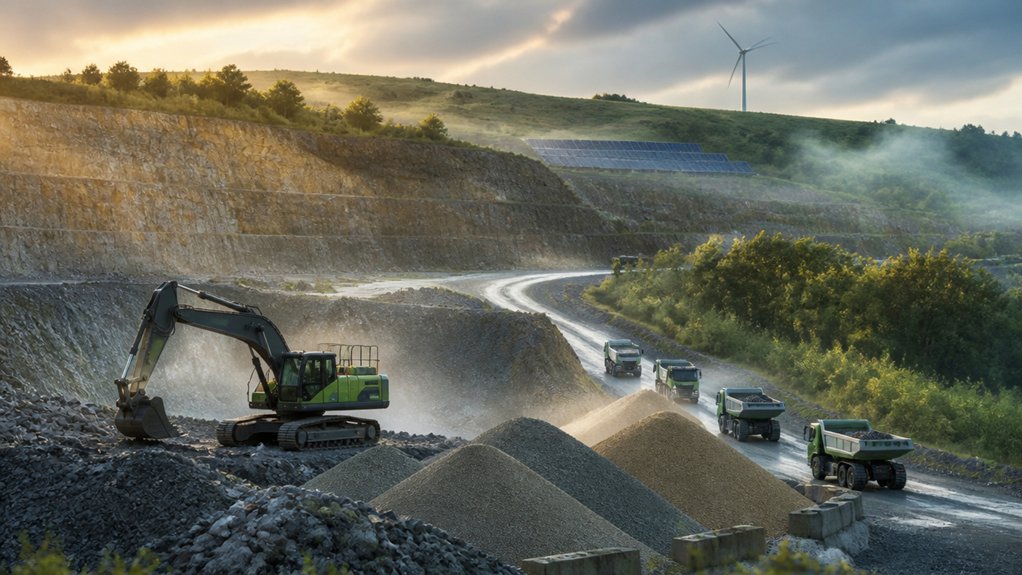
To cut emissions from UK mining and quarrying, you need to reduce energy use across extraction, processing and transport. Electrifying loaders, pumps and site vehicles can replace diesel, while renewable electricity and battery storage lower operational emissions and improve energy resilience. More efficient crushing and grinding, water recycling and mineral-fines recovery can reduce energy demand and waste. Track emissions, water use and environmental impacts, and pair operational changes with land restoration. The next steps show how to turn these measures into a practical net-zero pathway.
What Net Zero Means for UK Mining and Quarrying?
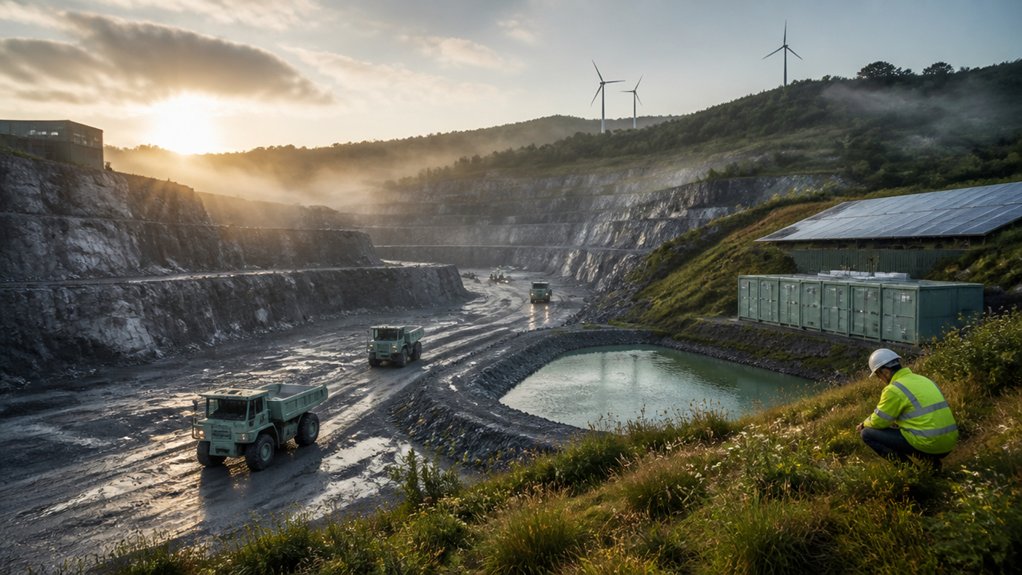
For UK mining and quarrying, net zero means cutting greenhouse-gas emissions from extraction, processing and transport until any remaining emissions are balanced by removals. You’ll need to measure emissions across your operations and supply chain, then set credible targets aligned with the UK’s legally binding climate goals.
Prioritise reductions before using high-quality removals for residual emissions; offsets shouldn’t replace operational change. Your plan should also address land restoration, biodiversity, water use and waste, since responsible site management supports wider environmental resilience.
Innovative exploration can improve knowledge of mineral deposits and help you avoid unnecessary disturbance, while careful planning can reduce impacts on nearby communities.
A sustainable workforce—with relevant skills, fair conditions and strong safety practices—will help you deliver lasting change. Track progress transparently and review targets as technology, evidence and regulation evolve.
How Electrification Cuts Quarry Emissions?
Electrification cuts quarry emissions by replacing diesel-powered plant and vehicles with equipment that runs on electricity, reducing direct fuel use and exhaust at the site. You can electrify loaders, conveyors, pumps and site vehicles, cutting carbon dioxide, nitrogen oxides and particulate emissions where people work.
An electric vehicle also produces less noise, improving conditions for operators and nearby communities. Battery storage can help manage peaks in demand and support charging for mobile equipment, while smart charging lets you avoid disrupting production.
Electrification works best when you assess duty cycles, charging access and grid capacity before replacing machinery. You’ll also need to plan for battery maintenance, equipment training and end-of-life recycling.
These changes can lower operating costs over time, though upfront investment and infrastructure upgrades remain practical challenges for UK quarries.
Why Renewable Power Matters for UK Mines?
When you power UK mines with renewables, you cut emissions from extraction and processing while supporting net-zero targets.
On-site solar, wind or renewable power contracts can also reduce exposure to volatile energy prices.
Cutting Carbon Emissions
As UK mines work towards net zero, switching from fossil fuels to renewable electricity can cut operational emissions at their source. When you power crushers, conveyors and ventilation with wind, solar or hydroelectricity, you reduce the carbon intensity of extraction and processing.
You can also electrify suitable mobile plant and use battery storage to balance variable renewable generation. For remote sites, carefully designed connections and on-site renewables can strengthen supply resilience while displacing diesel generators.
Track emissions across operations, using reliable energy and fuel data to identify where further reductions matter most. Pair these measures with sustainable mining practices, such as efficient material handling and restoration planning.
Innovative carbon capture may address residual emissions, but it shouldn’t replace direct cuts. By prioritising clean power, you’ll support a lower-carbon UK minerals supply chain.
Reducing Energy Costs
Why does renewable power matter to UK mines beyond cutting emissions? It can also help you control operating costs. Electricity prices expose mineral producers to volatile bills, while crushing, grinding, ventilation and pumping demand substantial power.
By pairing renewable energy, such as on-site solar or wind, with carefully negotiated supply contracts, you can reduce reliance on costly grid electricity and improve budget predictability.
You’ll gain more when you match generation with demand. Battery storage can shift surplus power to periods of high consumption, while smart controls help schedule flexible processes around cheaper tariffs.
Upgrading motors, conveyors and pumps also strengthens energy efficiency, lowering the amount of electricity you need before adding new generation.
Evaluating each site’s load profile, grid connection and planning constraints helps you choose practical investments.
Together, these measures can support competitive UK extraction and measurable progress towards net zero.
Strengthening Energy Security
Renewable power can strengthen energy security for UK mines by reducing exposure to grid outages, fuel-price shocks, and constrained supply. By pairing on-site solar or wind with efficient equipment, you diversify supply and rely less on volatile wholesale markets.
Yet renewable output varies with weather, so you’ll need Energy storage to balance demand, maintain critical operations, and provide backup during interruptions. Batteries can respond quickly; longer-duration storage may support extended shortfalls.
Effective grid integration lets your site export surplus electricity, access network services, and coordinate generation with mine loads. Work with your distribution network operator early to assess connection capacity, reinforcement needs, and operating constraints.
A hybrid system combining renewables, storage, and a resilient grid connection can improve continuity without treating the mine as fully off-grid. You’ll also cut operational emissions while supporting UK energy resilience.
Which Processing Changes Cut Energy and Waste?
You can cut power demand by optimising comminution to match crushing and grinding effort to the ore.
Reusing process water reduces freshwater use and the energy needed for pumping and treatment at UK sites.
Recovering mineral fines turns material otherwise lost to tailings into usable product.
Optimising Comminution
Because crushing and grinding can consume a large share of a mine’s electricity, optimising comminution is a practical route to lower emissions and reduce waste. You can start by matching equipment to ore hardness and feed size, preventing unnecessary processing. Energy efficient crushers reduce power demand at the primary stage, while well-designed liners and regular maintenance keep throughput high and downtime low.
Advanced grinding technologies, such as high-pressure grinding rolls and stirred mills, can liberate valuable minerals with less energy than conventional circuits. You’ll gain further savings by using sensors and automated controls to adjust settings as ore conditions change.
Measure energy use per tonne and track particle size to identify bottlenecks and avoid overgrinding. For UK operations, efficient comminution can cut operating costs, reduce carbon emissions and limit tailings by improving recovery from each tonne mined.
Reusing Process Water
As freshwater supplies face growing pressure, reusing process water can help UK mineral operations cut both consumption and emissions. Water recycling starts with mapping flows and separating clean water from streams that need treatment. You can use settling tanks, thickeners and filtration to remove suspended solids, then return clarified water to washing and processing circuits.
Sensors and automated controls help you match water quality and flow to each task, reducing unnecessary pumping and treatment.
Closed-loop circuits limit abstraction, wastewater discharge and the energy needed to heat or move replacement water. Yet salts, reagents and fine particles can build up, so you’ll need regular water-quality checks and controlled bleed-off.
Pair recycling with leak detection and efficient pumps to strengthen process efficiency. By adapting systems to local permits and catchment conditions, you can protect water resources while maintaining reliable production across the UK.
Recovering Mineral Fines
How much usable material escapes with the fines in a mineral-processing circuit? In British quarries and mines, fine particles can carry valuable minerals into tailings, increasing waste volumes and losing saleable product.
You can improve Mineral fines recovery by checking screen efficiency, tightening hydrocyclone settings and matching cut points to feed variability. These changes help you separate material accurately without grinding everything more finely, which can raise electricity demand.
Where fine material already sits in tailings, fines reprocessing can recover value through targeted classification, gravity separation or flotation, selected after testing the mineralogy. You’ll need to manage water use, reagent choice and dewatering so recovery doesn’t shift impacts elsewhere.
Monitor grade, recovery and energy per tonne, then return suitable streams to the circuit. Better control can reduce disposal, conserve resources and support the UK extraction sector’s net-zero progress.
How Can Extraction Protect Water and Restore Land?
Protecting water and restoring land are central to making mineral extraction in Britain more sustainable. You can strengthen Water conservation by monitoring abstraction, repairing leaks and recycling process water through closed-loop systems.
Settling ponds and treatment wetlands help you remove suspended solids before discharge, while regular testing checks compliance with environmental permits and protects nearby rivers, aquifers and communities.
Plan drainage around local catchments, and keep clean surface water separate from contact water.
You can build Land rehabilitation into each stage of a quarry’s life, rather than waiting for closure. Strip and store soils separately, then reuse them to recreate suitable habitats, farmland or public green space.
Shape slopes to reduce erosion, establish native vegetation and monitor species recovery. Work with local authorities and communities to agree restoration goals, then adapt management as conditions change.
How Can UK Mineral Businesses Reach Net Zero?
UK mineral businesses can reach net zero by cutting energy demand, switching to renewable electricity and replacing diesel-powered plant and haulage with lower-carbon alternatives. You can start with energy audits, efficient crushers, variable-speed drives and heat recovery, then electrify suitable equipment and use battery storage to manage peak demand.
Where grid connections constrain progress, you can combine on-site solar or wind with power purchase agreements and phased infrastructure upgrades. For heavy machinery, assess battery-electric, hydrogen and renewable-fuel options against duty cycles, safety and whole-life emissions.
Set measurable targets, track Scope 1, 2 and relevant Scope 3 emissions, and report progress transparently. Innovative financing, including leasing and green loans, can spread capital costs.
Through community engagement, you can build trust, address local concerns and support a fair shift for workers and neighbouring communities.