
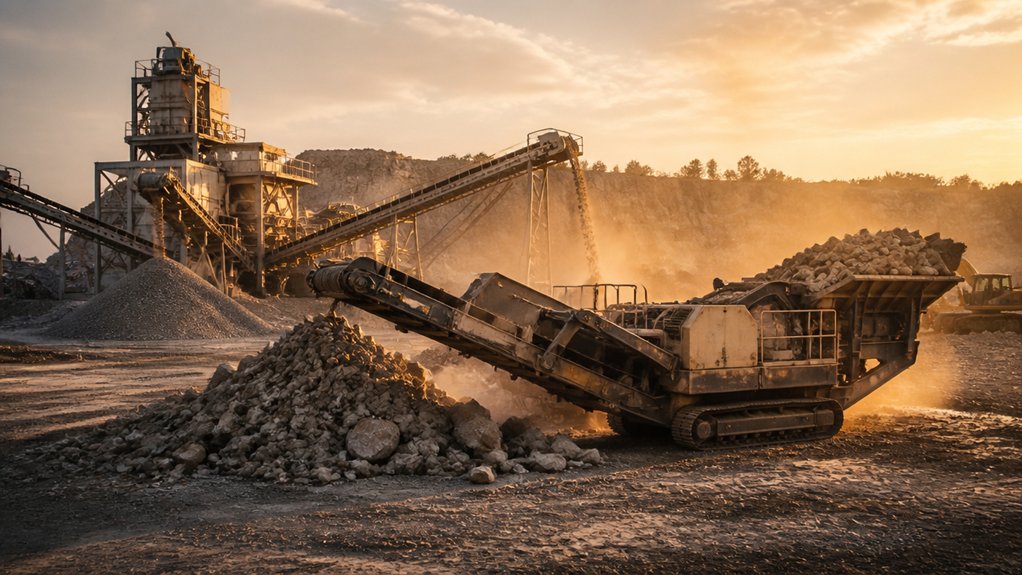
Choose a static quarry plant if you’ve secured long-term reserves, need consistent high-volume output and can invest in foundations, power and fixed conveyors. Choose a mobile plant if you’re working remotely, moving between deposits or handling short-term contracts; it can reduce haul distances and permanent infrastructure. Compare realistic throughput, permitted hours, site access, maintenance and whole-life costs before deciding. The right option depends on your project mix—and the practical differences below can help you assess the best fit.
Which Quarry Plant Fits Your Needs?

Which quarry plant fits your needs depends on the material you process, your production targets and how often the site changes. If you work a long-life quarry with consistent reserves, a fixed footprint and reliable power, a static installation may suit your operation. It can also make sense when you need to integrate processing stages around established site infrastructure.
If you move between deposits, tackle short-term contracts or face uncertain reserves, mobile equipment may offer more flexibility. Consider haul distances, access roads, ground conditions and the cost of relocating machinery before you decide.
Check whether your planning permission allows the proposed layout and operating hours; regulatory compliance can affect both options. Assess Environmental impact too, including noise, dust, water management and transport emissions.
Compare whole-life costs, maintenance support and downtime risks, then match the plant to your site’s commercial priorities.
What Can a Static Quarry Plant Deliver?
A static quarry plant can process high volumes efficiently when your site has steady feed and demand. Its fixed configuration helps you maintain consistent product quality across production runs.
With suitable layout and maintenance, you can improve long-term site efficiency and control operating costs.
High-Volume Processing
How much can a static quarry plant process? Your output depends on the feed material, circuit design and operating hours, but a purpose-built installation can handle thousands of tonnes per day.
Fixed crushers, screens and conveyors work as an integrated line, supporting sustained throughput for large UK reserves and long-term contracts.
You’ll need to size the plant around peak demand, not just average production. Check crusher capacity, screen area, stockpile space and loading arrangements; a bottleneck anywhere in the circuit can restrict tonnage.
Planned maintenance, reliable power and suitable access for excavators and dump trucks also affect availability.
High-volume production can improve unit costs by spreading labour and overheads across more tonnes. Yet you must weigh that benefit against capital, planning conditions and the environmental impact.
Dust suppression, noise controls and efficient water use help you meet permits and embed sustainable practices in daily operations.
Consistent Product Quality
With a well-designed circuit, a static quarry plant can produce consistent, specification-grade aggregates across long production runs. Fixed crusher settings, controlled feed rates and correctly selected screens help you maintain target grading and shape.
That Product consistency matters when you supply asphalt, concrete or roadstone to customers with tight acceptance criteria.
You can also tune each stage to suit the geology and finished products you need. Effective screening removes oversize material, while recirculation gives you another chance to meet the required grading.
Regular sampling and testing support Quality assurance, helping you spot changes in feed or performance before they affect a delivery.
With reliable process control, you can reduce off-spec loads, limit reprocessing and protect customer confidence.
Your plant’s output still depends on sound maintenance and competent operation, so keep settings checked and records current.
Long-Term Site Efficiency
Consistent output is only part of a static quarry plant’s long-term value; its fixed layout can also support efficient site operations. With crushers, screens, conveyors and stockpiles positioned around your material flow, you can reduce unnecessary haulage, shorten transfer routes and keep production moving predictably. That can lower fuel use and operating costs across the life of the site.
A planned installation also lets you integrate dust suppression, noise controls and water management from the outset, helping limit Environmental impact and meet UK permit conditions. Clear access routes, guarded equipment and designated maintenance areas can improve workforce safety, too.
You’ll need to assess ground conditions, reserves and future extraction phases before committing: a static plant delivers strongest returns where your quarry has a long operating horizon and stable production requirements.
Where Does a Mobile Quarry Plant Work Best?
A mobile quarry plant can suit you when a remote UK site makes fixed infrastructure costly or impractical.
You can move it closer to the face, reducing haul distances and keeping material handling efficient.
If your work locations change, you can relocate the plant as production shifts.
Remote Quarry Sites
When a quarry lies far from established infrastructure, a mobile plant can reduce the cost and delay of hauling material to a fixed processing site. You can position crushers and screens close to the face, limiting internal haulage and helping you manage fuel, vehicle wear and labour costs.
This suits remote UK sites where road access is restricted, power supplies are limited or transport routes impose weight constraints.
Assess site accessibility before choosing equipment. Your plant must reach the working area safely, with suitable ground bearing capacity, turning space and room for feed and product stockpiles.
Check whether a generator, water supply and communications are available, and plan maintenance support and spare-parts deliveries.
Remote operation can help your team monitor performance and respond to alarms, but it won’t replace inspections or skilled operators.
Changing Work Locations
If your extraction area shifts regularly, a mobile quarry plant lets you move crushing and screening closer to the working face instead of repeatedly hauling raw material to a fixed plant. This suits phased quarrying, short-term contracts and sites where the face advances across several benches.
Equipment mobility can reduce internal haulage, fuel use and traffic, while helping you keep production aligned with changing material flows. Consider access roads, gradients, ground bearing capacity and the space needed to set up safely.
Your plant may need relocating as reserves are exhausted or extraction plans change, so check transport requirements, setup time and service access before choosing a configuration.
Strong site adaptability helps you respond without committing to permanent infrastructure, but frequent moves can interrupt output. Compare relocation costs with haulage savings and expected production.
How Do Quarry Plant Costs Compare?
Comparing quarry plant costs means looking beyond the purchase price to installation, transport, labour, maintenance and downtime.
For a static plant, you’ll usually pay more upfront for foundations, civils, electrical connections and commissioning. Once installed, however, fixed equipment can offer predictable operating costs and straightforward servicing.
A mobile plant may cost less to establish because it needs less permanent infrastructure, but you’ll need to account for haulage between sites, setup time, fuel and wear on tracks or tyres.
Include operator training, spare parts, planned maintenance and the cost of lost production during repairs in your cost comparison.
For sound budget planning, request itemised supplier quotations and model whole-life costs over your expected ownership period.
Check what warranties, support and parts availability cover, then compare financing, resale value and site-specific installation requirements before choosing.
What Production Capacity Do You Need?
Choose a quarry plant capacity that matches your required output, not just the highest tonnes per hour on a supplier’s specification sheet. Start with your sales forecast, permitted operating hours and the tonnes of saleable aggregate you need each week. Then account for feed size, rock hardness, moisture and the product mix: these affect throughput and can create bottlenecks at crushing, screening or stockpiling stages.
A static plant may suit steady, high-volume demand, while a mobile plant can offer production flexibility when output or product requirements change. Check whether quoted capacity reflects your actual material and operating conditions, rather than ideal test results.
Consider equipment scalability too: can you add or upgrade stages as demand grows? Match capacity to realistic utilisation, so you avoid paying for idle capacity or missing contracts when orders peak.
How Do Setup and Site Access Compare?
Static plants need a suitable site for foundations, fixed conveyors, power supplies and stockpiles, so you’ll need to plan civil works and access before installation. You’ll also need room for delivery vehicles, cranes and safe assembly, which can make a constrained site costly to prepare.
Once installed, the layout can support efficient material flow, but relocating it involves significant work.
Mobile plants usually arrive on tracks or transporters and need less permanent infrastructure. You can position them closer to the working face, reducing haul distances, though you’ll still need firm, level ground and suitable access roads.
Check bridge limits, gradients and turning space before delivery.
Compare planning conditions, utilities and Site security requirements. Consider Environmental impact too: noise, dust, traffic and drainage controls can affect where you place either option and how quickly you can begin production.
How Do Maintenance and Downtime Compare?
Maintenance needs and downtime depend on how each plant is built and operated. A static plant gives you fixed equipment and established maintenance access, but a failure in a key crusher, screen or conveyor can halt the whole line. Planned inspections, critical spares and condition monitoring help you limit disruption.
A mobile plant lets you service individual units and may keep production moving while you reposition equipment. However, frequent transport and exposure to dust, vibration and weather can increase wear. Equipment durability depends on sensible operating limits, lubrication and timely replacement of wear parts, such as screens and crusher liners.
Your maintenance plan should reflect manufacturer schedules and site conditions. Invest in operator training so your team spots faults early and follows safe isolation procedures. Track downtime and repair costs to assess reliability and protect output.
Which Plant Fits Your Project Mix?
If your workload varies by material, location or contract, match the plant to the production demands you face most often. A static plant suits a long-term quarry with steady reserves, consistent feed and space for fixed conveyors, stockpiles and utilities. Its layout can support high throughput and efficient processing, but you’ll need enough volume to justify installation and site preparation.
Choose mobile equipment when you move between short-term contracts, work across several locations or need to follow a changing face. You can reduce haulage and set-up time, though output depends on feed consistency and available space. Compare transport, fuel and commissioning costs against expected tonnes.
Check Equipment durability against abrasive rock and duty cycles, and assess Environmental impact, including noise, dust, emissions and planning constraints. Your project mix should determine the plant’s capacity, configuration and commercial return.
When Does a Hybrid Quarry Plant Make Sense?
A hybrid quarry plant makes sense when you need fixed-site efficiency but also want the flexibility to relocate selected equipment. You might keep primary crushing, screening and conveyors on permanent foundations, then use mobile units for secondary processing or work across separate faces.
This arrangement suits a long-term UK quarry with changing extraction areas, phased development or occasional contract work elsewhere.
Before investing, compare the cost of foundations, installation and servicing against the savings from moving equipment. Check that mobile units can integrate with your fixed circuit and meet required throughput without creating bottlenecks.
A well-designed layout can improve energy efficiency by matching plant capacity to demand, while reducing haulage distances and environmental impact. You’ll still need to plan access, power, noise controls and maintenance around site conditions and planning limits.