
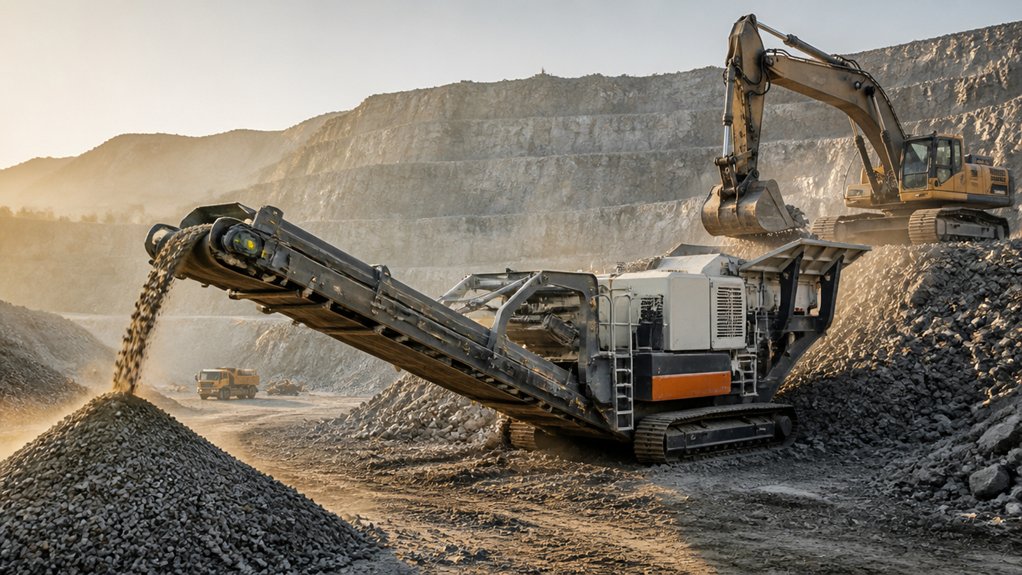
A mobile crushing plant can transform your quarry operation by processing rock near the extraction face, cutting haul distances, truck movements and fuel use. Feed blasted material through a vibrating grizzly into jaw, cone or impact crushers; conveyors and screens then move and grade the product, returning oversize for further crushing. You can reposition the plant as benches move, while careful feeding, maintenance and safe operating procedures sustain output. The sections below explain the key choices and practical considerations.
How Does a Mobile Crushing Plant Work?
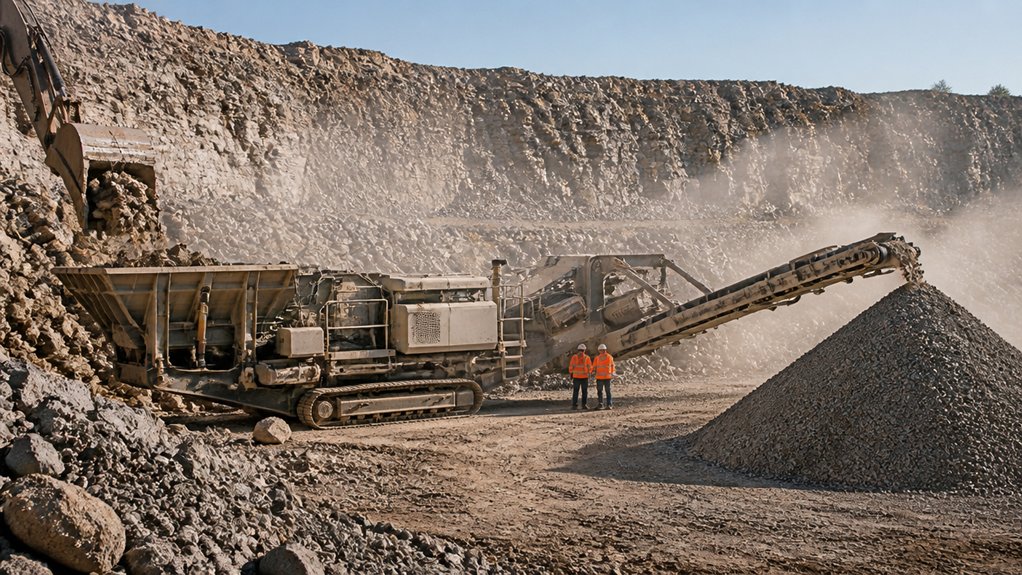
A mobile crushing plant takes quarried rock through a connected sequence of feeding, crushing and discharge equipment mounted on a transportable chassis. You load blasted material into the feed hopper, where a vibrating grizzly removes fines and regulates flow to the primary crusher.
Jaw crushers handle coarse rock; impact or cone units provide further reduction, depending on the required product and geology. Conveyors then transfer crushed material between stages and discharge it into stockpiles or screening equipment.
Screens separate specified sizes, returning oversize material for another pass. You can adjust settings and feed rates to meet production targets, while onboard controls monitor performance.
Effective Crusher maintenance, including inspections and lubrication, helps limit downtime. Follow site safety protocols, isolate machinery before servicing, and keep personnel clear of moving belts and crushing zones.
How Mobile Crushing Plants Cut Hauling
By crushing material at or near the extraction face, mobile plants reduce the distance quarry operators need to haul unprocessed rock. You can feed blasted rock directly into the crusher, then move sized aggregate by conveyor or shorter truck runs to stockpiles and processing stages.
This cuts reliance on diesel haul trucks, lowers fuel use and tyre wear, and frees vehicles for other duties. Fewer loaded journeys also ease congestion on internal haul roads and reduce maintenance demands.
For UK quarries, where fuel, labour and emissions costs affect margins, these savings support cost efficiency while limiting environmental impact. You’ll also reduce exhaust emissions, dust and noise associated with repeated transport.
How Mobile Crushers Adapt to Quarry Sites
Because quarry faces, access routes and working areas change as extraction progresses, mobile crushers can relocate to suit the site. You can position a tracked unit close to the current bench, then move it as the face advances or the working area shifts. This Mobile flexibility helps you respond to changing haul-road layouts, restricted access and phased extraction without redesigning the whole operation.
Site adaptability also depends on choosing the right configuration for local ground conditions. On firm, level ground, you may use a different set-up from one needed on uneven or soft terrain. Check gradients, bearing capacity, turning space and clearance before moving equipment, and plan routes around quarry traffic and exclusion zones.
What Keeps a Mobile Crusher Productive on Site?
Once you’ve positioned the crusher for the current quarry face, steady production depends on keeping material flowing and downtime low. Keep the feed consistent, with excavator operators avoiding surges that can choke the chamber or overload conveyors. Match the crusher’s settings to the material, then monitor throughput, product size and engine load throughout each shift.
Planned crusher maintenance protects availability. Inspect wear parts, belts, screens and hydraulic lines at the intervals set by the manufacturer, and replace components before failure disrupts production. Clear blockages only after isolating and locking out the plant; never reach into a running machine.
Good site safety also depends on clear communication between operators, banksmen and haulage drivers, especially when tracking or repositioning the unit. Record faults promptly, so your team can act before minor issues become costly stoppages.
What Should You Consider When Choosing a Mobile Crusher?
Choosing a mobile crusher starts with matching its capacity and configuration to your material, target output and site constraints. Check feed size, abrasiveness and moisture: a jaw crusher suits primary reduction of hard rock, while an impact crusher can produce well-shaped aggregate from softer stone. Confirm throughput against your production plan, including any screening or recirculation requirements.
Assess access, ground conditions and transport limits across your UK sites. Track-mounted units offer manoeuvrability, but you’ll need safe working space and suitable haul routes. Compare fuel or electric power options, service support, parts availability and maintenance costs over the machine’s working life.
Consider environmental impact too: dust suppression, noise limits, emissions and proximity to neighbours may affect planning conditions. Finally, verify guarding, emergency stops and operator training meet UK health and safety requirements.