

A cone crusher can help you produce consistent, well-shaped aggregate at high throughput, reduce reprocessing and labour needs, and lower energy use per tonne. It suits steady UK operations processing hard, abrasive rock, provided your feed and plant are compatible. However, you’ll face high purchase and installation costs, ongoing power and liner expenses, maintenance downtime, and demands for space, lifting equipment and trained operators. You’ll also need effective dust, noise and vibration controls. The next sections explain how to assess whether the investment fits your operation.
Will a Cone Crusher Fit Your Operation?
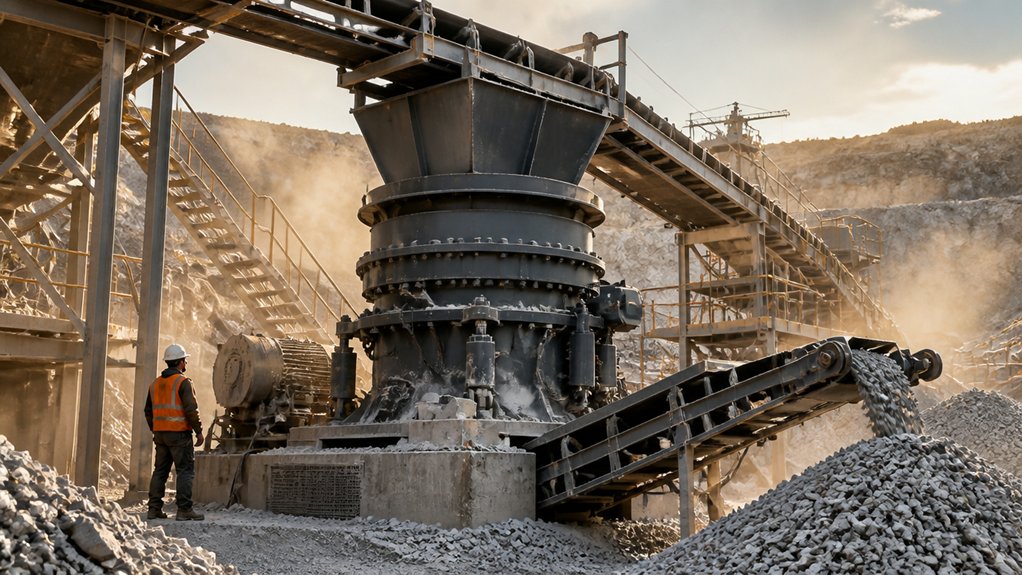
Before investing, check whether a cone crusher suits your feed material, output requirements and site constraints. Assess the rock’s hardness, abrasiveness, maximum feed size and consistency; oversized or contaminated material may need upstream screening or breaking. Compare the required product grading and throughput with the crusher’s capacity, allowing for changes in wear and settings.
Operational flexibility depends on whether you can adjust the closed-side setting and integrate the machine with your existing screens, conveyors and control system.
Check available space, ground conditions, power supply and access for maintenance. In the UK, consider planning conditions, noise limits, dust suppression, water management and transport restrictions.
Evaluate Environmental impact alongside operating needs, including energy use and emissions. Confirm guarding, isolation points, safe access and lifting arrangements meet site procedures and applicable requirements.
If these checks reveal costly modifications, reassess the investment.
What Are the Main Benefits?
A cone crusher can deliver consistent, well-shaped aggregate at high throughput, particularly when processing hard, abrasive rock. For your UK quarry or recycling site, that product quality can help you meet customer specifications and reduce costly reprocessing.
Adjustable settings let you control output size, while automation can maintain performance as feed conditions change.
The economic benefits may include lower labour demand, fewer rejected loads and improved plant utilisation. Compare these gains with purchase, installation, wear-part and maintenance costs before investing; a crusher only pays when it suits your material and production plan.
Efficient crushing can also reduce energy use per tonne, limiting environmental impact and supporting emissions targets.
Check noise, dust and guarding controls, and train operators to follow safe isolation procedures. Reliable output can strengthen supply commitments without compromising site safety or regulatory compliance.
How Does It Handle Hard, Abrasive Rock?
When you process hard, abrasive rock, a cone crusher uses compression between its mantle and concave to break the feed, rather than relying on impact. This controlled rock fragmentation suits tough materials such as granite and basalt, common in UK quarries.
You can adjust the closed-side setting to influence product size, but check feed gradation and moisture first: oversized or sticky material can disrupt consistent crushing.
Abrasive wear remains a key consideration; quartz-rich stone can wear liners and other contact surfaces quickly. Choose suitable manganese-steel liners, monitor wear patterns and follow the manufacturer’s inspection schedule to maintain performance.
Before clearing blockages or changing liners, isolate and lock off the machine, then verify it’s safe to work.
Correct settings, steady feeding and planned maintenance help you process hard rock reliably.
What Are the Main Drawbacks?
Despite their strengths, cone crushers can bring high capital and operating costs, especially when frequent liner replacement is needed for abrasive UK aggregates. Beyond purchase and upkeep, you’ll need suitable foundations, lifting equipment and trained operators, which can complicate installation at a constrained quarry or recycling site.
Their size and mass may limit relocation between jobs, while feed variations or incorrect settings can produce inconsistent grading and increase blockage risks. You must isolate and lock out the machine before clearing material or inspecting the chamber; stored pressure and moving parts pose serious hazards.
Environmental impact also matters: dust, vibration and noise pollution can affect nearby communities and wildlife. You’ll need effective suppression, monitoring and planning to meet UK environmental and workplace requirements.
These drawbacks may outweigh the benefits where space, access or permits are limited.
What Does a Cone Crusher Cost to Run?
You’ll need to budget for power, fuel and wear parts, with costs shaped by throughput, material hardness and UK energy prices.
Maintenance adds planned servicing and replacement components, while poor upkeep can increase downtime and safety risks.
Track both costs per tonne to assess the crusher’s true running cost.
Operating Costs
A cone crusher’s running costs depend on throughput, feed material and operating hours, with electricity, wear parts and planned maintenance usually accounting for the largest expenses. To estimate your budget, compare the machine’s power demand with your expected tonnes per hour and local electricity tariff.
Hard, abrasive rock can increase liner consumption, while consistent feed and correct settings help you produce saleable material efficiently. Energy efficiency matters: a correctly sized drive and well-managed circuit can reduce energy use per tonne.
Consider the environmental impact too, including site emissions, noise and dust controls required under UK planning and environmental conditions. Include fuel for mobile plant, operator time and any costs for transporting or handling material.
Follow the manufacturer’s limits and site safety procedures; overloading can raise costs and create hazards. Track cost per tonne to guide purchasing decisions.
Maintenance Expenses
Maintenance costs vary with crusher size, duty cycle and rock abrasiveness, so budget for routine inspections, lubrication, liner replacement and repairs to key components.
Your actual spend also depends on feed quality, operator practice and access to parts. Check oil condition, temperatures, clearances and wear patterns at the intervals in the manufacturer’s manual; isolate and lock off the machine before anyone works on it.
Replace worn liners promptly to protect the chamber and maintain product shape, but plan change-outs to limit downtime.
Keep critical spares available and train operators to spot abnormal vibration or noise early.
For a cost comparison, weigh planned servicing against breakdown risk, lost production and parts lead times in the UK.
Timely maintenance can reduce energy waste and environmental impact by keeping crushing efficient and preventing avoidable component failure.
What Maintenance and Downtime Should You Expect?
You’ll need to inspect wear parts, lubrication, hydraulics and safety systems at the intervals set by the manufacturer.
Plan for downtime during routine servicing, and keep critical spares available to reduce delays when repairs are needed.
Always isolate and lock off the crusher before maintenance, following UK site procedures.
Routine Maintenance Needs
Although a cone crusher is built for demanding work, routine servicing still takes it offline. You’ll need to follow the manufacturer’s schedule and record inspections to keep performance reliable and meet UK site procedures.
Check oil levels, pressure, temperature and filter condition; Lubrication requirements vary by model, so use the specified grade and keep the system free from contamination.
Inspect liners, fasteners, guards and feed arrangements for wear or looseness, with the machine isolated and locked off before access.
Cleaning procedures matter too: remove compacted material from accessible areas using approved methods, never reaching into moving or stored-energy components.
Plan these tasks around shifts and production targets, allowing time for safe isolation, cooling and checks before restart.
Train operators to report abnormal noise, vibration or leaks promptly, and retain maintenance records for audits.
Downtime And Repairs
Even with planned servicing, a cone crusher will lose production time when parts wear, faults develop or inspections uncover a safety issue. Your repair schedule depends on feed abrasiveness, throughput, operating conditions and access to skilled engineers.
Common stoppages include replacing liners, repairing hydraulics, clearing blockages and investigating abnormal vibration or temperature. Keep critical spares, such as wear parts and seals, on site, and arrange prompt support to limit delays.
Before anyone works on the machine, isolate and lock off all energy sources, then verify isolation. Never clear a blockage or inspect moving components while the crusher runs.
Use downtime to review fault records and identify efficiency improvements, such as adjusting feed control. Reliable repairs can reduce fuel use and the environmental impact of repeated call-outs, but don’t defer safety-critical work to protect output.
When Is a Cone Crusher Worth the Investment?
A cone crusher is worth the investment when your operation needs a reliable supply of consistently sized aggregate and can keep the machine productively fed. You’ll gain most when steady demand for graded stone supports high utilisation across shifts, such as at a UK quarry serving infrastructure projects.
Check market trends before committing: local construction activity, planning constraints and haulage costs can affect sales and margins.
Consider environmental impact too. Efficient crushing may reduce energy use per tonne, while well-managed dust, noise and vibration help you meet site controls and protect workers and nearby communities.
The investment makes less sense if feed supply is irregular, throughput is low or product demand is uncertain.
Include operator training, guarding, isolation procedures and planned maintenance in your business case; safe, consistent operation underpins dependable output and returns.
How Should You Compare Cone Crushers?
To compare cone crushers, match each model’s rated capacity and feed-size limits to your material, target output and operating hours. Check performance against your expected market demand, including seasonal peaks, rather than relying on headline tonnes-per-hour figures.
Confirm the crusher suits your feed’s hardness, abrasiveness and moisture, and assess product shape, setting range and adjustment time.
Compare whole-life costs: purchase price, installation, liners, power, maintenance, parts availability and downtime. Ask UK suppliers for local service coverage, realistic lead times and references from comparable sites.
Review guarding, safe access, isolation points and clearing procedures; operators must follow site risk assessments and manufacturer instructions.
Finally, weigh emissions, noise, dust controls and energy use to judge environmental impact and planning requirements. Choose the model that meets production needs safely, reliably and economically—not simply the cheapest option.