
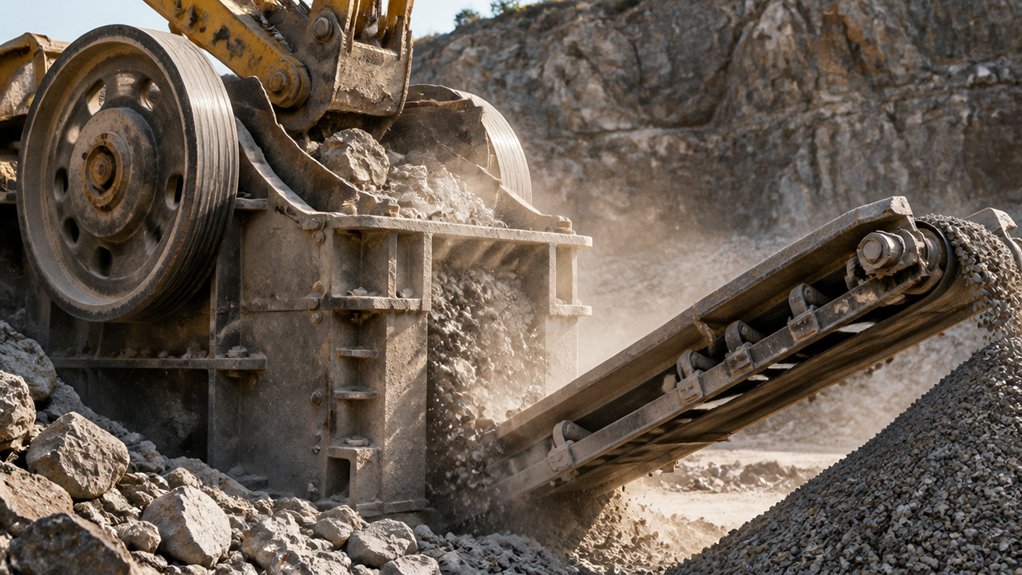
A quarry crusher turns blasted rock into aggregate by applying controlled compression, impact or shear until natural flaws fracture. You feed stone into a hopper, where a vibrating feeder regulates flow and a grizzly removes fines. A jaw crusher usually handles primary breaking; cone or impact crushers refine the material. Screens separate sizes, returning oversize for further crushing. Output depends on rock type, feed consistency and settings. Operators must follow site procedures and isolate machinery before clearing blockages. The stages below explain the process in more detail.
How Does a Quarry Crusher Break Rock?
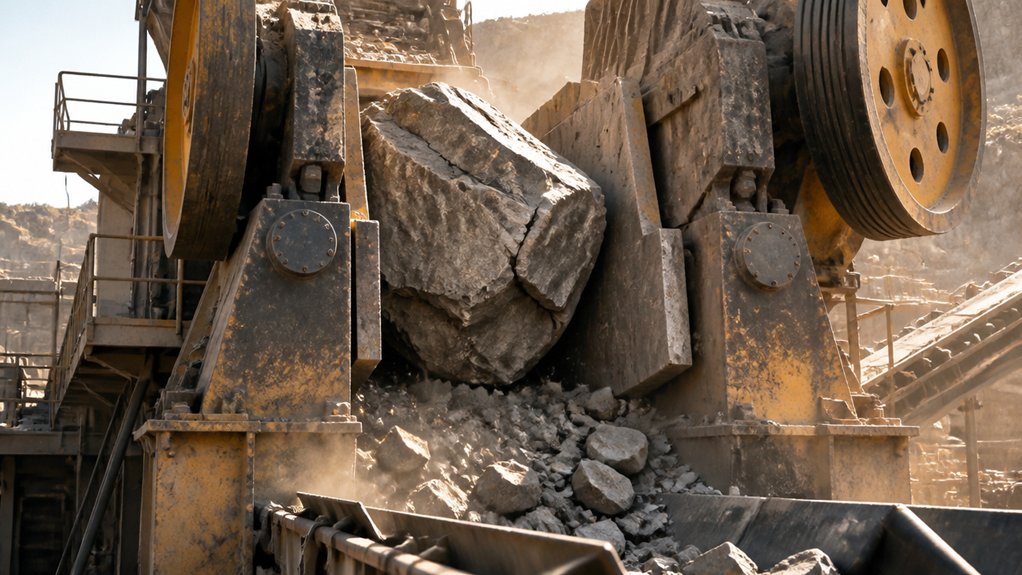
A quarry crusher breaks rock by applying controlled compressive, impact or shear forces until the material fractures into smaller pieces. As you feed stone into the chamber, moving surfaces load it against fixed surfaces or other rock. Stress builds at natural flaws, causing cracks to grow and fragments to separate.
The machine’s settings and feed conditions influence rock fragmentation, so you should monitor output size and avoid overloading.
You’ll get consistent results when you keep material flowing evenly and remove tramp metal before it reaches the crushing zone. Follow the manufacturer’s instructions, isolate equipment before inspection, and never reach into a moving or blocked machine.
Dust suppression and suitable respiratory protection help control airborne silica, a serious UK workplace hazard.
Regular crusher maintenance, including checks for wear, loose parts and guarding, supports safe, reliable operation and helps prevent unexpected stoppages.
Which Crushers Are Used in a Quarry?
In a UK quarry, you’ll typically find jaw crushers for primary breaking, followed by cone or impact crushers to achieve the required size and shape.
Your choice depends on the rock’s hardness, the feed size and the specification of the finished aggregate.
You must also match each machine to site conditions and follow guarding, isolation and safe operating procedures.
Jaw Crushers
At the start of a quarry’s crushing circuit, a jaw crusher uses two heavy plates to break large rocks into smaller pieces. One plate stays fixed; the other moves towards it, compressing feed as it falls through the chamber. You’ll find this robust machine handles blasted rock and produces a coarse, uneven product for further processing.
Adjusting the discharge setting controls the maximum output size, while feed size and rock hardness affect throughput. Keep material flowing evenly to limit blockages and unnecessary wear.
For quarry safety, isolate and lock off the crusher before clearing obstructions or carrying out inspections. Follow the site’s risk assessments, guarding requirements and maintenance procedures, and never reach into a moving machine.
Regularly check jaw plates, fasteners and lubrication, replacing worn parts in line with the manufacturer’s instructions and UK site rules.
Cone Crushers
Once jaw crushers reduce blasted rock to a manageable size, cone crushers often handle the next stage, breaking it down further between a rotating mantle and a fixed concave liner. As the mantle gyrates, it compresses feed against the liner, producing aggregate sized for your next processing stage.
You can adjust the closed-side setting to control product size, but check the specification against your required grading and throughput. Effective cone optimization also depends on steady, correctly sized feed; remove tramp metal and avoid overloading the chamber.
In UK quarries, follow the manufacturer’s isolation procedure before inspection or crusher maintenance, and never reach into a running machine. Monitor lubrication, wear, temperature and vibration, then replace worn liners promptly.
These checks help you maintain reliable output and protect operators from avoidable hazards.
Impact Crushers
When a quarry needs to shape aggregate or produce cubical material, an impact crusher can be the right choice. You feed rock into a chamber, where a fast-spinning rotor throws it against breaker plates. These impact forces fracture the stone, while adjustable gaps help control the product size.
Unlike cone crushers, impact units often suit softer, less abrasive rock, such as limestone; highly abrasive material can accelerate wear and raise operating costs.
Your choice depends on the required grading, throughput and feed characteristics. Crushing mechanisms also create dust, noise and flying debris, so keep guards, interlocks and extraction systems in place.
Before clearing a blockage or inspecting the rotor, isolate the machine and follow site lock-off procedures. Check wear parts regularly, and assure operators receive suitable training under UK quarry safety requirements.
How Does Stone Move Through a Crusher?
How does stone travel through a crusher? You’ll typically see an excavator or loading shovel feed rock into a hopper, where a vibrating feeder controls the flow. Grizzlies may screen out fines before material reaches the crusher, helping you manage throughput and reduce unnecessary wear.
Conveyors then carry the crushed stone to screens or stockpiles, where you can separate it by size and recirculate oversize material if the plant design allows.
Effective Stone transportation depends on correctly set belt speeds, clear transfer points and suitable guarding. Keep people away from moving belts, and isolate equipment before clearing blockages or carrying out inspections.
In the UK, follow site traffic plans and relevant risk assessments. Regular Crusher maintenance, including checks on rollers, belts and chute liners, helps you spot damage early and keep material moving safely and reliably.
What Happens During Primary Crushing?
During primary crushing, you feed blasted rock into the crusher’s hopper, following site procedures and keeping clear of moving equipment.
The crusher’s jaw or other crushing mechanism applies force to break the largest pieces into smaller fragments.
You then send this first-stage material onwards for further processing.
Initial Rock Feeding
At the start of primary crushing, a loader or excavator feeds blasted rock into the crusher’s hopper, where grizzly bars or a vibrating feeder screen out fines and regulate the flow. Your operator controls the feed rate to prevent surges, bridging and spillage, keeping material moving steadily towards the crushing chamber.
After rock blasting, you’ll need to check loads for oversized pieces that could obstruct the hopper; don’t let anyone enter or reach into it to clear a blockage while machinery is running. Use suitable barriers, safe access routes and clear radio communication between the loading plant and crusher operator.
In wet or clay-rich conditions, monitor the feeder for build-up and adjust the flow as needed. Routine equipment maintenance, including inspections of bars and feeder components, helps keep feeding reliable and safe.
First-Stage Size Reduction
Once the feeder delivers rock into the primary crusher, the crushing chamber reduces it by compression or impact, depending on the machine type. A jaw crusher squeezes stone between a fixed plate and a moving jaw; an impact crusher strikes it with rotating blow bars. You’ll produce manageable fragments for secondary crushing, not finished aggregate.
The crusher’s setting controls the maximum output size, while feed consistency affects throughput and wear. Operators monitor power draw, vibration and discharge flow, adjusting settings only under approved procedures.
Quarry blasting determines the rock’s initial size and shape, so poor fragmentation can cause blockages and uneven loading.
Keep guards in place, use lockout procedures before clearing jams, and control dust and noise. These measures protect workers and limit environmental impact near communities.
How Does Secondary Crushing Refine Stone?
After primary crushing reduces blasted rock to manageable pieces, secondary crushing breaks it down further to meet the required size and shape. You’ll typically feed this material into a cone crusher or impact crusher, selected to suit the rock’s hardness, abrasiveness and end use.
The machine applies compression or impact, producing more consistent aggregate for UK construction specifications. You can adjust the crusher setting to control product size, while screens separate correctly sized stone and return oversize pieces for another pass.
This stage supports efficient mineral extraction by improving usable yield and reducing waste. Keep guards, interlocks and emergency stops operational, and isolate equipment before clearing blockages.
Dust suppression and noise controls help protect workers and nearby communities. Secondary crushing prepares stone for its intended application; it doesn’t involve stone polishing.
When Does a Quarry Need Tertiary Crushing?
Tertiary crushing is needed when secondary crushing can’t produce the smaller, more uniform aggregate your specification requires. You’ll typically add a tertiary stage when producing fine aggregate, manufactured sand or tightly graded material for UK construction standards.
A cone crusher suits hard, abrasive rock, while an impact crusher can improve particle shape in suitable feed. Check the rock’s hardness, moisture and feed size before selecting a machine; excessive fines or unsuitable settings can reduce output and raise costs.
Consider Environmental impact: efficient crushing can limit energy use, dust and noise, but you must assess site conditions and meet planning and environmental controls.
Schedule equipment maintenance around wear parts, lubrication and inspections to protect performance. Before work, verify guards, isolation procedures and operator training meet your quarry’s risk assessments and UK requirements.
How Do Screens and Conveyors Guide Stone?
Screens separate crushed stone by size, while conveyors carry each grade to stockpiles or back to the crusher for further reduction. You feed material onto a vibrating screen, where the deck and mesh let smaller pieces pass through while retaining larger stone.
Screen alignment matters: check the machine sits level and the decks remain correctly positioned, so material spreads evenly and screening stays reliable.
Conveyors then move each fraction between processing stages or into separate stockpiles, helping you keep grades distinct.
Set Conveyor tension to prevent belt slip or excessive strain, and inspect rollers, guards and emergency stops before operation.
In UK quarries, follow site risk assessments and isolation procedures before clearing blockages or maintenance.
Never reach beneath a running screen or conveyor; stop, isolate and secure equipment first.
What Affects Quarry Crusher Output and Size?
Quarry crusher output and product size depend on the feed rock, crusher settings and how steadily material reaches the machine. Hard, abrasive stone can reduce throughput and wear crushing surfaces faster than softer rock.
Feed size matters too: oversized blocks may need primary breaking, while a consistent feed helps the crusher work efficiently. You can adjust the CSS—the gap between the crushing surfaces—to control the product’s maximum size. A tighter setting usually produces smaller stone but may lower capacity and increase wear.
Screen apertures and recirculation also affect the final grading and tonnage. In UK quarries, you’ll balance these factors against the required aggregate specification, energy use and Environmental impact.
Efficient material recycling can turn suitable demolition rubble into usable aggregate, reducing demand for virgin stone and landfill.
How Do Operators Keep Quarry Crushers Safe?
Because crushing plants combine heavy machinery, moving rock and dust, operators must follow a site-specific risk assessment and safe system of work. Before starting, check guards, emergency stops, interlocks, conveyors and access routes; report defects and don’t operate unsafe equipment.
Safety protocols should cover isolation and lock-off before clearing blockages, maintenance or entry into the crusher. Never rely on an emergency stop as an energy-isolation device.
Your operator training must match the plant and task, including safe start-up, shutdown, communication and emergency procedures. Keep clear of feed hoppers and discharge points, and use designated walkways and safe viewing positions.
Control dust with suitable suppression, and wear required PPE, including hearing and eye protection. Follow UK site rules, traffic plans and manufacturer instructions.
Supervisors should review controls after changes, incidents or near misses, and record inspections and training.