

You can transform abandoned UK quarries into a nature reserve by first surveying its wildlife, water, habitats and safety risks. Set measurable restoration goals, check ownership and planning requirements, then stabilise dangerous faces without removing valuable nesting crevices. Restore pools, wetlands and streams with native plants, varied margins and natural water flows. Add species-appropriate roosts only where needed, and guide visitors away from sensitive zones. Ongoing monitoring helps you adapt management; the sections below explain each step in more detail.
Why Can Abandoned Quarries Support Wildlife?
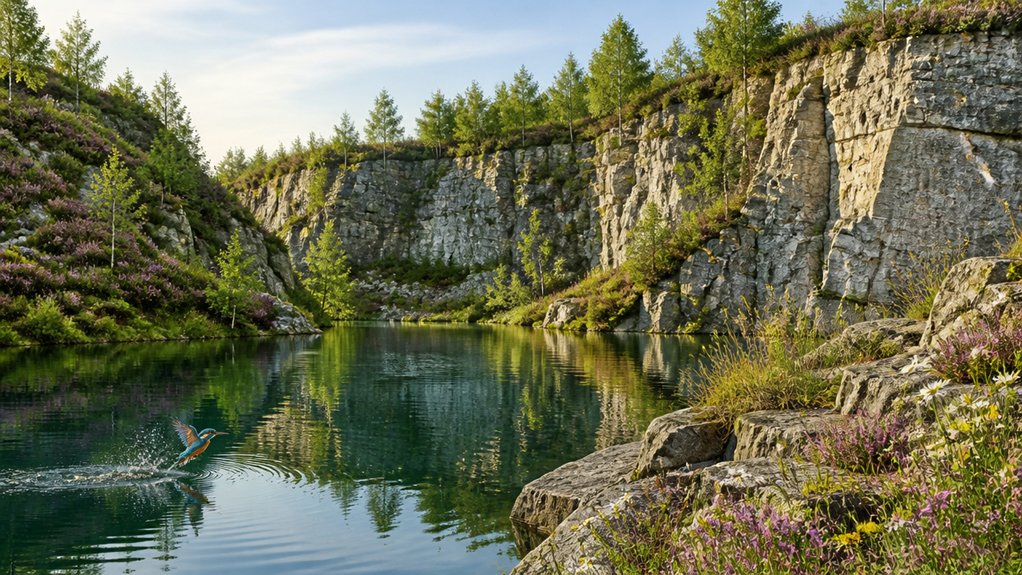
When quarrying stops, the exposed rock, water-filled pits and sparse soils create habitats that are scarce in the wider countryside. You can help these places recover by allowing natural succession while retaining varied landforms.
Bare faces suit nesting peregrines and solitary bees; ledges and crevices shelter bats, lichens and ferns. Ponds and shallow margins support amphibians, aquatic invertebrates and wetland plants, while scrub and grassland offer food and cover for birds and pollinators.
This habitat mosaic can increase species diversity, especially where intensive farming has reduced ecological options. You can connect a quarry to nearby woodlands, rivers and nature reserves through Wildlife corridors, enabling animals and plants to move between sites.
Careful restoration also keeps some open ground from becoming uniformly scrubbed over, preserving the distinctive conditions that make former quarries valuable refuges across the UK.
Survey Quarry Habitats, Water and Safety Risks
Before planning restoration, survey the quarry through the seasons to map habitats, record species and assess how water levels and quality change. You’ll need to identify calcareous grassland, bare rock, scrub, woodland, ponds and wetland edges, noting where rare plants, nesting birds, bats or amphibians occur.
Use repeatable methods, such as fixed-point photographs and mapped vegetation plots, to track change and reveal quarry biodiversity. Check whether hedgerows, streams and nearby nature sites provide habitat connectivity, or whether roads and steep faces isolate populations.
Sample pools and groundwater where appropriate; test for acidity, nutrients, metals and contamination, and note flooding patterns. Inspect unstable faces, loose scree, deep water, hidden shafts and contaminated ground. Record access routes and hazards without disturbing wildlife.
These findings help you understand ecological value and practical risks.
Set Restoration Goals and Check Permissions
Use your survey findings to set measurable restoration goals, such as expanding species-rich grassland, improving pond water quality or linking habitats to nearby nature sites. Set baselines, targets and review dates, and choose indicators you can monitor, such as native plant cover, water chemistry or breeding bird records.
Agree priorities with landowners, local authorities and conservation partners; Community engagement can reveal local knowledge and build lasting support.
Before work begins, check who owns the site and whether planning permission, an environmental permit, protected-species licences or consent from the relevant mineral planning authority is required. Consult your county ecologist and the Environment Agency where activities could affect watercourses or groundwater. Confirm any quarry restoration obligations and restrictions.
Match your phased plan to suitable funding opportunities, including grants, and budget for long-term monitoring and management.
Make Quarry Cliffs and Slopes Safer
Before opening a quarry to visitors, you’ll need a geotechnical inspection to identify loose rock and unstable faces.
Use targeted scaling or rock bolts where needed, while retaining safe features for nesting birds and other wildlife.
Manage steep slopes with suitable grading, drainage, and access controls to limit erosion and falls.
Stabilize Loose Rock
Loose rock on quarry faces can endanger visitors and wildlife, so assess each cliff and slope before opening it as a nature reserve. Commission a suitably qualified geotechnical specialist to inspect discontinuities, weathering, seepage and evidence of recent falls. Their rock stability assessment should identify hazards and recommend proportionate measures, balancing public safety with the site’s geological and ecological value.
Where necessary, remove only demonstrably unstable blocks, using controlled scaling by trained contractors; avoid wholesale clearance that would destroy ledges, fossils or nesting habitat. Install discreet rock bolts, mesh or catch fences only where assessment supports them, and check that materials won’t obstruct drainage or wildlife movement.
Schedule work outside sensitive breeding periods, following advice from local ecologists and relevant UK wildlife legislation. Record interventions, inspect treated faces after heavy rain or freeze-thaw, and keep visitors behind signed exclusion zones until hazards are addressed.
Manage Steep Slopes
Rockfall controls address unstable blocks, but you should also manage how people approach steep quarry slopes. Commission a competent geotechnical assessment before opening routes, and map unstable faces, drainage paths and likely visitor movements. Keep paths and viewing points beyond credible runout zones; use fencing, clear signs and discreet barriers where access must be restricted. Don’t rely on barriers alone: inspect them after storms and record changes in cracking, seepage or fallen material.
For slope stabilization, choose the least intrusive measures that suit the geology, such as local reprofiling, anchored mesh or controlled drainage. Avoid blanket engineering that would erase valuable rock exposures or disturb nesting birds and roosting bats.
Apply Erosion control with native vegetation where roots can bind suitable soils, while keeping sensitive habitats intact. Set inspection schedules, trigger thresholds and emergency closures with your site manager.
Restore Quarry Pools, Wetlands and Streams
Restore quarry pools by managing water levels and improving water quality, so native aquatic plants and invertebrates can thrive.
You can revive wetlands and streams by re-establishing natural flow paths, planting locally appropriate species, and controlling invasive plants.
Monitor water chemistry and habitat condition to guide ongoing conservation work.
Restore Quarry Pools
Quarry pools can become valuable habitats when you shape their edges, water levels and connections with care. You’ll support Aquatic biodiversity by creating varied depths, gently shelving margins and submerged ledges, while retaining some steep faces for specialist species. Leave sections undisturbed so amphibians, dragonflies and aquatic plants can establish naturally.
Check Water quality before altering a pool. Test for acidity, nutrients, metals and suspended sediment, especially where quarry geology or past workings may affect conditions. Don’t stock fish: they can consume amphibian eggs and disturb vegetation. Instead, manage invasive plants carefully and avoid introducing materials or species from elsewhere.
Use local ecological surveys to guide any excavation, and secure required permissions before changing water levels or structures. Monitor seasonal levels and species, then adjust management to keep the pool’s habitat varied and resilient. Protect existing refuges during works.
Revive Wetlands and Streams
For stream enhancement, you can stabilise eroding banks with natural materials, add woody features and create varied depths and flow speeds.
Keep works within consenting requirements, including those set by the Environment Agency or relevant regulator.
Monitor water levels, vegetation and species, then adapt management as the quarry’s hydrology responds.
Choose Native Plants for Quarry Habitats
Choose locally native plants to suit each quarry’s soils, drainage and exposure, rather than aiming for uniform cover. Match species to the site’s geology: calcareous grassland plants thrive on limestone, while acid-tolerant species suit sandstone and slate.
On bare spoil, establish locally sourced seed mixes only where natural regeneration won’t meet your objectives; avoid imported topsoil, which can smother specialist substrates and introduce weeds.
Native species support locally adapted populations and strengthen links with nearby habitats. You’ll create habitat diversity by retaining open, sparsely vegetated ground alongside patches of scrub and grassland, rather than planting every surface.
Check provenance with reputable UK suppliers, and seek advice from your county ecologist or local wildlife trust. Monitor establishment, control invasive plants, and adjust management as conditions change.
Let quarry soils and natural processes guide planting decisions.
Add Nesting, Roosting and Insect Habitat
Add nesting and roosting features where natural shelter is scarce, matching each structure to the species and quarry conditions. For Nest site selection, assess rock faces, aspect, drainage and disturbance before installing ledges, nest boxes or swift bricks.
Place bat boxes on suitable sheltered elevations, retaining fissures and mature trees wherever possible. Keep features varied: solitary bees need sunny, well-drained bare ground, while amphibians benefit from damp refuges beneath stones and logs.
Build insect hotels only where they complement existing habitat, using clean, untreated materials and varied cavities; poorly designed units can harbour pests or disease.
Support Insect diversity by retaining deadwood, creating patches of bare substrate and allowing some vegetation to flower and set seed. Monitor occupancy and condition, then adapt provision to local species, quarry geology and conservation objectives.
Welcome Visitors Without Disturbing Wildlife
You can welcome visitors while limiting disturbance by routing them along clearly marked paths.
Keep sensitive areas, such as nesting cliffs and roosting sites, within quiet zones with restricted access.
Use signs and seasonal closures to explain how these measures protect quarry wildlife.
Guide Visitors Along Paths
Well-planned paths let visitors explore a restored quarry while keeping sensitive habitats undisturbed. Route trails over stable ground, away from fragile scree, wetland margins and nesting areas. Use existing tracks where possible to limit soil compaction and avoid fragmenting vegetation.
Link viewpoints to Wildlife corridors without cutting across them, and provide clear, accessible routes suited to the site’s terrain.
Choose permeable, locally appropriate surfacing that drains safely and withstands footfall. Raised boardwalks can protect boggy ground, while firm, graded paths improve access for wheelchairs and pushchairs.
Set path widths and boundaries to guide visitors without encouraging shortcuts. Educational signage can explain quarry restoration, geology and seasonal wildlife, helping you build understanding as people walk.
Check routes regularly for erosion, drainage problems and damage, then repair them promptly to keep visitors on designated paths and habitats resilient.
Protect Quiet Wildlife Zones
Clear paths can guide visitors through a quarry reserve, while quiet zones give wildlife space to feed, breed and shelter undisturbed. You can mark these refuges with discreet signs and keep routes away from sensitive cliffs, reedbeds and ponds.
Use seasonal surveys to identify Bird nesting sites, roosts and amphibian breeding pools, then adjust access during vulnerable periods.
Keep dogs on leads where permitted, and explain restrictions before visitors enter the reserve.
Native scrub, grassland and wetland can link habitats through Wildlife corridors, allowing animals to move between feeding and shelter areas without crossing busy paths.
You’ll reduce disturbance by limiting lighting, noise and visitor numbers near refuges.
Review monitoring records regularly, and relocate signs or barriers if wildlife changes its use of the site.
This approach welcomes people while protecting quarry biodiversity.
Monitor Wildlife and Adapt Quarry Management
How can you tell whether a restored quarry is supporting wildlife? Set a baseline, then repeat seasonal surveys using consistent methods. Record birds, bats, pollinators, amphibians and plants, noting abundance, breeding evidence and habitat condition. You’ll spot changes more reliably when you compare results across years.
Map Wildlife corridors and check whether hedgerows, ponds and rough grassland connect habitats beyond the quarry. Track Bird nesting success from a suitable distance, and avoid revealing sensitive locations. Log water levels, turbidity, invasive species and disturbance alongside wildlife observations; these pressures can explain population shifts.
Use the evidence to adapt management. If scrub encroaches on species-rich grassland, cut it in rotation; if ponds dry too early, review water control. Consult ecologists and local records centres, document decisions, and reassess outcomes each year.
Learn From UK Quarry Nature Reserves
Annual monitoring shows whether a quarry’s habitats are improving; UK nature reserves can also offer practical models for what to do next. Visit established sites to see how managers balance public access, geological interest and sensitive wildlife. Compare their habitat mosaics with your quarry’s geology, hydrology and restoration goals, rather than copying measures without assessment.
Historical quarry use can explain steep faces, spoil heaps, flooded workings and nutrient-poor substrates that now support specialist species. Use that evidence to identify features worth retaining and risks requiring management, such as invasive plants or unsafe edges.
Ask reserve staff about grazing regimes, scrub control, visitor routes and survey methods; adapt lessons to your site’s scale and statutory designations.
Local community involvement strengthens long-term stewardship. Work with nearby residents, volunteers and local wildlife groups to shape access, monitoring and interpretation, while protecting quiet refuges.